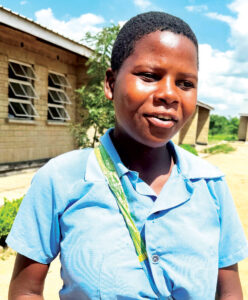
When Alinafe Wilson was selected to Njelenje Community Day Secondary School (CDSS) in Balaka, it was bittersweet for her widowed mother Ndiuzayani Madeya.
“While some parents were extremely happy for their children, my mother appeared to be worried. She did not know where my school fees would come from,” the 16-year-old Form Two girl recalls.
Ndiuzayani has raised her eight children single-handedly since 2018 when Alinafe’s father died. The girl was ten years old that time.
Life at home has not been easy for Alinafe. She once had to drop out of school because her mother could not afford paying for her school and other needs.
“I wept because my friends kept learning while I was at home. I feared for my future. My mother did everything to keep me in school, but she had to choose between educating me and feeding my family,” Alinafe says.
- Advertisement -
But Alinafe weeps no more.
She is among learners who are benefiting from a partnership between Oxfam and Centre for Alternatives for Victimised Women and Children (Cavwoc) with support from Medicor Foundation and Oxfam Hong Kong.
The project dubbed ‘Support towards girls and other vulnerable children in Malawi’ provides support in the form of bursaries, bicycles for mobility, uniforms, notebooks and capacity building for teachers.
It is being implemented in communities and schools in Balaka and Phalombe districts to improve access, achievement, retention and completion rates among girls, boys and other vulnerable children.
- Advertisement -
- Advertisement -
Alinafe, the last born in the family, says her dreams of becoming a nurse looks bright and achievable due to the support she is getting.
“I used to walk long distances to school. That aside, there was a time I dropped out and I was just at home thinking that was it for me. I thought my story would become like those of most other girls who get married and survive on piecework,” she says.
Now, Alinafe happily goes to school and focuses on getting good grades.
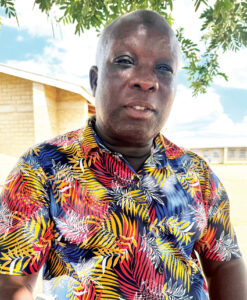
The bursaries help keep girls from poor families in school, which Head teacher James Nankhamo considers a safe space for them.
“There were lots dropouts, especially in Form 1 and Form 3. Many were due to lack of school fees and other necessities.
“We presented the problem to Cavwoc which, together with Oxfam, has been helping to pay school fees for some of the students. The dropout rate has significantly declined,” Nankhamo says.
He adds that the education support has saved the girls from violations that drive them out of school into marriage, teen pregnancies and sexually transmitted infections.
“Without these scholarships, most of the girls would have dropped out of school to marry, as do most of their peers in this area,” Nankhamo laments.
Twambie Kayuni, Oxfam’s Education and Gender Programme Officer, says they are implementing several models and initiatives which have seen a reduction of school dropout rates.
“Girls and boys were dropping out of school and lacking learning materials. The impact has been huge; so far, we have seen a lot of learners completing secondary school as well as transitioning to other classes,” Kayuni says.
Kayuni adds that the bursary programme has reached to about 3,221 learners in Balaka and Phalombe districts.
“We have seen learners being able to participate in school activities like the study circles and other extracurricular activities because they are not worried about school fees or other things.
“We have seen significant improvement in terms of performance among the learners and access to education has also improved,” she says.
Alinafe is lucky to have been selected for the bursary programme after her mother had hit rock bottom struggling to keep her daughter in school.
“After my husband’s death, taking care of my family has not been easy. Oxfam and Cavwoc have helped my daughter to dream and have a chance to achieve her goals.
“I could not afford to pay her school expenses on my own. They also gave her a bicycle which helps her to get to school on time,” Madeya says.