


By Mercy Matonga:
The Ministry of Agriculture says it has launched an investigation into the contract for the supply of 800 portable solar-powered water pumps after the contractor failed to deliver the equipment within the agreed timeframe.
This is according to Ministry of Agriculture officials who presented a report during an appearance before members of the Parliamentary Committee on Agriculture in Lilongwe Tuesday.
The report says the ministry contracted Fisd Limited Company to supply, deliver, install and train farmers in the use of the solar-powered water pump systems under the National Irrigation Services (NIS) initiative.
- Advertisement -

“The delivery period was 13 weeks and the effective completion date was 29th October 2025,” the report reads.
- Advertisement -
It says by the end of the delivery period, the company had not delivered any pump because it could not secure foreign exchange to pay its supplier.
“The first delivery was made in January 2026 and, to date, 44 pumps have been delivered.
“Currently, the issue is being audited to determine the way forward,” the report indicates.
Principal Secretary for Agriculture Erica Maganga said the ministry was conducting an audit to determine how the issue would be resolved.
- Advertisement -
“The contract period has also ended and we are now trying to find a way forward on what we, as a ministry, are going to do,” she said.
During the meeting, the officials also presented a report on water supply in the country.
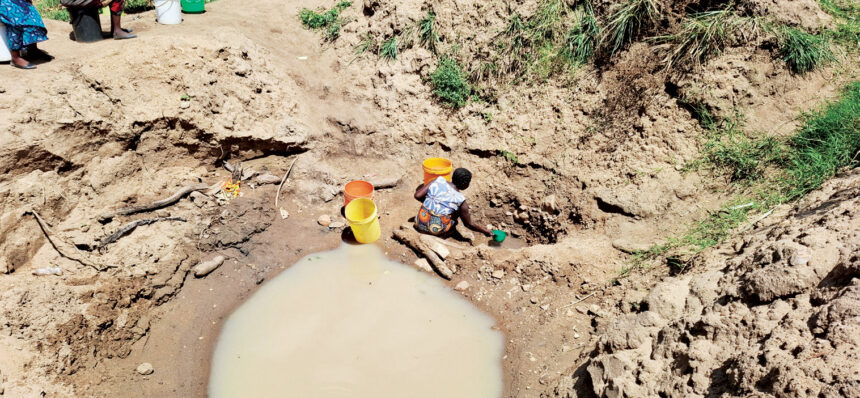
During the presentation, it was reported that 69 percent of Malawians do not have access to clean water.
“On average, about 89 percent of the population have access to improved drinking water sources, 73 percent have access to at least basic water service levels, while 16 percent have access to limited water service levels, which means more than a 30-minute walk to and from water point sources,” the report reads.
It adds that the proportion of urban households with access to improved water sources stands at 97.1 percent, while for rural households it stands at 87 percent.
In response to the development, Maganga said the ministry was working on policies and strategies aimed at ensuring that every Malawian has access to clean water.
Currently, according to the ministry, water boards are losing nearly half of the water they produce for distribution and sale.