By Wanangwa Tembo:
On the veranda of a cracked, ageing building that leaks and creaks under the weight of time in Traditional Authority (TA) Mnyanja, Kasungu District, patients queue on a wooden bench in search of healthcare services.
Most are women, cradling babies close to their chests, shielding them from the harsh weather on a cold, cloudy day with intermittent drizzle.
Situated at a lively trading centre by the roadside, the area is noisy with revving motorcycles and surrounded by vendors just metres away, compromising patient privacy.
Despite its dilapidated state, a clear sign of neglect and struggle, Ofesi Health Centre remains a source of hope for over 20,000 people in its catchment area and beyond.
- Advertisement -
Tobias Mtonga, chairperson of the Health Centre Management Committee, says communities have long struggled to access proper healthcare due to the facility’s poor condition.
“This structure was built a long time ago and is unfit to serve as a health centre. It is small, dirty and leaks when it rains. It also lacks the privacy needed by clients, especially those seeking antiretroviral therapy,” he says.
Mtonga adds that the centre’s condition has severely compromised the quality of healthcare in the area.
Still, communities in TA Mphomwa in the western part of the district consider Ofesi’s situation better than theirs; they have no nearby health facility at all.
- Advertisement -
- Advertisement -
“When you are unwell, the usual response is to stay home unless the condition worsens. This puts our lives, especially children’s, at risk. Imagine a child falling ill at night with no money to travel the long distance. What then?” asks Clara Phiri.
Residents in Mphomwa like her rely on distant facilities, with access often proving costly.
“It is expensive. The quickest transport, especially at night, is a motorcycle and most of us can’t afford the fare,” Phiri adds.
Access to quality, affordable healthcare in much of the district has long been hindered by distance, population growth and ageing infrastructure.
Yet, amid this bleak reality, hope is emerging following government investment in new health facilities.
In the past three financial years, starting from 2021- 22, Kasungu District Council received at least K3.4 billion in performance-based grants (PBG) under the World Bank-funded Governance to Enable Service Delivery (Gesd) project.
To date, the council has channelled around K1.2 billion, 35 percent of the grant, into building new health facilities and related infrastructure to bridge the service delivery gap.
The funds were accessed after the council met the criteria of the Local Authority Performance Assessment (Lapa), a tool used to determine eligibility for funding based on performance indicators such as financial management and service delivery.
Gesd, a five-year $100 million project, aims to strengthen local authorities’ institutional performance, responsiveness and resource management. Through Lapa, it rewards councils that perform well.
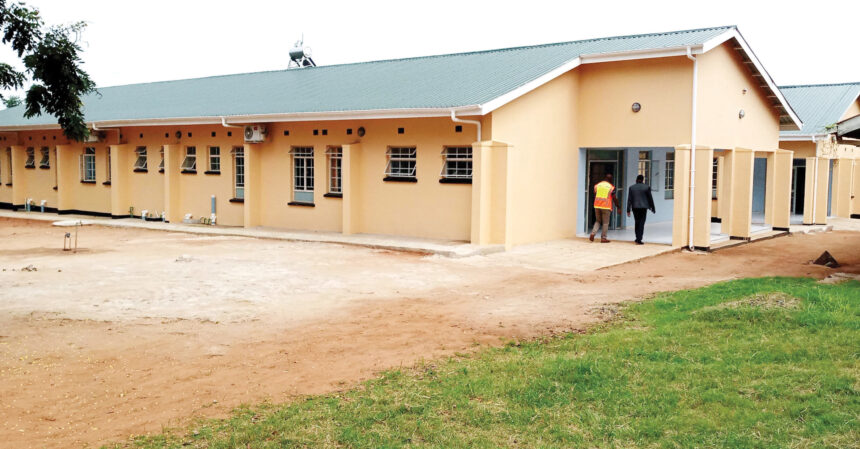
The impact is already visible. At Ofesi, the council has completed a new K100 million facility, equipped with a solar-powered water system. It is a stark contrast to the old structure.
“It has been a long wait, but we are thrilled to have a new, spacious facility that offers privacy for clients. We now urge authorities to expedite procurement of furniture and medical equipment so it can open soon,” Mtonga says.
The new centre serves 16 group village heads and supports communities from Mzimba South, Mphomwa and Kaomba.
Likewise, there is excitement in Mphomwa, where the council has invested K220 million in a new dispensary, staff housing and solar-powered water supply.
“This means a lot to us, considering the difficulties we have faced in accessing healthcare. We have long asked for a clinic to ease the burden of long travel,” resident Agnes Banda says.
Completion of the K839 million paying ward at Kasungu District Hospital marks another milestone in efforts to improve healthcare.
Emmanuel Golombe, the district’s Director of Health Services, says the new ward will provide an income stream for the sector while responding to public demand.
“We aim to generate revenue because we currently rely entirely on Central Government funding. This limits service delivery. The new ward will help us buy essentials such as fuel and critical medicines,” Golombe says.
Golombe adds that many people have requested pay services.
“Kasungu District Hospital sees high daily traffic. Those in a hurry, on medical schemes, or able to pay often dislike waiting in long queues. This ward addresses their needs,” he explains.
The hospital also serves residents from Jenda in Mzimba and Malomo in Ntchisi, making it the fourth busiest district facility in the country.
Magie Sinda, of Mayadi Township, calls the ward a game-changer.
“It is a huge relief to have a better option for those seeking pay services. It was long overdue,” Sinda says.
Senior Planning Officer at the National Local Government Finance Committee, Charity Kaunda, urges councils to deliver projects in line with PBG agreements.
“Councils must address community needs by completing quality projects on time and to specification,” she says.
Kasungu District Commissioner James Kanyangalazi says Gesd has transformed Kasungu, especially in healthcare.
“In the last financial year alone, we built several health facilities and staff houses. We can’t talk about poverty alleviation without infrastructure,” Kanyangalazi says.
He adds the council remains committed to serving the people; not just to qualify for PBGs, but to fulfil its mandate of delivering quality services.—Mana