





By Tsogololathu Itaye:
“Those living close to the river and bridges, take caution. Tropical Cyclone Freddy will hit Malawi from this evening (10 March 2023).”
In the weeks before the cyclone hit, the warnings were intensified on social media and from newsrooms. Community workers from the department of disaster management affairs went into the towns and villages of the southern districts.
I was in Zomba. I had stocked up enough for a few days — cyclones like these typically don’t last more than a day. Little did I know. Tropical Cyclone Freddy began with showers, which turned into non-stop heavy rain and very strong winds for four days. It led to a power outage and no running water for almost two weeks.
- Advertisement -

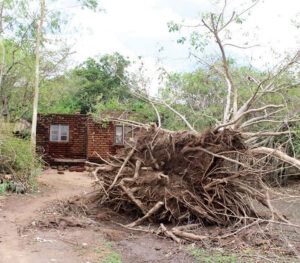
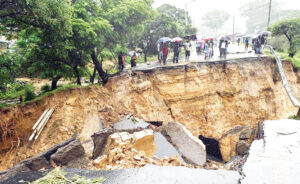
After 24 hours of non-stop heavy rain, most of the roads were flooded. In the 48 hours that followed the continuing rainfall not only flooded roads, it buried houses, some with people in them. People lost their livestock, crops and other assets — buried by mud or simply washed away.
- Advertisement -
Blantyre, Chikwawa, Phalombe, Mulanje, Nsanje, Thyolo and Zomba were badly affected by the cyclone. Then on 13 March, Malawi’s president declared a state of disaster in the affected areas.
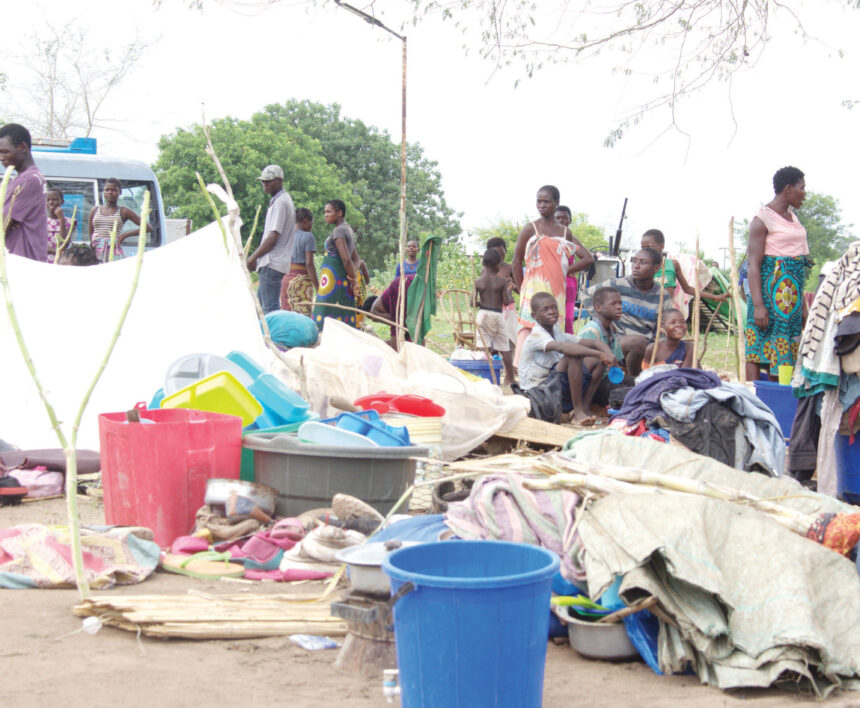
During the response, there was more shelter needed than anticipated. Churches and schools offered temporary shelter. The government, NGOs, individuals, groups and churches in and outside Malawi donated essential groceries and clothing.
Days turned to weeks and individuals became emotionally overwhelmed, so a call for psycho-social services from counsellors went out. I was among the social workers under the Association of Social Workers in Malawi who volunteered. The counselling provided in camps could only be very brief. A counsellor would spend about 20 minutes with someone and then have to move on to the next person. Even then, not everyone who needed psycho-social services was reached. There was a budget deficit, not enough counsellors and some areas were hard to reach as they were still flooded.
Response and recovery from the cyclone took more than a month. The cyclone hit at a time when there had been a rise in cases of cholera and high food insecurity, causing a triple crisis. The toll was 659,278 people displaced, 697 killed and more than 530 declared missing. In addition, 260,681 houses were damaged or destroyed. In total, the physical damage caused by the cyclone was valued at $506.7 million, and $347.2 million to recover.
- Advertisement -
In 2022, the physical damage caused by Tropical Cyclone Ana was valued at $16 million. Although donations poured in to support survivors, there was very limited psycho-social support from social workers because they were not included in the budget or the policies and planning for such disasters.
In February 2015, the National Disaster Risk Management Policy was adopted by the government to guide disaster risk management mainstreaming in Malawi. It provided strategies that would achieve the long-term goal of reducing people’s livelihood losses. The Malawi Implementation Plan-1 (MIP-1) 2021-2030 aims to mainstream climate change in sector plans, policies and programmes from 60 percent to 100 percent by 2030.
As a result, the department is strengthening preparedness by providing training in first aid, search and rescue and reporting on disaster risk reduction, as well as providing relief items to people and identifying land for relocation for affected districts. But both the policy and the implementation plan ignore psycho-social disaster recovery.
Social workers are not recognised as an asset, yet they can play a critical role in all phases of disaster risk management.
In disaster preparedness, social workers have a deep understanding of community dynamics, cultural norms and local contexts. They can conduct vulnerability assessments to identify vulnerable populations. They are best placed to work with local authorities such as village headmen and chiefs, and with residents to develop disaster preparedness plans tailored to specific needs and resources. Social workers’ engagement with communities leads to trust and cooperation.
Social workers can also take on the role of educators. Through interdisciplinary collaboration, social workers can focus on psychological preparedness by focusing on stress management techniques and providing counselling training.
During disaster recovery, social workers can deliver psychological first aid to individuals. This helps to stabilise emotions, reduce distress and promote adaptive coping strategies in the early stages of recovery. Group counselling sessions will support survivors experiencing psychological distress, grief, anxiety or trauma by offering empathetic listening, emotional support and providing coping strategies. Group therapy also provides opportunities for mutual support, validation and sharing of coping strategies among members of the group.
After weeks or months of living in camps, survivors go back to rebuild in the same disaster-prone areas they evacuated from. Psycho-support can be extended with follow-ups where needed.
In December 2017, the vice-president warned residents of Soche Hill, Blantyre, to evacuate because the area was a “man-made death trap”. He advised the city council to relocate them with immediate effect to an area in Machinjiri, Blantyre. But the residents took an injunction against this order to relocate.
In March 2023, the vice-president cautioned the residents in Soche Hill to evacuate the disaster-prone area to prevent future calamities, such as this one. In October of the same year, the local government, unity and culture ministry said residents in flood prone areas were to be relocated to Mapanga in the Blantyre district. It allocated 300 hectares of land.
To date, people have still not moved. But why? It could be that these areas are of significant cultural value, where the land has been passed on from one generation to the next. It could be fear of being apart from others or from other attachment assets. Social workers can facilitate culturally sensitive community-based and community-led initiatives aimed at promoting resilience, social cohesion, psychological well-being, and recovery.
Social work’s mission is to enhance people’s well-being and help meet their basic needs, particularly the vulnerable and oppressed living in poverty. It is important for social workers to uphold their ethical responsibilities by advocating for policies and practices that can create sustainable communities, limit damage to the environment brought on by climate change and help people adapt. Social workers should collaborate with policymakers, both government and NGOs, to develop and implement risk reduction strategies that prioritise the needs of the marginalised.
In reality, social workers only play a crisis response role during natural disasters — if there are sufficient resources. A budget needs to be allocated and we need to ensure that psycho-social perspectives are integrated from the outset of planning and response.
Southern Africa is prone to a variety of natural disasters, including cyclones, droughts, floods and occasional earthquakes whose effect is now worsened by climate change. These disasters are affecting countries already deeply under strain. Without absolving state responsibility or the responsibility of global actors to prevent and address climate change disasters, social work support before, during and after these events, empowers personal and community agency and local problem solving, which will become more and more important as the disasters start to pile up.
By leveraging their expertise in human behaviour and social systems, social workers can significantly contribute to people’s resilience to ensure that disaster risk management is as much about restoring mental health and personal agency as it is about rebuilding infrastructure. —Mail & Guardian
Tsogololathu Itaye is a lecturer for the social work programme in the Department of Sociology and Population Studies at the University of Malawi. She is a Canon Collins PhD candidate in Social Work at the University of Cape Town. Her PhD explores the role of social workers in disaster risk management in Malawi, with the aim of mitigating the psychological trauma caused