

By Erik O’Flynn:
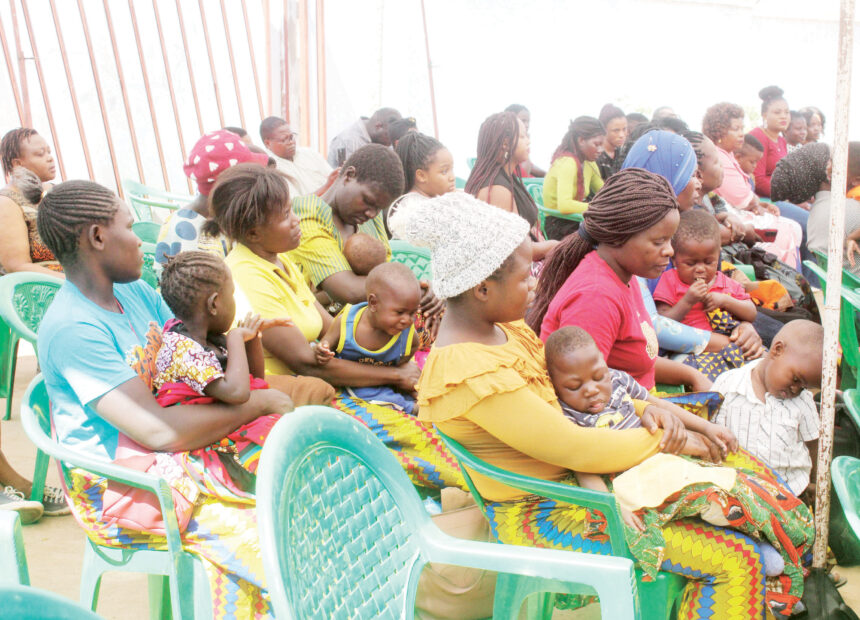
For decades, preventable deaths, lifelong disabilities, and disfigurements presented devastating consequences for over 90 percent of the population in Africa, where surgical care remains largely out of reach.
Simple, affordable procedures like skin grafts for burns, bone fracture repair, and hernia procedures routinely go untreated, causing needless suffering and often driving families into abject poverty due to loss of livelihood.
Consider a young man in his 20s in rural Zambia, electrocuted by a low-hanging power cable while riding on the back of a lorry, whose exposed skull and severely damaged scalp were repaired during a 16- hour procedure, allowing him to make a full recovery; a 19-year-old woman with a deep-seated tumour that caused her to lose her sight and whose surgery was made possible by a resourceful clinician using magnifying glasses in the absence of a microscope, removing the tumor in full and allowing her to regain her vision; a 32-year-old mother of two in rural Zambia, run over by a truck and left with devastating injuries who underwent eight months of intensive treatment and rehabilitation putting her on a path to recovery.
- Advertisement -

Cases like these are the everyday reality faced by surgeons Peter Mushenya from Zambia and Nathalie Umugwaneza from Rwanda, both recent graduates of the College of Surgeons of East, Central, and Southern Africa (Cosecsa), which celebrates its 25th anniversary this December.
- Advertisement -
Since its founding, Cosecsa has grown from graduating just six surgeons in 2010 to an impressive 152 in 2023.
This growth reflects the organisation’s commitment to equipping surgeons with the skills to meet the urgent needs of communities across the region. Over the course of their careers, Cosecsa-trained surgeons are projected to perform nearly 9.5 million surgeries, a stunning demonstration of the impact of successful surgical training programmes.
Qualified just a year, Dr Mushenya is a specialist neurosurgeon working at Maxcare hospital in Lusaka, where patients often travel over 1,000 kilometres to receive care from the only neurosurgical team in the country.
On average, he and his team perform 70 surgeries a month. He describes challenges such as a shortage of surgical supplies, long waiting lists and needless complications arising from untreated simple infections that worsen due to a delay in care.
- Advertisement -
Common, he explains, are untreated coughs in children that escalate into meningitis and later abnormal swelling of the head due to excess fluid on the brain.
“Many patients are two years down the line without a CT scan and come to us in critical condition in need of urgent surgical attention. In many cases, we often have to use our own money to buy drills, sutures, shunts – not just the expensive equipment like microscopes, but even the little things are not there. Instead, we rely on well-wishers. A lot of the conditions we see are simple to treat, yet we don’t get the support we need,” says Mushenya.
It is an all too familiar scene in Rwanda, according to Dr. Umugwaneza, who counts road traffic accidents and falls among her most common surgeries.
“Patients often wait up to six months for surgeries that are not considered acute, resulting in improperly consolidated fractures that cause life-long disability,” she says.
She emphasises the need to strengthen the entire surgical system, from training surgeons to strengthening entire surgical teams across a range of disciplines from nurses to anesthetists.
The situation experienced in Zambia and Rwanda matches the broader challenges faced in the region. In many countries of the Global South, the surgeon-to-patient ratio is alarmingly low, with just one trained surgeon for every 2.5 million people. This neglect persists even though surgically treatable conditions cause more deaths and disabilities than Aids, tuberculosis, and malaria combined.
Despite a 2015 World Health Assembly (WHA) resolution urging the inclusion of global surgery within primary healthcare as a critical component of Universal Health Coverage (UHC), surgical care remains strikingly absent from policymakers’ agendas.
This lack of priority has contributed to minimal progress in strengthening emergency and essential surgical and anesthesia services. As a result, 16 million people worldwide die annually from conditions that could be treated surgically.
In response to the urgent demand for surgical care, Cosecsa, supported by Royal College of Surgeons in Ireland has trained 910 surgeons through its intensive five-year programme, achieving this at an astonishingly low cost of just $600 per surgeon per year.
Prof. Juan Carlos Puyana, Chair of Global Surgery at RCSI University of Medicine and Health Sciences in Dublin, has witnessed firsthand the impact of the programme and is a passionate advocate for further investment in global surgery.
An experienced surgeon himself, he worked for decades in low resource settings, and emphasises the scalability and cost-effectiveness of the initiative, underlining the importance of changing perceptions about surgical care.
“There’s a misconception that surgical care is prohibitively expensive, but simple procedures don’t require large investments in infrastructure and expensive equipment.
“Our approach is grounded in evidence that safe surgery is not an expense but a critical investment in health infrastructure and in promoting economic development,” he says.
Puyana’s views are echoed in the findings of the 2015 Lancet Commission on Global Surgery, which underscored that billions of people lack access to safe surgery.
The report highlighted that investing in surgical services is not only affordable but essential to saving lives and securing safe health systems.
Closing the gap to ensure that surgical services are more readily accessible in lower- and middle-income countries, will not only save lives but also restore patients’ ability to work and lead productive lives, generating economic benefits that far outweigh their costs. The programme stands as a powerful testament to how targeted, cost-effective interventions can make a lasting impact.
In recent years, it has broadened its scope beyond surgical training. Recognizing that effective surgical care relies on multidisciplinary teams, it now supports the development of colleges in anesthesiology, obstetrics and gynecology, and nursing across the region.
This expansion builds on a proven model for rapidly scaling up training in the sub-Saharan context that involves a blend of virtual classrooms, mentorship, and a support network for isolated health workers.
In some countries like Zambia, Tanzania and Malawi, particularly in rural hospitals, non-specialist and non-physician surgeons also play a key role in delivering essential procedures.
Further, at a time when trained health workers from the Global South are increasingly migrating to the Global North in search of better opportunities, the programme has proven to be a game-changer in stemming the exodus of health workers in the region.
A 2024 study reveals a significant shift, with an impressive 98.5 percent retention rate of specialist surgeons within Africa, addressing the chronic shortage of skilled health professionals. This shift represents not only a major achievement for the programme, but also an important step toward the sustainability of local healthcare systems.
Addressing the crisis in global surgery demands a fundamental shift in global health priorities: surgery is not a luxury intervention, but an essential component of any functioning health system.
This requires policymakers to prioritize investments in training, infrastructure, and system-wide support, ensuring that surgical care is within reach for the millions who still don’t have access.
As the network of skilled practitioners expands, communities are themselves laying the groundwork for resilient health systems. In doing so, surgeons like Mushenya and Umugwaneza are safeguarding future generations from the preventable suffering that has long plagued the world’s poorest regions.—IPS
**********
Eric O’Flynn is Programme Director — Education, Training and Advocacy, Institute of Global Surgery, Royal College of Surgeons in Ireland (RCSI), University of Medicine and Health Sciences, Dublin.