By Mike Mataka:
Several hills of Phalombe, long stripped bare by deforestation and neglect, are slowly coming back to life.
Green shoots rise from soil once cracked and barren, reflecting a people learning to live in harmony with nature.
For decades, Phalombe mirrored the struggles of many Malawian districts; hills cleared for firewood, erratic rainfall and farmland turned to wasteland. Rivers dried, floods destroyed crops, and hunger became routine.
Enock Mwanalira, a resident of Group Village Nyambalo and chairperson of the Food for Assets Community Champions Committee, recalls a harsher time.
- Advertisement -
“Before 2019, every year our crops were washed away by mountain runoff. When the rains stopped, the land cracked. We had nothing left,” Mwanalira says.
Hope returned in 2019 with the launch of the Integrated Livelihood Resilience Programme, known locally as Food for Assets, by World Vision Malawi, the World Food Programme and the Government of Malawi.
The programme, covering six traditional authorities (TAs), aimed to rebuild lives and landscapes.
Through training, tools and community mobilisation, Food for Assets introduced climate-smart agriculture, soil and water conservation, tree planting and income-generating activities.
- Advertisement -
- Advertisement -
“We learned to build trenches, swales and terraces. These structures now hold water, prevent erosion and keep the soil fertile,” Mwanalira explains.
Communities dug trenches and built stone bunds, reshaping the land one hillside at a time.
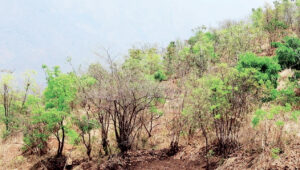
Over 150 hectares around Namangale Hill and 71 hectares around Mpasa Hill have been conserved, transforming once-barren slopes into productive farmland capable of withstanding dry spells.
“When the heavy rains came, our crops survived. For the first time in years, the water did not wash them away,” Mwanalira says.
Namangale and surrounding hills have become symbols of resilience. In the 2024–2025 planting season alone, over 12,000 trees were planted, with a 94 percent survival rate.
Leadership from TA Nyambalo proved crucial. Bylaws were introduced to protect the forest, making conservation a shared responsibility.
“This is not World Vision’s project anymore. It is our project. Even if they leave tomorrow, the work will continue,” the chief says.
The transformation is evident in the people as well. Josophine Chiopsa from Lomoliwa Village observes: “Before, we waited for others to save us. Now we are saving our home. My family no longer worries about floods destroying our crops.”
World Vision Malawi’s Project Coordinator for Phalombe, Mark Allan, notes the visible results.
“When we started, most hills were bare. The soil was exhausted. People were discouraged. But communities responded with incredible commitment,” Allan says.
The Integrated Watershed Management component focused on the land. Fertile soil and managed water led to improved food, income, health and education.
Communities constructed swales, deep trenches and other structures, planted trees, promoted natural regeneration and practised climate-smart farming.
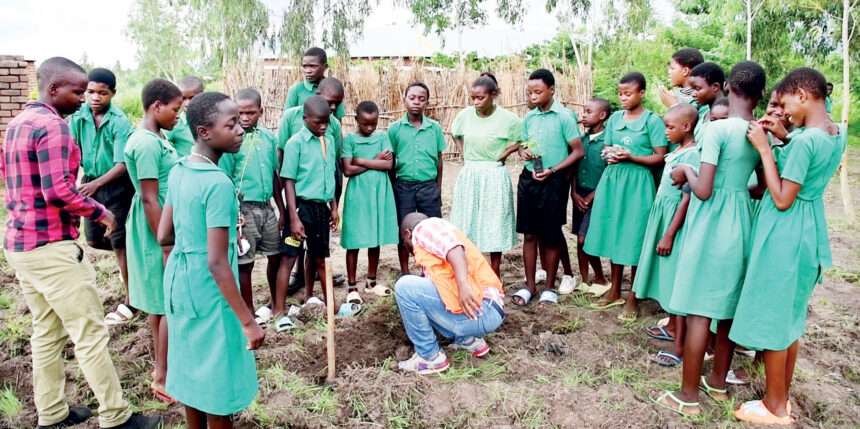
Schools joined through environmental clubs, ensuring the next generation becomes stewards of the land.
“The school clubs are our insurance for sustainability. These children understand climate change better than most adults. They are the voice of the future,” Allan says.
At Mpasa Hill, formerly bare slopes now hum with life. Students from Mpasa Community Day Secondary School study under the shade of tall trees planted by their parents and themselves.
Farmers hang beehives in the trees, generating income from honey.
“The swales in my garden keep moisture for weeks. Even when rains delay, my crops survive,” Grace Peter, a smallholder farmer, explains.
Crops Officer at Phalombe District Council, Drive Kachitsa, explains that the programme’s bottom-up approach makes the communities decision-makers.
“They plan, implement and monitor. That is why this change will last,” Kachitsa says.
And as Mwanalira observes beside a water-filled trench: “We used to fear the rain. Now we welcome it. The soil holds water and the trees hold the soil.”
For World Vision, Phalombe represents a roadmap for resilience, aligned with the United Nations Sustainable Development Goal 13 on climate action.