By Aliko Munde:
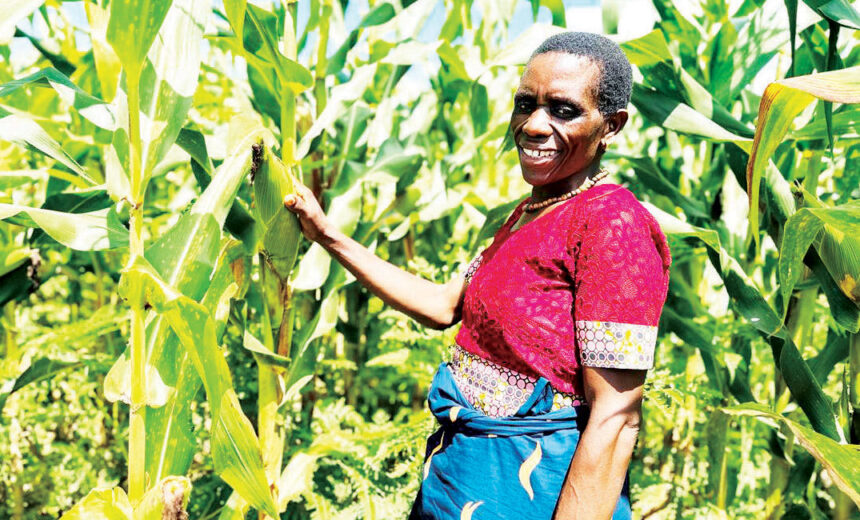
For years, Ester Kumwenda has faced discrimination and several barriers due to her physical disability, which forced her to rely on her relatives for survival.
She was a victim of prevalent challenges which people with disabilities continue to face due to their conditions.
Kumwenda believes people like her can become self-reliant if society is inclusive enough and gives them a chance to maximise their potential.
She cites herself as a testament of her sentiments.
- Advertisement -
“For instance, I am now actively involved in agricultural activities because I received the necessary support,” she says.
Kumwenda recently harvested 15 50-kilogramme (kg) bags of maize from a quarter-acre piece of land at Mafinga Irrigation Scheme in Chitipa District.
She expects to harvest more from rain-fed farming which she is involved in, where she is growing maize on four acres.
Kumwenda applied Mbeya manure, a type of fertiliser made by combining maize husk, animal waste, ash and a small amount of chemical fertiliser, to her crops.
- Advertisement -
- Advertisement -
Lucy Mtambo of Munyaza Village, Traditional Authority Mwenewenya in the district is another farmer who stands on behalf of her elder sister and her mother—both with physical disabilities.
Mtambo, 47, received 10 chickens on behalf of her relatives from the Programme for Rural Irrigation Development (Pride), which aims to enhance rural Malawian communities’ resilience to food insecurity and adverse effects of climate change.
Pride is funded through a concessional loan and grant from the International Fund for Agricultural Development (Ifad) and a complementary grant under the Adaptation for Smallholder Agriculture Programme.
At least 17,500 smallholder households, particularly those of women and young people, are expected to directly benefit from the programme.
Among other targets, Pride is building small-scale farmers’ capacities to take advantage of market opportunities and determine the types of crops to opt for.
After the chickens which she received from the programme multiplied, Mtambo sold some and bought two bags of fertiliser, which she used to make Mbeya manure for her three-acre maize field.
“The chickens are coming in handy. We use their droppings in making Mbeya manure. I am expecting at least 180kg bags of maize from my field,” she says.
Mtambo is already set to venture into another manure-making session in readiness for irrigation farming and selling the surplus at K40,000 per 50kg bag.
On behalf of her relatives, she and Kumwenda are among farmers with disabilities who are determined to contribute to food security and sustained and inclusive economic growth.
Research shows that there is a bidirectional link between disability and poverty, meaning each condition can exacerbate the other.
So, the International Labour Organisation, through its two-year programme dubbed ‘Sparking Disability Inclusion in Rural Transformation’, shortened to ‘Spark’, has been promoting disability inclusion in government programmes funded by Ifad.
Kumwenda and Mtambo’s families were identified and recruited in the Pride project, which established Mafinga Irrigation Scheme near Malawi’s border with Zambia in Chitipa District.

Spark also works with the Transforming Agriculture through Diversification and Entrepreneurship and Financial Access for Rural Markets, Smallholders and Enterprise initiatives.
Federation of Disability Organisations in Malawi Project Manager Ethel Kachala Chibwana hails the inclusion of persons with disabilities in Ifad-funded activities.
“People have to know that persons with disabilities are not beggars. If given a conducive environment, society can benefit from them,” Chibwana says.
Spark Project Officer Vincent Kavala says the initiative targets people with any type of impairment through a rights-based approach towards inclusion.
Kavala notes that challenges abound for persons with disabilities, including looking down upon themselves and negative attitudes from society.
“We are happy that over 100 persons with disabilities in Chitipa District are already participating in different agricultural and economic empowerment activities that are being coordinated by Ifad-funded programmes,” Kavala explains.—Mana