By Wezzie Gausi in Johannesburg , South Africa:
The 21st African Investigative Journalism Conference (AIJC) opened in Johannesburg, South Africa, with a call for African journalists to move beyond exposing individuals and focus instead on the systems that enable corruption and abuse of power.
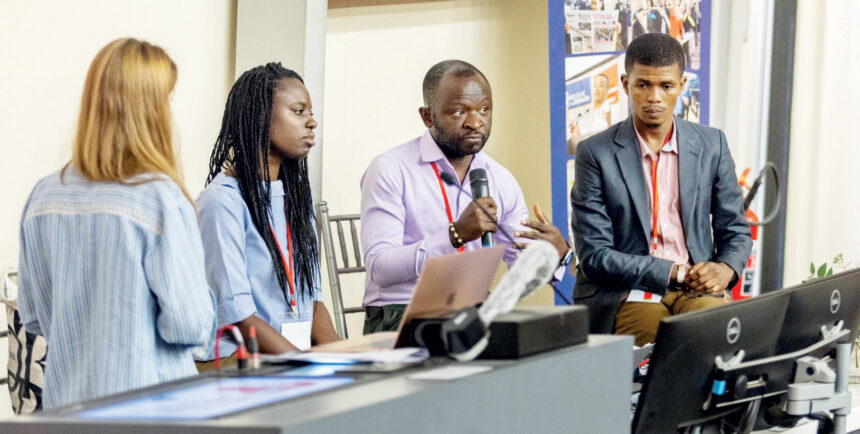
Held at the University of the Witwatersrand, the three-day conference has brought together hundreds of investigative journalists, editors and media trainers from more than 30 African countries.
The gathering, which runs until Friday, provides a platform for journalists to exchange knowledge, learn new tools and build cross-border collaborations.
Speaking during the opening session, University of the Witwatersrand Dean of Humanities, Professor Mucha Musemwa, urged journalists to adopt a more structural approach to investigations.
- Advertisement -
“Too often we investigate the symptom, a corrupt official or a failed project, but not the system behind it.
“The stronger angle now is institutional investigation. We must ask why oversight mechanisms are weak, why data is hidden and why reforms fail to take hold. That is where journalism has the power to bring change,” Musemwa said.
He added that the future of investigative journalism in Africa lies in collective efforts to uncover institutional weaknesses, expose loopholes in governance and highlight policy failures that sustain corruption.
The conference has also attracted young and emerging journalists eager to learn new techniques.
- Advertisement -
- Advertisement -
Among them is Malawian journalist Yamikani Makanga, who said the sessions have deepened his understanding of the investigative process.
“In Malawi, we often report corruption stories as isolated cases, but what I am learning here is how to trace the money, the contracts and the networks behind them.
“My goal is to collaborate with other journalists across borders to produce stories that expose entire systems, not just individuals,” Makanga said.
Experts are training participants on how to use technology to track illicit financial flows, analyse procurement data and uncover hidden company ownership structures.
Wits Centre for Journalism Director Dinesh Balliah said the AIJC remains an essential space for capacity building and collaboration among African reporters.
“The challenges are immense, but so are the opportunities. This gathering reminds us that investigative journalism is alive and evolving. It continues to be the backbone of accountability on the continent,” she said.