





By Wezzie Gausi:
The United Nations Children’s Emergency Fund (Unicef) has expressed concern over poor learning outcomes in Malawi, where only about one in five children achieves the expected reading proficiency despite increased school enrolment.
Unicef Country Representative Penelope Campbell said the country needed to shift its focus from merely increasing access to education to ensuring that children acquire the knowledge and skills necessary for their development.
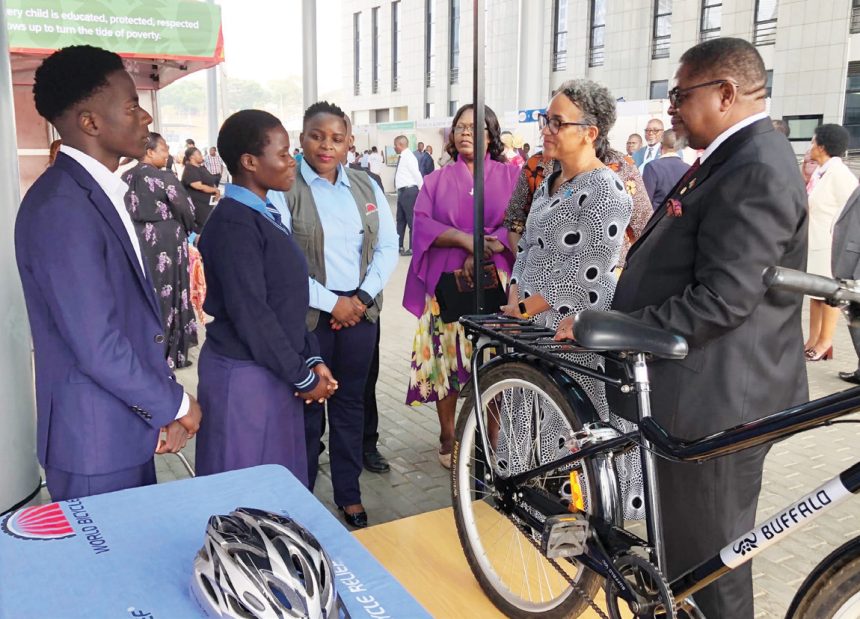
Speaking during the 2026 Education Joint Sector Review in Lilongwe City Tuesday, Campbell said Malawi had registered progress in primary and secondary school enrolment, gender parity and primary school completion.
- Advertisement -

She, however, said learning outcomes remained a major challenge.
- Advertisement -
“Every policy investment should face one question: Will this improve learning for children?” Campbell said.
Her concerns are reflected in the newly launched National Education Sector Investment Plan (Nesip) for 2026 to 2030, which shows that only 18.9 percent of 10-year-old children demonstrate reading proficiency, while 12.6 percent demonstrate mathematics proficiency.
The report further reveals that the survival rate from Standard 1 to Standard 8 stands at 45 percent, while the primary school repetition rate is estimated at 25 percent.
Despite these challenges, the country has made progress in expanding access to education, with primary school enrolment reaching 5.6 million learners and secondary school enrolment standing at approximately 600,000.
- Advertisement -
The Nesip also reveals significant inequalities in secondary education, with Malawi School Certificate of Education pass rates standing at 97 percent in national and boarding secondary schools compared to 54 percent in community day secondary schools.
Campbell said addressing these challenges required sustained investment in teachers, teaching and learning materials, school leadership and regular assessments.
She also urged the government to use education data to ensure that resources reach learners who need them most, particularly children with disabilities, girls at risk of dropping out and those living in underserved communities.
On his part, Education, Science and Technology Minister Bright Msaka acknowledged the challenges, saying the government was committed to improving foundational literacy and numeracy through the newly launched investment plan.
“Children who fall behind in literacy and numeracy in the early years often struggle throughout their education,” Msaka said.
He said the government would prioritise teacher recruitment, professional development, curricula improvements and the provision of appropriate teaching and learning materials.
Msaka disclosed that the recruitment of 1,100 secondary school teachers was nearly complete, adding that the government intended to recruit teachers at all levels annually.
Meanwhile, Civil Society Education Coalition Executive Director Benedicto Kondowe has said the country’s continued emphasis on school enrolment without adequate attention to learning has contributed to poor education outcomes.
“Access on its own doesn’t mean anything if it doesn’t contribute towards learning,” Kondowe said.
The newly launched Nesip, which will guide education sector investments between 2026 and 2030, prioritises access and equity, quality and relevance, and governance and management, with greater emphasis on improving actual learning outcomes.
