







DISTRIBUTION DATES—Moleni
By Mcloyd Chilangiza:
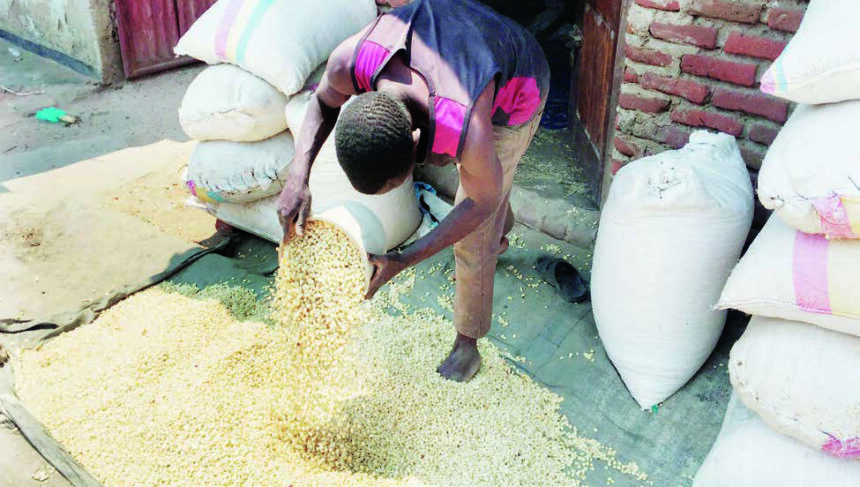
Malawians are facing rising food costs after maize prices increased by seven percent in October, raising concerns over food insecurity as the country enters the lean season.
According to the International Food Policy Research Institute (IFPRI) October 2026 Maize Market Report, maize prices increased to above the K900 per kilogramme (kg) farm-gate price across all monitored markets despite continued imports from neighbouring countries.
The report shows that a 50-kg bag of maize was selling at K58,850 in the Southern Region during the last week of October, compared with K51,050 in the Central Region and K43,200 in the Northern Region.
- Advertisement -

This means consumers in the south were paying K15,650 more for a bag of maize than their counterparts in the North.
- Advertisement -
At national level, the average price increased to K1,072 per kg from K1,001 in September, representing a seven percent increase.
However, the price was 14 per cent lower than the K1,240 recorded during the same period last year.
“The increase in domestic prices was partly contained by supplies of relatively cheaper imported maize, which continued to exert downward pressure on local prices,” the report reads.
However, The Daily Times’ November market snapshot has established that consumers are buying the staple grain at K65,000 per bag in Nsanje and Salima districts and at between K55,000 and K65,000 in Mzuzu and Lilongwe cities.
- Advertisement -
One consumer, Precious Kalimanjira, who recently bought maize at Msundwe Trading Centre in Lilongwe, said the price increases risked putting his family under economic and food security strain during the lean season.
He called for the timely distribution of relief food to poor households, as well as the opening of Agricultural Development and Marketing Corporation (Admarc) markets to stabilise prices across the country.
“The government must start distributing maize right now to stabilise prices; otherwise, the situation will affect our nutritional status in February, when hunger is more pronounced,” he said.
Lunzu-based Isaiah Mwachande said he bought a 50kg bag of maize at K70,000 last week.
“Surprisingly, policymakers keep on telling us that maize is not expensive. This is not true. The government should do something about the situation by ensuring that Agricultural Development and Marketing Corporation depots are open.
“When I visited Matindi Admarc Depot last week, I did not find anything,” said the Blantyre resident.
In Chikwawa District, 46-year-old Ruth Samuel said people are now depending on sorghum flour.
“We are not bothered by the price of maize because some of us are using sorghum flour. We cultivate the sorghum ourselves, such that rising prices of maize are not affecting us,” she said.
Meanwhile, the Famine Early Warning Systems Network (FEWS NET) has warned that poor households face worsening food insecurity due to declining incomes, poor agricultural earnings, reduced tobacco revenues and limited employment opportunities.
The situation is also unfolding at a time when the World Food Programme has downscaled its planned lean-season humanitarian assistance by 33.3 percent, from 600,000 to 400,000 beneficiaries, targeting only three districts in the Southern Region due to funding constraints.

Centre for Humanitarian Assistance and Social Protection Executive Director Kenneth Sakala said regional price disparities were putting pressure on both consumers and farmers.
Sakala called on the government to expedite relief food distribution through the Department of Disaster Management Affairs (Dodma).
“We are entering the lean period, with maize prices already unaffordable for many households, yet relief has not reached them. In the South, consumers are struggling. In the North, farmers are selling below the farm-gate price and losing money.
“If we do not act now, farmers will plant less next season and the food crisis will be worse next year,” Sakala said.
Recently, Dodma Commissioner Wilson Moleni said the commission would start distributing maize under the 2026-27 Lean Season Food Insecurity Response in November 2026.
The Malawi Vulnerability Assessment Committee (MVAC) has projected that 2.6 million people will face acute food insecurity during the 2026- 27 lean season.
MVAC estimates that supporting the affected population for three to four months will require 97,887 metric tonnes of maize, valued at K124.3 billion.
In another development, maize which some people planted in the Southern Region in October this year has started wilting.
Village Headman Aliviyele, under Traditional Authority Mbiza in Zomba District, told The Daily Times that he planted early in October because he plants with the first rains every year.
“Last year, I planted in October. Of course, it was sunny but my crops survived the moment the rains came. This time around, things are different,” Aliviyele said.
