The phone vibrates before sunrise. A message flashes across the screen: “I am about to do something bad. I need help.”
For Chimwemwe Shaba, this is not unusual. There are no sirens, no courtroom, no police report. Just a message sent in a moment that could decide a life. Within minutes, he responds—not as a lawyer or a judge, but as something far less visible and perhaps more powerful: a last line of prevention.
In Malawi, the justice system is stretched thin. Prisons are overcrowded, court cases drag, and legal aid is limited. For many, justice comes late—if it comes at all. By the time most people encounter the system, the damage is already done.
But in Dedza District, a quiet experiment is challenging that reality. It asks a simple but powerful question: what if justice could begin before the crime?
At first glance, Shaba looks like any other influencer—charismatic, conversational, always online. But his message is simple and direct: anyone can become a prisoner. It is not a slogan. It is a warning.
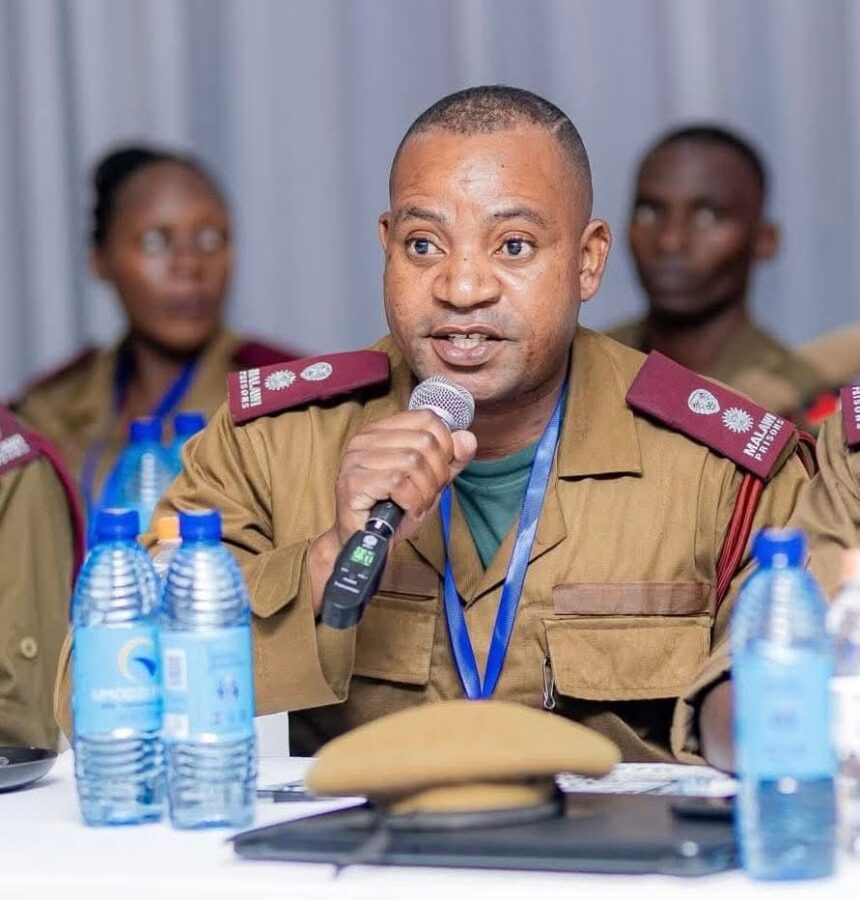
Working alongside officers from Dedza Medium Security Prison, Shaba has turned social media into an unlikely tool of crime prevention. He intervenes in lives before they unravel. While the justice system reacts, he anticipates. While courts process cases, he works to prevent them. And increasingly, people are listening.
Inside Dedza Prison, officers are also changing how they work. They are no longer waiting behind prison walls. They are moving into communities, engaging with people before problems escalate. Through outreach programs, more than 200 traditional leaders are now involved in discussions around crime prevention, mediation, and reconciliation.
At the center of this effort is jailer Grace Nyoni. Recently promoted, she has committed not only her time but sometimes her own resources to bring offenders and victims together—often before conflicts turn into criminal cases. Her work has earned national recognition, including a Presidential Meritorious Award.

Yet the real impact of this work is not always visible. It lies in conflicts resolved quietly, cases that never reach court, and lives that never enter prison.
Across much of the world, prisons are designed to punish, with rehabilitation often taking a secondary role. In Malawi, the situation is even more challenging, with overcrowding, limited resources, and high rates of reoffending putting pressure on the system.
Dedza is trying something different. The prison has invested in what it describes as total transformation, focusing not only on punishment but also on changing lives. Inmates receive spiritual guidance and counseling, alongside programs such as the Prisoner’s Journey and theological training with institutions like Veritas College.
But the deeper change is in how justice is approached. Through restorative justice and peacebuilding programs, offenders, victims, families, and community leaders are brought together—often before release. Offenders undergo training in conflict resolution, trauma awareness, and non-violence before any mediation takes place. Only when genuine remorse is shown does the process move forward.
The goal is not punishment. It is repaired.
The prison has also introduced community conferences, taking conversations about justice directly to the public. Chiefs, religious leaders, and families are included, and the prison follows up on former inmates to support their reintegration. It is an approach that promotes openness in a system often associated with secrecy.
This is also part of a broader strategy. Preventing crime, officials say, is just as important as rehabilitating offenders.
The results are beginning to show. Some inmates are enrolling in education programs, with a few earning places at public universities. Others are learning agricultural skills, raising seedlings such as pawpaw, orange, and gliricidia with support from local partners. The aim is to ensure that when they leave prison, they do not return.
The impact of this approach can last long after incarceration. One former inmate, now living in South Africa, recently donated one million kwacha to the prison. He asked to remain anonymous but shared a simple message: he was treated not as a prisoner but as a human being, and that changed his life.
Despite these successes, challenges remain. Access to justice in Malawi is still uneven. Legal aid is limited, case backlogs persist, and poverty continues to push some people toward crime. Critics question whether such initiatives can be expanded nationwide without broader reforms.
There are no easy answers. Questions remain about whether this model can work on a larger scale and how to measure crimes that never happen.
But something is shifting. Justice is no longer seen only as something that happens in courtrooms. It is beginning to take shape in conversations, in communities, and even on mobile phones.
Shaba may not pass laws or deliver verdicts, but through every message he responds to, he is influencing decisions at critical moments. In a country where one mistake can change a life forever, that influence matters.
Because sometimes, the most effective justice system is not the one that punishes crime. It is the one that prevents it.
Back on his phone, another message comes through. Another moment. Another decision waiting to be made.
Shaba types a response. Somewhere, a choice shifts. There are no headlines, no arrests—just a life quietly redirected.
And in that moment, justice is served.