





Small, family-run tobacco farms line the sides of a tarmac road stretching from Phalombe Town Centre through the pastoral villages of the border district.
Four months after the tobacco selling season opened on April 16 and just over two weeks after it closed on August 2, stalks remain in many of the cracked and parched fields.
A few farmers have removed them.
“After harvesting, the real work begins. We immediately start preparing the fields for the next cycle,” farmer Weston Majiya, from Nyezelera Village in Phalombe, says.
A dusty path splits the village, flanked by barren fields—some stripped bare, others still dotted with tobacco stalks.
- Advertisement -
Majiya, who collected eight bales of tobacco and earned K10 million, has cleared his plots in readiness for the next growing season.
He says the better prices offered at the auction floors this year have given him the confidence to continue with tobacco, which remains Malawi’s largest single foreign exchange earner.
“I follow all the advice regarding tobacco production and uprooted the stalks early to avoid transferring pests and diseases to the next growing season,” Majiya, 43, explains.
He briefly walks into a neighbour’s field, kicking up clouds of dust as he attempts to uproot some tobacco stalks.
- Advertisement -
- Advertisement -
They are firmly stuck in the loamy soil, which has lost its moisture due to prolonged days of scorching heat.
Wiping his beaded face with the back of his hand, Majiya reiterates his dedication to the crop, which he believes would have yielded more money this year if not for the dry spell that affected his area.
He claims the harvest would have doubled had the weather conditions been more favourable.
El Niño-induced warmer weather conditions scorched thousands of crop fields in the Southern Region in March this year, leaving farmers desperate for relief.
“Apart from chemical fertiliser, I applied manure to the tobacco, which is why I managed to produce up to eight bales. In normal weather conditions, I would have harvested up to 16 bales,” Majiya asserts.
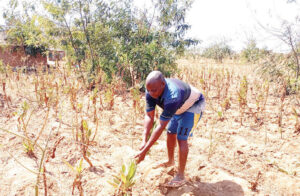
About the length of a football pitch away, his fellow farmer Thomson Chiwaya is making slow progress in preparing for the coming growing season.
Although he admits to having made a good profit from his tobacco production this year, he has cleared only part of his field while the rest still has stalks stuck in the dry ridges.
“I will soon uproot them,” he says sheepishly, his heavy hands dangling by his sides.
Chiwaya acknowledges that his partial negligence is due to laziness and a lackadaisical approach to what he insists are crucial tasks.
Agricultural extension services, once sparse in his area, have returned in recent years, providing guidance on how to efficiently prepare for the next growing season.
Chiwaya is aware that, according to the Tobacco Industry Act, wilful failure to uproot tobacco plants and stalks after a specific period is a crime.
“I know I am not supposed to leave the stalks in the field until the next season. That is why I pledge to remove them as soon as possible,” he says, deftly uprooting old stalks from last season’s crop.
Some stalks have fresh green twigs and risk reviving if a few drops of rain fall.
Others still have flowers maturing into seeds, which Telephorus Chigwenembe, spokesperson for the Tobacco Commission (TC), fears farmers might replant.
Chigwenembe acknowledges that despite the law prohibiting the use of uncertified seed and seed from previous production, some farmers in remote locations ignore the law.
The Seed Act stipulates that using unapproved seed for growing tobacco is illegal.
“That is why we insist that they should uproot and destroy the stalks so that everything about and on them ends there,” he says.
The TC spokesperson rates farmers’ adherence to the requirement of not keeping stalks in their fields as mixed.
He notes that while there are tobacco fields across the country devoid of stalks as farmers prepare for the next season, some are slow to remove them, which increases the risk of pests and diseases being carried over from one season to the next.
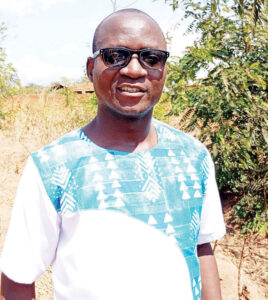
Chigwenembe warns that the appeal of Malawi’s tobacco on the international market could diminish if it absorbed too many chemicals and lost its flavour.
“Our tobacco, grown in very conducive soil, is the best out there and we don’t want that rating to be destroyed,” he says.
TC has been using a public address system to raise awareness about the benefits of uprooting tobacco stalks and plants, ensuring no farmer is left uninformed.
Majiya and Chiwaya say the messages have resonated with them and that they will also remind their neighbours about proper agronomic practices.
They understand that their fields, now hard and desiccated, and facing uncertainties due to climate change, still hold the promise of their families’ self-sustainability.
“I have been growing tobacco since 2002 and it has been a challenging journey. However, the prices offered this year give me confidence that the crop remains valuable,” Chiwaya says, gazing at the empty field behind his house.
In his cleared field, Majiya imagines a few days from now when the area will be filled with the clang of hoes and the chatter of farmers exchanging tips and advice.
“Well, essentially, every farmer knows what to do. It is just that some do the right thing very late and we discourage each other on that,” he says.
With his fortunes now closely tied to the whims of the weather, the tobacco farmer diligently prepares manure to retain moisture for longer periods and protect crops during dry spells.
He aims to triple production as Malawi seeks to raise its annual tobacco output to 200 million kilogrammes (kg) by 2028, up from the 132.8 million kg produced in the recently ended season.