By Mcloyd Chilangiza:
The African Development Bank (AfDB) has warned that Malawi’s heavy dependence on agriculture, high unemployment, widespread informality and limited economic opportunities are constraining inclusive growth.
The warning is contained in the bank’s ‘Bridging the Gap: Inequality and the Imperative for Inclusive Growth in Africa’ report.
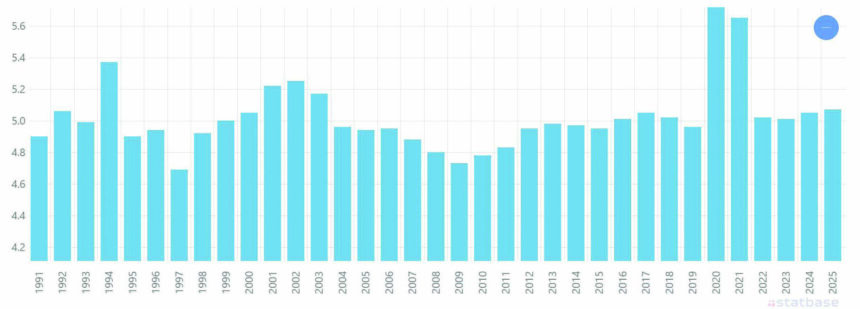
It says Malawi’s gini coefficient— a measure of income or consumption inequality—stood at 0.39 in 2023 compared with an African median of 38.5.
The gini coefficient measures the distribution of income, with zero representing perfect equality and higher values indicating greater inequality.
- Advertisement -
AfDB attributes the situation to limited economic diversification, unequal access to human capital, labour-market informality, limited access to finance and rural-urban disparities.
According to the report, about 51.5 percent of Malawi’s population lived below the national poverty line in 2018, while broadly defined unemployment stands at 20 percent and youth unemployment is estimated at between 23 and 26 percent.
The bank says inflation stood at 28.5 percent in 2025, while public debt was about 91 percent of gross domestic product, constraining inclusive growth.
“To significantly address [the problem of] poverty, Malawi needs to raise growth levels, ensure inclusive development, and reduce vulnerability to climate shocks through climate-smart agricultural practices,” the report reads.
- Advertisement -
- Advertisement -
The report says the richest 10 percent of people across African countries receive between 37.9 percent and 67 percent of total income while the poorest 50 percent receive between 5.3 percent and 18.2 percent.
It recommends accelerating economic diversification and structural transformation, expanding access to quality education and strengthening access to finance and social protection, particularly for small businesses, informal workers and vulnerable households.
Economist Marvin Banda said the figure pointed to a significant distributional challenge and urged the country to move people from low-productivity agriculture, informal businesses and precarious employment into more productive activities.
Banda said the country also needed to expand irrigation, agricultural commercialisation, agro-processing, access to markets and finance while diversifying into manufacturing, mining, tourism, logistics, information communication technology and other productive services.
“The gini measures the distribution of income or consumption. It tells us how evenly the economic pie is shared, but not how big that pie is,” Banda said.
Meanwhile, the government, through the Ministry of Gender, Disability and Social Welfare, is implementing expanded social protection policies, financial empowerment funds and inclusive education reforms aligned with the Malawi 2063 vision to address inequality.
The Danish Trade Union Development Agency’s 2026 Labour Market Profile recently flagged that informal employment had increased from 85 percent in 2013 to 93 percent, raising concerns about job quality and the country’s tax base.
The World Bank has also flagged pressure on Malawi’s labour market, with more than 270,000 job seekers entering the market annually against about 40000 formal jobs created by the government.