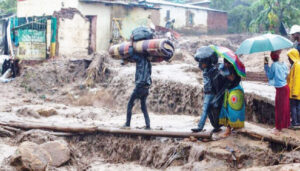
 The rainy season is here! Rain is the primary source of water. It helps maintain the water cycle. Rains are vital for agriculture; more so in a rain-fed system of agriculture. While rains are vital, rainy seasons also come about with challenges, danger and destruction. It is not uncommon to experience floods, land and mudslides and various other hazards, which calls for action at various levels, be it at individual, family or community, among other levels.
This entry presents random tips as a contribution to reducing the damaging impacts associated with rains and the rainy season in an effort to protect our loved ones, family members, community members, property and assets.
Avoid crossing flooding rivers as they could be death traps. Attempting to cross in fast-moving water bodies can be a dangerous and life threatening undertaking. School-going children should be specifically empowered with information to make right decisions in such scenarios, a duty which both parents and teachers should prioritise.
Be on the lookout for leaning trees. Trees provide scenic beauty and shade in our surroundings. However, some leaning trees can also cause injury, loss of life and damage to property. Roots keep the tree trunk tethered to the ground and balance the branches. The more a tree leans, the more it pulls up the roots and compromises its support structure. Heavy rains soften the soil and cause the roots to lose their grip, making a tree more susceptible to further leaning and falling over completely.
Falling poles carrying power lines are not uncommon during the rainy season. The rule is to treat the power lines as live, hence do not touch the power lines; rather, report to appropriate authorities, Electricity Supply Corporation of Malawi. Children must be made aware of the dangers of such fallen power lines to avoid accidents.
- Advertisement -
Prevent flooding in residential or business premises due to limited, blocked or absence of drainage systems by having a functional drainage system. Carry out thorough inspection of the entire drainage system, remove any trash that may block the drainage system and address all defects that may be detected, including in the connecting storm drains. Sometimes, networking with neighbours to address the drainage system beyond one’s property may be helpful.
Reports of roofs being blown down are common in the rainy season. Sometimes the entire structure crumbles due to heavy downpours. Examine structures and carry out maintenance works to enhance the strength of the structure, including the roofing, to withstand strong winds and heavy downpour. Let’s face it; sometimes, the nature and state of structures that always have their roofs blown down or, indeed, the entire structure brought down due to rains leave a lot to be desired.
Heavy downpour and cyclones can trigger landslides and mudslides. A landslide is a mass movement of material, such as rock, earth or debris, down a slope. They can happen suddenly or more slowly over long periods of time. Landslides may lead to death, injury as well as loss of property and assets. Reflect on our choices of places of settlement. Do you feel safe where you settled? If not, it is high time you took precautionary measures such as relocation, among others.
Lightning is a common occurrence during the rainy season. We need to know how to keep safe in the event of lightning, strong and gusty winds. Properly orient those of school-going age on how to keep safe in the event of such hazards. This includes staying indoors to avoid flying objects. Avoid seeking shelter under tall trees as these are not safe during lightning.
- Advertisement -
- Advertisement -
When a house is flooded, make sure to switch off power and unplug all electric appliances during the heavy downpour to avoid electric shock. Avoid touching electric equipment with wet hands.
Avoid constructing residential houses in flood-prone areas. Relocate to safer places. There is a tendency to always look up to government and other players such as NGOs and international organisations for support. However, there are decisions one can make to save lives and property; for instance, deciding to evacuate or relocate when it is still safe to do so is much wiser than waiting.
In conclusion, always check and take heed of warning alerts from appropriate authorities such as the Department of Climate Change and Meteorological Services (DCCMS) and Department of Disaster Management Affairs (Dodma). Based on these alerts, take precautionary measures, be it at individual, community, district or, indeed, national level. For instance, as we publish this entry, the DCCMS and the Department of Water Resources have issued an alert of possible flooding in some areas in the country. It is wiser to take action now, when it is safe to do so. Further, DCCMS and Dodma have social media platforms that are regularly updated. Visit their pages for updates and stay safe in the rainy season.