




By Pemphero Malimba:
Thirty-eight-year-old Patuma Tambala of Mvula 3 Village, Traditional Authority (TA) Mphonde, in Nkhotakota District is yet to accept the reality that she lost all her property to floods, which hit the Central Region district late last month.
Worse still, every time she wakes up, which is often at 5am, she fails to stomach the reality that she is a displaced person; one who is now at the mercy of the government and well-wishers.
“I could not imagine, ever, that one day I would be one of the survivors of natural disaster,” says the mother of 11.
- Advertisement -

“As such, sleeping at a camp full of displaced people is a new experience to me,” Tambala adds.
- Advertisement -
The woman and nine children are among the 600-plus floods survivors who are seeking refuge at the camp following the tragedy that happened late last month.
Lucky enough, Tambala and her family survived raging floods.
Six others were not so lucky.
- Advertisement -
“At the time of the incident, I was away from home and got the news I dreaded, to the effect that we had lost all property, from my husband, who called me on the phone,” she says.
“Two of my children are now living with their grandparents on the other side of our area while the other nine children, husband and I are staying here at the camp,” she said.
Life has never been the same since then, as living conditions are far from the life she experienced in the 38 years she has been on the earth.
“Here, we are eating in groups and I rarely have enough time to be with my family,” she said.
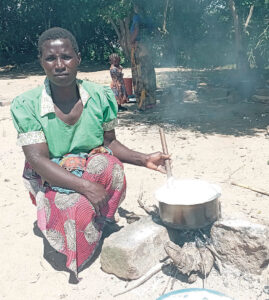
Every lunch hour, Tambala prepares nsima for her children, fellow women and some traditional leaders.
“Sometimes we eat porridge in the morning and nsima at lunchtime. Later, we try as much as possible to look for other foods. This is because maize flour is not always sufficient at this camp,” she said.
Now her biggest worry is how her family will rebuild from the tragedy.
“We lost everything to the floods and, now, we will have to start from scratch to go back to our normal lives, something that will not be easy to achieve as we rely on farming for our economic sustainability.
“Problem is, our crops have been affected by the floods, too. We have nowhere to go,” she lamented.
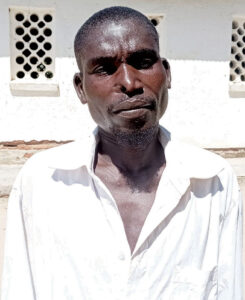
Forty-nine-year-old Issah Khosa, one of the survivors at the camp, echoes the concerns.
Khosa, a father of six, feels that it will not be easy for his family to go back to its feet due to the loss suffered during the tragedy.
“We are in trouble.
“However, my family is ready to relocate if the government can provide us with land for constructing houses and cultivation,” he said.
Khosa is only hoping for quick interventions from the government as living standards at the camp are not conducive to human habitation.
“We only have four tents at the camp,” he said.
However, Lunga camp chairperson Luka Mtata has a different view on relocation plans.
“After the incident, we discussed the issue of relocation but it was also revealed that some people will lose land for cultivation if they completely relocate to a new place. We feel that we need to continue our discussions till the end of the current rainfall season so that a constructive step can be taken,” he said.
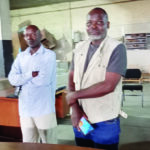
To Nkhotakota North Constituency Member of Parliament Henry Chimunthu Banda, whose constituents have been affected by the tragedy in TA Kanyenda, proper registration of the affected households is the way to go.
He says this is key to the rebuilding process.
“Most of the affected people have not been properly recorded and that is making life difficult for people that opt to move out of camps to start a new life,” Chimunthu Banda says.
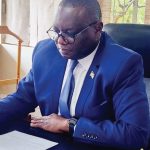
Meanwhile, Health Minister Khumbize Kandodo Chiponda has expressed optimism that affected households will be supported by the government to withstand the pressure brought up by the incident.
“Through the Department of Disaster Management Affairs, we are working on recovery processes because it is important for people to go back to their normal lives,” she said after touring some camps in the district in the company of government, World Health Organisation and other officials.
Last year, Malawi lost about $500 million to the devastating effects of Tropical Cyclone Freddy.
The government, through President Lazarus Chakwera, has indicated that the country is in need of $700 million to rebuild following the tragedy that left more than 1,000 people dead.