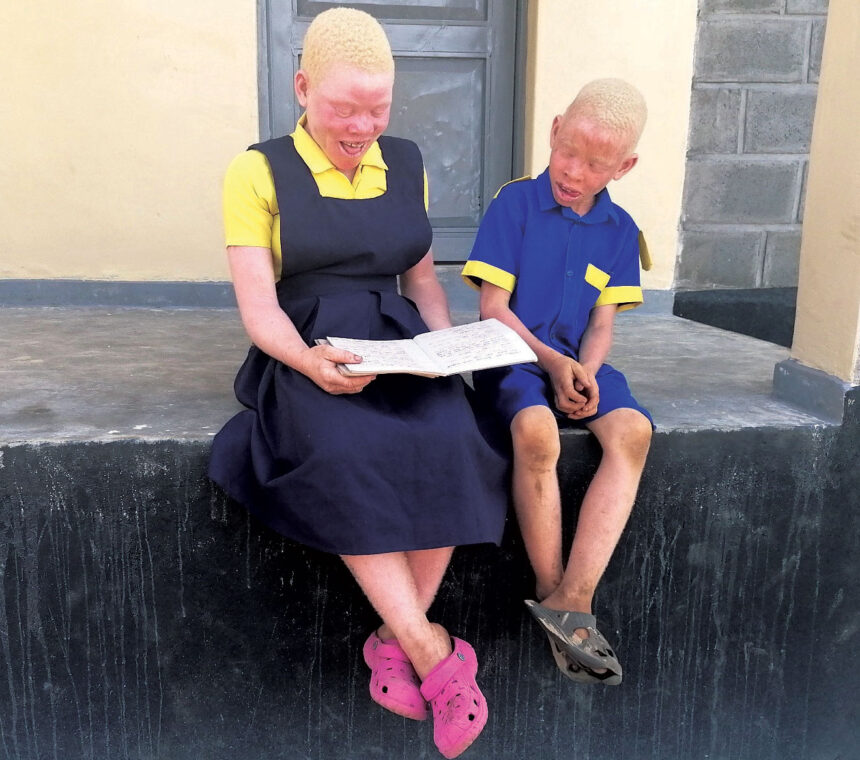
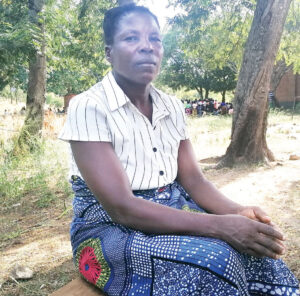
In Chitani Village in Chikwawa District, a single mother’s journey of resilience and hope casts the spotlight on the impact of a government initiative to construct safe houses for persons with albinism.
Fagesi John Masaza’s life took a tragic turn in 2016 while in search of greener pastures in Mozambique, her maternal home.
Her husband had suddenly died three months earlier, leaving her to take care of their six children, five of whom were born with albinism.
“While in Mozambique, thugs attacked my family and killed my nine-year-old son,” Masaza narrates amidst sobs.
She recalls that the assailants had initially captured three of her children before neighbours managed to rescue two of them after shouts for help.
- Advertisement -
“They had already hacked the other one to death,” Masaza adds.
The experience shattered the sense of security for her family.
“When Group Village Head Chitani heard the news, he followed us to Mozambique and took us back to our home village in Malawi for safety,” she says.
Despite relocating, the shadows of danger lingered, until hope emerged in the form of the housing project whose aim is to construct secure homes for persons with albinism.
- Advertisement -
- Advertisement -
Chitani says the house that the family was living in was not safe.
“I asked some men from my village to help me take turns guarding the house during the night. So the news that government would build them a house was a relief not just to the family, but everyone who was concerned about their safety,” the local leader says.
Masaza and her children have stepped into their new home with relief, gratitude and renewed optimism.
The children now have hope of excelling academically.
“I now feel safe and motivated to work hard in school towards my dream of becoming a nurse,” 15-year-old Faless says.
The housing project was launched in 2020, following concerns about the welfare of vulnerable groups such as persons with albinism.
Local councils have the responsibility of supervising the implementation process and ensuring that quality is not compromised.
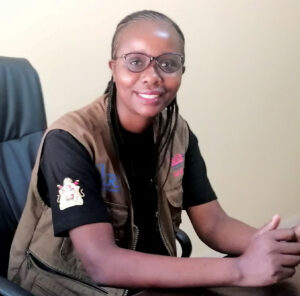
Ministry of Lands, Housing and Urban Development District Housing Officer for Chikwawa, Thandiwe Ngalande, says the primary focus is to ensure that every house constructed under the project meets the highest standards of safety and security for persons with albinism.
The Ministry of Gender, in partnership with the Association of Persons with Albinism in Malawi (Apam), identifies families in dire need of housing support.
“Our goal is not just to build houses but to create sustainable living environments that promote the wellbeing and dignity of persons with albinism.
“Malawi has seen an alarming increase in abuses against persons with albinism, including abductions, killings and grave robberies,” Ngalande says.
Apam National Coordinator Maynard Zacharia describes the housing project as a life-changing initiative for persons with albinism in Malawi.
Zacharia appeals for faster implementation to ensure more people benefit from the project.
Malawi Human Rights Resource Centre Programmes Officer Enock Chinkhuntha says one of the most critical aspects in promoting and protecting the rights of persons with albinism is safety and security.
“Most of the attacks that have occurred to persons with albinism are due to insecure houses as the majority of them live in abject poverty, and it is impossible for them to construct secure houses on their own,” Chinkhuntha says.
He further calls on government and partners to invest more resources in the housing project to address the “slow speed” at which it is progressing.
Chikwawa District is among selected councils that are constructing additional houses under the initiative.
Ngalande, who is also responsible for managing the housing projects in the district, says they are working closely with relevant stakeholders to streamline the implementation process and address any challenges that may arise.
“We welcome feedback and suggestions from the community and stakeholders to improve the project’s impact and ensure it aligns with the needs of the beneficiaries,” she says.
Since 2021, the average cost of houses has increased from K12.9 million to K27.2 million in 2022-23 and K30.9 million in 2023-24.—Mana