At 62, Jackson Julius insists the extent of problems besieging his family is beyond his age.
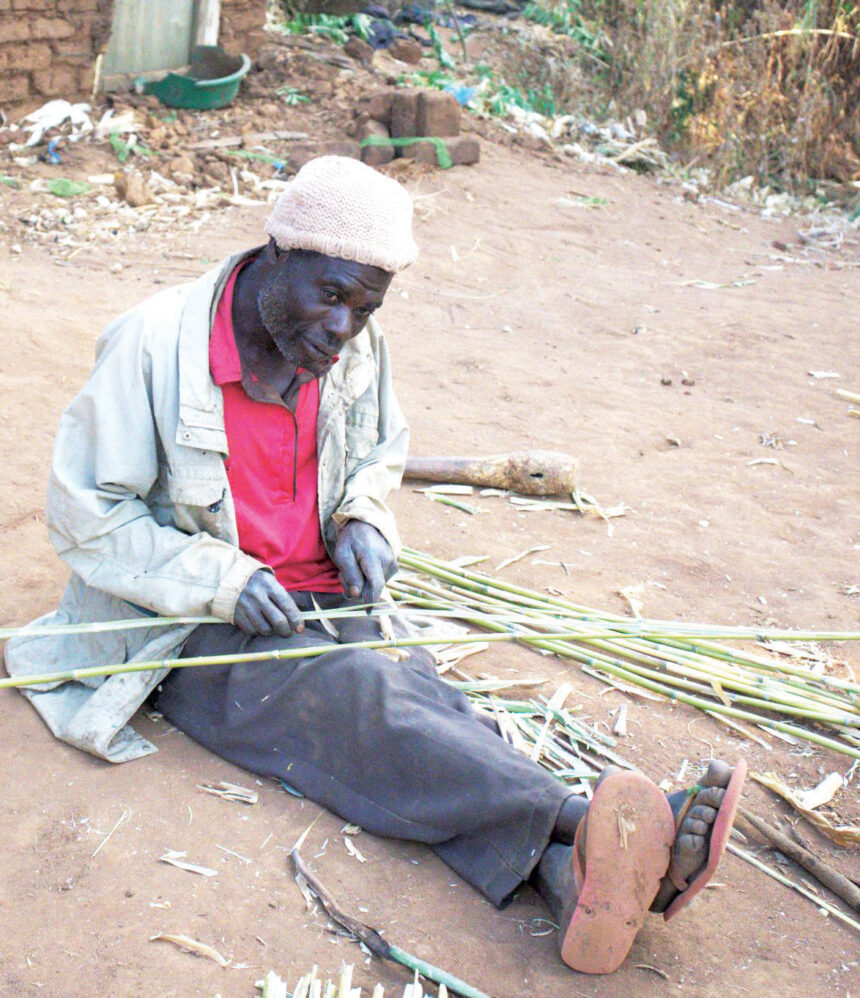
Sitting on bare and dusty ground in front of his small mud house, he casually breaks fresh reed into small strips to dry for weaving a supple mat.
“My poverty is beyond what should be considered normal,” he says with a straight face, avoiding the glare of his wife sitting on a relatively elevated windblown veranda.
She relieves her head from the clasp of her rough palms as if to instantly disagree with Julius’ assertion, but decides against the interjection.
In a later interview, the man whom we find at his home in Chulu I Village, Traditional Authority (TA) Kalumo in Ntchisi District, is reluctant to admit he is mostly an absent father.
- Advertisement -
“Well, my wife has told you that I am mostly away from home, but it is because I go to search for money for caring for my family,” he says, a sarcastic smile registering on his face.
He contends that he has the energy to work in his gardens but gives up the idea of going the extra mile because farming is futile without necessary inputs.
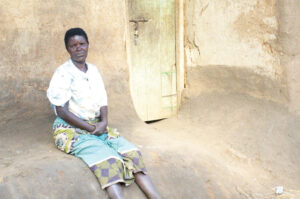
When her turn to explain why she has allowed their son to be tending cattle of a wealthy man by village standards, Julius’ wife Dorothy Mtsitsi says it is all because of poverty.
Mtsitsi, 55, has 10 children of her own, four of them from her second marriage, with Julius.
- Advertisement -
- Advertisement -
“I stay alone; literally alone. This man you are seeing here is rarely home. When time for farming comes, he abandons his family and goes about drinking alcohol from one place to another.
“He sometimes goes as far as Kasungu, claiming he is searching for piecework. We have never seen the money from the piecework,” Mtsitsi narrates, a distant look appearing in her eyes.
She absently runs her cracked fingers through her dishevelled hair while staring at her husband vacantly.
There starkly is a silent tension in the family, which is among several others in Ntchisi, a district best known for expansive crop fields, which are grappling with instances of children being forced into doing work beyond their ages and statures.
Across Malawi, 2.12 million children, aged between five and 17 years, representing 38 percent, are said to be in child labour, with the majority of them in the agriculture sector.
Some 1.16 million children, or 20.9 percent, are involved in hazardous work, according to the International Labour Organisation.
In Ntchisi, just as the case is in many other districts where the majority of families are involved in agriculture as the main socioeconomic activity, issues of child labour come out very prominently.
“There are many incidences of school dropout among children because most of them opt to work in farms or are forced to do that by their parents due to poverty,” Ntchisi District Labour Officer Brian Mayenje says.
Mayenje adds that during the Covid-19 pandemic, which peaked in Malawi in 2021, and resulted in the indefinite closure of schools, many girls in the Central Region district fell pregnant.
He believes both government and non-State actors’ interventions have the potential to rewrite Ntchisi District’s child labour troubled story.
“Already, in terms of social cash transfer programmes, we are engaging in re-targeting in terms of beneficiaries so that poor families are enlisted,” Mayenje says.
He adds that interventions by organisations such as Save the Children and its partners are already getting some children out of work which is beyond their ages.
He cites the Joining Forces for Africa: Acting to End Child Labour (Jofa Acte) activity as one of those that are pushing for communities where every child has the right not to engage in work which should be done by adults.
“The Jofa project, which is being implemented in TAs Vuso Jere and Kalumo in Ntchisi, has revamped local structures such as the child protection committees and mother groups, which are crucial in ensuring children’s rights are protected and they return to or remain in school,” Mayenje says.

Jofa Acte Project Manager Janet Nkhoma Chagoma says the project seeks to contribute to the reduction of the worst forms of child labour in Malawi, Burkina Faso, Mali and Madagascar, where it is being implemented.
In Ntchisi, the European Commission-funded activity, which commenced on January 1, 2023 and winds up on December 31 2025, is targeting children such as Julius’ son who are out of school because they have to fend for their families.
An alliance of Save the Children, Plan International, World Vision Malawi and SOS Children’s Villages, is implementing the project in Malawi.
While Save the Children is targeting Ntchisi, Plan International is working in Lilongwe’s TAs Njewa and Chimutu.
“So far, the project has conducted mapping and capacity assessment of frontline workers and community structures concerned with child protection,” Chagoma says.
She adds that to ensure the sustainability of their interventions beyond the project’s timeframe, they are using existing structures such as child protection committees and child labour committees so that they can carry on where Jofa will leave.
Julius believes interventions such as these, which also push for the economic empowerment of households with children involved in child labour or at risk of falling into the trap, will get his son back to school.
“Well, he dropped out in Standard 2 a few months ago. He is 12 years old, but I still believe he can return to school,” he says as he bundles the strips of reeds together.
His wife, who maintains her husband can do better in terms of taking care of his family, also agrees that their son has a chance of getting educated and vows she will ensure that it happens.