By Deogratias Mmana, Cathy Maulidi & Benadetta Chiwanda Mia:
The fuel crisis has terrorised every sector, including the diplomatic community whose vehicles join gas queues, thereby compromising operations at embassies, The Daily Times can reveal.
The United States of America (USA) has since asked the government to increase fuel prices as one measure of addressing the crisis.
The US embassy has admitted that its operations have been compromised.
“We have seen the impact of fuel shortages, including on employees of the US Mission to Malawi. We have taken steps to limit fuel consumption to ensure mission operations continue uninterrupted and have offered employees paid administrative leave time to procure fuel for their own vehicles,” US Public Affairs Officer Grant Phillipp told The Daily Times.
- Advertisement -
Phillipp said the US government already gave a tip to the Malawi Government on what to do to manage the crisis.
“We have encouraged the Government of Malawi to raise the price of fuel to adequately cover the cost of importation and regain sustainability in the supply chain,” he said.
On his part, European Union Ambassador to Malawi Rune Skinnebach said staff members at embassies were struggling with transportation to get to work.
He said careful arrangements are being made among members of the diplomatic community so that operations are not hugely compromised.
- Advertisement -
- Advertisement -
Skinnebach said the fuel crisis had affected many people in Malawi in many ways which include transportation to work, transport price hike, high fuel prices at the black market and others.
“It is a real challenge for all Malawians,” Skinnebach said.
The ambassador suggested three solutions to the problem. They include increasing fuel prices, forex generation and improving transportation modes in Malawi.
“Malawi needs to trade less and produce more and export it. The other way of dealing with this is to look at the transportation modes in Malawi. I know many people do not have access to cars and they take public transport. You need to introduce more economic use of resources you have,” Skinnebach said.
“I come from a small country in Europe where everybody is using their bikes. When I live in Brussels, I take my bike to the office every morning. And it makes me exercise,” Skinnebach said.
On the issue of fuel prices hike, he said: “The third and painful means of responding to this is to increase the fuel prices and increase taxes on cars so that there are less cars in the country. These are painful measures but they are measures that are unavoidable if we want to keep the fuel flowing.”
A diplomat from another embassy said the generation of forex, applying austerity measures and increasing fuel prices could be some of the solutions to the crisis.
“When drivers go to search for fuel, some programmes are suspended or halted. Our ambassador failed to conduct some events,” the diplomat said.

Mera Chief Executive Officer Henry Kachaje recently admitted that the country’s fuel prices were too low which, he said, affects Mera’s operations.
Both the Parliamentary Committee on Natural Resources and Climate Change and Consumers Association of Malawi have, at one point or another, asked the government to increase fuel prices but that request has not been considered as of now.
Asked why Mera is not increasing the fuel prices, its spokesperson Fitina Khonje said yesterday that it was the mandate of the Mera Board to review the prices.
“And when the board is ready, it will inform the public,” Khonje said.
Sources said a recommendation was made to increase the fuel prices but the authorities have not yet given it approval.
Commenting on how the embassies had been affected, Khonje said the diplomatic community was at liberty to make agreements with oil marketing companies and get oil directly for their use.
Khonje said such a provision is attainable after fulfilling the requirements that include having acceptable storage facilities, among others.
“We accept, we have [a] fuel challenge,” Khonje said.
Dean of the diplomatic community, Zimbabwe’s High Commissioner to Malawi Nancy Saungweme, said she was in Zimbabwe and referred us to her deputy, who asked us to wait until the High Commissioner would be at the office to give a comment.
“I am still in Harare but my deputy will get in touch with you on the fuel situation in Malawi,” Saungweme said.
On his part, Church and Society of Blantyre Synod of the Church of Central Africa Presbyterian Executive Director Reverend Master Jumbe said it was embarrassing that the government was failing to normalise fuel supply to the extent of pushing diplomats to queue for the gas.
“Malawi’s image has been soiled. It is unfortunate that it is now over a month living with the crisis but without a solution. And looking forward, we do not have any hope as those in authority also seem clueless,” Jumbe said.
Taking his turn, People’s Development Party president Kondwani Nankhumwa faulted the government for failing to handle the fuel supply situation.
At a press conference held in Lilongwe Tuesday, Nankhumwa described the current fuel shortage as the “worst in Malawi’s history”, with prices rocketing to K10,000 per litre on the black market.
He further accused President Lazarus Chakwera of being “unconcerned” and “busy travelling” while the nation suffers.
“This prolonged fuel shortage is affecting people’s lives and economic activities. Transport costs and prices of basic commodities have increased dramatically. This crisis has also adversely affected the health sector as ambulances do not have fuel, leading to deaths that could have been avoided.
“What is most troubling is that President Lazarus Chakwera appears to be unconcerned. He is busy travelling around and making political speeches as though everything is normal. But the situation in Malawi is very far from normal,” Nankhumwa said.
Nankhumwa said he would be joining anti-fuel shortage demonstrations that have been organised by Centre for Democracy and Economic Development Initiatives on Thursday.
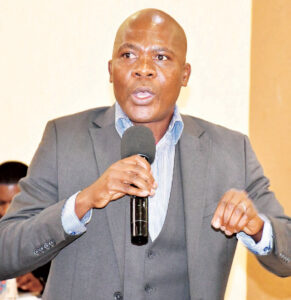
The organisation, through its executive director Sylvester Namiwa, has penned the Lilongwe District Commissioner Lawford Palani, notifying him about the demonstrations.
Human Rights Defenders Coalition (HRDC) has joined calls for the government to address the problem.
HRDC Chairperson Gift Trapence said, in a statement, that the Ministry of Energy paid no attention to the issue for weeks when the problem was festering.
“The situation is getting worse,” Trapence said.
The fuel crisis has affected operations of many organisations, including the ongoing voter registration exercise by the Malawi Electoral Commission, which had to seek special consideration from Mera.
The Central Medical Stores Trust also lamented that the delivery of drugs to health facilities was compromised because of the fuel crisis.
Its spokesperson Herbert Chandilanga said the trust had asked Mera for special treatment so that drugs could be delivered to healthcare service facilities to save lives.
Medical Doctors Union of Malawi asked the government to find permanent ways of addressing the problem, adding that some doctors were not prescribing the most needed drugs to patients because most facilities had run out of stock.
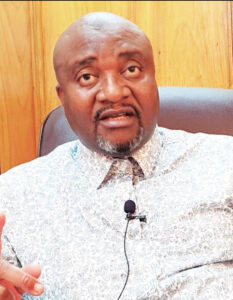
Meanwhile, Energy Minister Ibrahim Matola has announced that the government has secured foreign exchange facilities to enable immediate fuel procurement.
In a statement issued Tuesday, Matola indicated that multiple fuel vessels were being processed for offloading at the country’s ports of entry to ensure prompt availability of the commodity.
“A Crisis Response Technical Team is now operational, monitoring supply chain disruptions and providing immediate responses around the clock,” Matola said.
Acknowledging the complexity of the situation, Matola said they were working around the clock to address the problem.
“We are strengthening collaboration with neighbouring countries to enhance regional fuel security and minimise supply disruptions. I want to be transparent with you—the fuel supply chain involves complex international logistics and financial mechanisms.
“While we are diligently working on both immediate and long-term solutions, we must ensure that our interventions are sustainable,” he said.
Matola also urged consumers to avoid panic buying, saying it exacerbates the situation and strains supply.
“We urge you to alert authorities to cases of hoarding, price manipulation and illegal fuel vending, and to maintain normal buying patterns wherever possible,” he said.
In an earlier interview, Mera’s Khonje highlighted that the fuel supply issues were primarily driven by forex shortages and significant unpaid arrears to fuel suppliers, at the moment totalling over K800 billion.