




By Kingsley Jassi:
The government-imposed distortions in the management of State Owned Enterprises (SOEs) turned the sector from a combined profit of K543 billion in 2023 to a K47.6 billion loss in 2024, driven mainly by downturns in water and energy sectors.
This is contained in the World Bank report on Public Finance Review that highlights serious breaches in management of public resources and the economy from both fiscal and monetary policy positions.
Experts took time to discuss the economic position, the causes and the suggested pathways to recovery as a consensus was for a big push that should come with painful decisions.
- Advertisement -

Calls included improving corporate governance in the SOEs to harness their revenue potential and their contribution to industrialization and not maintain their burden on the treasury.
- Advertisement -
“Declining financial performance undermines service delivery and increases reliance on government support, delivering resources from priority sectors,” the Bank says in the report.
Such distortions in the SOEs fall on a broader economic mismanagement that has for years limited revenue collections and caused fiscal policy breaches, leading to over-expenditures.
Implicit subsidies and unjustifiable tax exemptions were cited as areas of high concern that begged for reversals to ensure a credible reform position in driving economic stability and recovery.
Revenue increase from 4 percent to 15 percent of GDP has not helped to improve fiscal balance as this has been counteracted by high spending, widening deficits to an average 11.9 percent the past three years.
- Advertisement -
Further distortions are identified in the monetary policy, costing Reserve Bank of Malawi (RBM) K708.7 billion in 2023 and K200.4 billion in 2022, and had to be recapitalised through promissory notes.
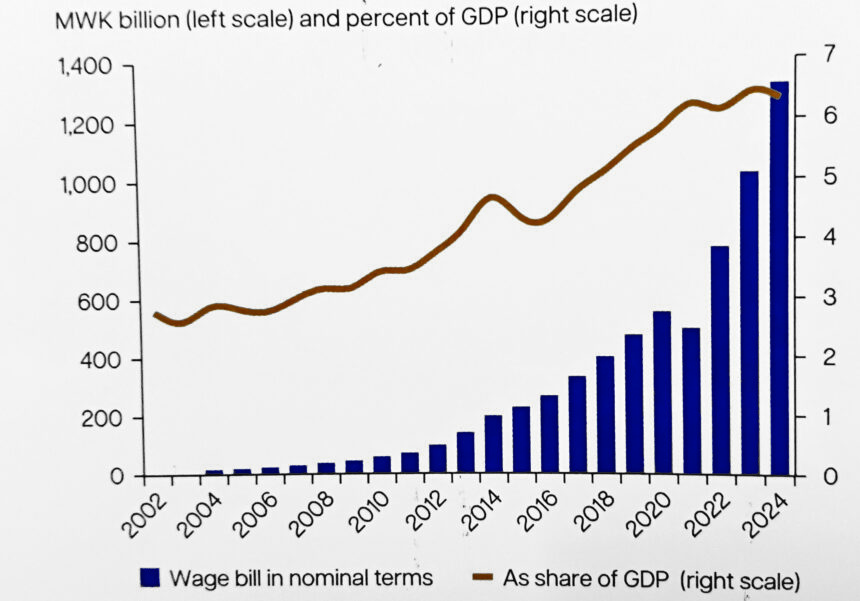
The country is now dependent on foreign support to Finance development projects as over 90 percent of domestic revenue is now going towards statutory expenditures like wages and debt service costs.
During a panel discussion, experts isolated lack of accountability in public Finance management as a driver of abuse of resources.
Economics Professor Winford Masanjala said the budget is never treated as a law but a suggestion hence there was no fear in violating it.
“Budget is a law, if somebody violates a law they should be treated like those that violate the penal code,” Masanjala argued.
Another economist, Taz Chaponda said the country needed to be decisive on the reform path to have a cocktail of interventions that chart the way forward to unlock the much needed foreign financing that can help to stabilise the foreign reserve situation before heading towards economic recovery.
“With the current debt levels and foreign reserve position, it is a difficult situation but we need to be decisive on the reform path with a big push, although that is painful,” Chaponda suggested.
The World Bank has provided recovery scenarios through either the big push, gradual approach or leaving the status.
“We have made suggestions on the alternative paths the country can take but it is up to the people of Malawi on what they choose to take,” the World Bank country manager Firaz Raad said in an interview.