Some policy errors whisper their consequences. Others announce themselves in queues, in sleepless nights, in the quiet arithmetic of a nation paying more than it realizes.
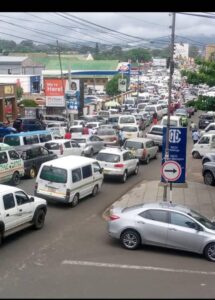
In the early hours of September 16, 2025, as Malawians filed into polling stations to elect a president, lawmakers, and ward councillors, Enock Phiri took his place in a different kind of line. He stood at position 32 on a fuel queue at a filling station in Lilongwe’s City Centre, a stone’s throw from the seat of government.
It was an image at once mundane and profound: democracy unfolding on one side, dysfunction idling on the other.
For nearly two years, the state had chosen political comfort over economic clarity. In an effort to shield voters from rising costs, the administration held fuel prices artificially low, effectively overriding the Automatic Fuel Pricing Mechanism, the system designed to align domestic pump prices with global oil markets and exchange rate movements.
The numbers became frozen in time. Despite shifting fundamentals, authorities clung to prices set on November 10, 2023: petrol at K2,530 per litre, diesel at K2,734, and paraffin at K1,910. Even as pressures mounted, the adjustment never came.
- Advertisement -
What is striking is that the call for higher prices did not come only from technocrats or international lenders. It came from within. The Consumers Association of Malawi (Cama), a body meant to defend consumer interests, urged authorities to raise prices. The government did not oblige.
The result was not stability, but distortion.
Fuel became scarce. Queues stretched endlessly. Men slept in their cars at filling stations, waiting for deliveries that might not come.
Across borders, neighbouring countries quietly benefited from Malawi’s artificially cheap fuel, while within, a black market flourished. Roads deteriorated as levies tied to fuel sales failed to materialize, starving maintenance funds of revenue.
- Advertisement -
- Advertisement -
What appeared to be a subsidy was, in reality, an accumulating liability.
Finance Minister Joseph Mwanamvekha would later quantify the cost. Delays in adjusting prices left the Malawi Energy Regulatory Authority (Mera) with K1.29 trillion in under-recoveries owed to petroleum importers.
The debts spread widely: K963 billion to the National Oil Company of Malawi (Nocma), K227.6 billion to Petroleum Importers Limited, and smaller but significant sums to Mount Meru Petroleum, Simso Oil, and Pouma Jet. These obligations had quietly accumulated between 2022 and December 2025.
At the same time, Mera failed to remit K593 billion in levies to key public institutions. Roads, rural electrification, standards enforcement, and strategic fuel reserves all went underfunded. Additional arrears, carbon taxes, road taxes, reconstruction levies introduced after Cyclone Freddy, regulatory charges, and financial costs, deepened the imbalance.
In total, the gap reached K1.883 trillion.

“The fixed pricing system meant Malawi ended up subsidising fuel for neighbouring countries,” Mwanamvekha said.
Energy Minister Jean Mathanga offered a complementary admission: suppressed pump prices had fueled smuggling, leading to a 30 percent loss of domestic fuel.
In trying to protect Malawians, the policy had instead exported benefits outward and scarcity inward.
Even infrastructure bore the imprint of this decision.
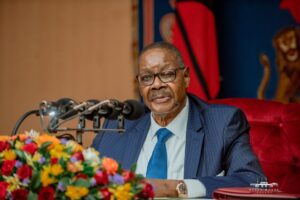
In his State of the Nation Address, President Peter Mutharika painted a stark picture of neglect stretching from Chitipa to Nsanje.
“You can’t believe that the previous Administration stopped maintaining roads in 2022.
“My Government is resuming maintenance of roads with immediate effect. In this regard, Government has reinstated the fuel Automatic Pricing Mechanism to ensure predictable flow of resources for road maintenance,” he said.
The deeper irony is that the policy may have been misdirected from the start. In its Malawi Public Finance Review, Restoring Stability, Building Trust, the World Bank observed that fuel subsidies largely benefited wealthier Malawians.
“Until September 2025 general elections, the authorities were not allowing fuel prices to adjust flexibly, concerned over the impact on consumers.
“However, a distributional analysis using data from the 5th Integrated Household Survey (IHS) indicates that only a small share of the population, primarily those in urban areas, directly consume fuel.
“This suggests that the overall inflationary impact of fuel-price adjustments may be smaller than perceived, primarily affecting the richest 20 percent of Malawians, who account for most fuel consumption, though indirect impacts affect a larger share of the population,” the bank says.
Short-term relief, it turns out, came with long-term costs.
“When these subsidies become fiscally unsustainable, their removal often leads to sharp and abrupt price increases that contribute to inflation volatility, as observed recently. Thus, the government’s readoption of the APAF is the step in the right direction toward phasing out these implicit subsidies,” the bank said.
International partners were unequivocal. In No Time To Waste: Policy Priorities for Malawi’s Recovery, the African Development Bank, the United Nations, and the World Bank Group urged a return to cost-reflective pricing.
Fuel prices, they argued, should follow the statutory mechanism, while a plan to clear Mera’s arrears should be urgently implemented. The broader recommendation was even more ambitious: a gradual shift toward market-based pricing for essential commodities.
Reality eventually caught up with policy.
On January 20, 2026, Mera raised fuel prices by more than 40 percent. Petrol jumped to K4,965 per litre; diesel to K4,945. The adjustment was steep, driven by higher landing costs and the urgent need to restore supply.
And almost immediately, the distortions began to unwind.
The black market vanished. Fuel stocks began to recover. The Price Stabilisation Fund resumed collecting resources. Revenue streams reopened, allowing authorities to begin addressing outstanding debts.
There had been fears of a cascading effect, of traders sharply raising prices in response. But government spokesperson Shadrick Namalomba suggested otherwise, noting that many had already adjusted prices earlier, when they were forced to source fuel from the black market.
Today, as Phiri drives through Lilongwe’s City Centre, the memory lingers. The night spent in a fuel queue on the eve of an election is no longer just a personal inconvenience. It is a symbol of a policy miscalculation that cost K1.883 trillion.
Some mistakes are indeed more costly than others.
And for Phiri, as for the country, the lesson is as clear as it is enduring: that must not happen again.