



In cities and towns, talk is that street-connected children are little monsters with no regard for human dignity and life. But, as THOMAS KACHERE writes, this conception is a thorn in the flesh of the children, who claim to be suffering abuse themselves at the hands of law enforcers and have taken the bold action of reporting the ‘atrocities’ to the authorities.
George [not real name], 14, became a street child after losing his parents to HIV and has been struggling to get food and shelter.
To make matters worse, some of his parents’ relations grabbed the little property his parents left for him, leaving him and siblings destitute.
“I had nowhere to go and, eventually, ended up in the streets, where I do piecework. For instance, I carry people’s luggage,” George says.
Things have been working well until recently when, according to him, law enforcers started manhandling them.
- Advertisement -
“There are several challenges we are facing at the hands of police such that we cannot even walk freely in town. It is as if we are irregular immigrants in our own country.
“Police are telling us not to be coming to town even when we want to come here [town] to buy commodities. They brand us as criminals,” he says.
The sentiments are corroborated by others. For instance, 15-year-old James [not real name] says he has, more than once, been chased from town by police.
“I am surprised that police have concluded that all street-connected children are criminals. This is hasty generalisation,” he points out.
- Advertisement -
- Advertisement -
He says they are now living in fear and cannot trust even the police.
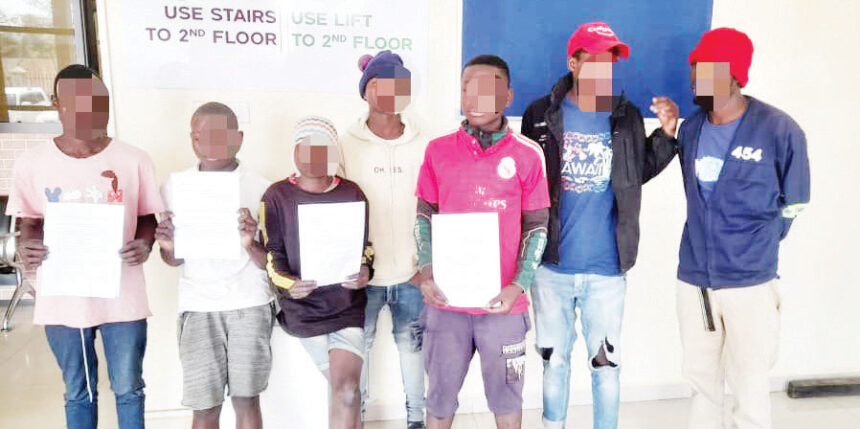
Recently, over 40 street-connected children were arrested around Limbe and Blantyre for allegedly taking part in robberies that have been reported in Blantyre and Lilongwe.
Following the development, a group of street-connected children have written a petition to the office of the Independent Complaints Commission (ICC), expressing concern over police brutality and other issues.
In the petition, they bemoan mass arrests irrespective of whether one was involved in a criminal activity or not, which they feel is a violation of their rights.
“It is unfair to paint all street-connected children as criminals and treat everyone as such. Use of excessive force during arrests, investigations and interrogations is another concern that we, as street-connected children, face. Many of us on the streets have stories of unwarranted aggression, verbal abuse and physical mistreatment at the hands of police,” the statement reads.
They are demanding a thorough and unbiased investigation into the reported cases of police brutality, mass arrests and torture.
The street-connected children are also demanding that they be provided with safe reporting mechanisms, for them to be reporting incidents of abuse without fear, in addition to safe housing so that they can have a roof on top of their heads and a sense of security.
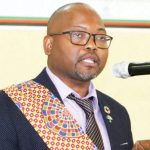
ICC Commissioner Christopher Tukula confirms receiving the petition from the concerned street-connected children.
“Yes we have received it and we have opened a file to inquire into various allegations of police brutality and abuse,” Tukula explains.
Malawi Human Rights Commission Executive Secretary Habiba Osman says she is not surprised to hear that street-connected children have taken a further step against the police.
“I am not shocked that the children have taken that action based on the fact that there is a judgement where the court said street-connected children ought to be in foster homes and it made this very clear to the Ministry of Gender and asked it [the ministry] to take action,” she says.
Osman adds that there is a need for stakeholders, including the Ministry of Gender, to take requisite action and remedy the situation.
“The police need to collaborate with other stakeholders so that they must ensure that the children are put in safe homes, where, as per law, they can be monitored,” she explains.
Centre for Human Rights, Education, Advice and Assistance Litigation Officer Ruth Kaima concurs with Osman.
She adds that police need to tread carefully on the issue of street-connected children.
“For example, they [police] should not be arresting and detaining children in cells because it is against the law. What the police are doing [by arresting and detaining street-connected children in cells] is being in contempt of court.
“In addition, police cannot arrest and investigate but [instead] investigate and then arrest,” Kaima said.
However, South- West Region Police spokesperson Joseph Sauka says they have not received any report of alleged police brutality.
Sauka adds that “police officers know their limit when discharging duties”.
“If there are some people who were tortured by police in the course of their [law enforcers’] duties, they are free to report that to the office of the officer-in-charge,” Sauka points out.
The Child Care, Protection and Justice Act stipulates that all children have to be protected in the country, something Ministry of Gender spokesperson Pauline Kaude believes is being done.