








By Pemphero Malimba:
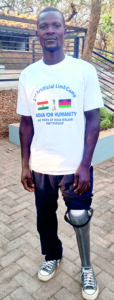
Mike Diso from Neno District lost his mobility in 2000 due to a snake bite that resulted in the amputation of his left leg.
Diso was bitten by the reptile while returning home from a family farm.
The 30-year-old was taken to Mwanza District Hospital, where doctors amputated his leg.
“Life became hard transitioning from walking on two legs to using one leg and a stick. I struggled to access services and meet my needs due to difficulties in mobility,” he recalls.
- Advertisement -
His dream of walking on two legs seemed distant, as Malawi lacks a specialised facility for the production and provision of artificial limbs.
“I heard that it was expensive to obtain an artificial leg, as it needs to be imported,” Diso says.
For nine years, he relied on sticks for mobility until 2008, when a well-wisher provided him with an artificial leg.
However, it only lasted four years, as the foot was easily damaged, a setback that contributed to his poor performance in the 2014 Junior Certificate of Education examinations.
- Advertisement -
- Advertisement -
“It was difficult to focus on my studies, as my parents could not support my needs. I did not perform well, which led to the organisation funding my school fees withdrawing support in favour of other students,” Diso narrates.
The lack of financial assistance forced him to drop out of school and he decided to learn technical skills, particularly bricklaying, to support his daily needs.
“It was challenging to find work due to my limited mobility, but life began to improve,” the resident of Neno’s Traditional Authority Symon says.
Diso’s experience reflects the struggles of many people in need of artificial limbs in Malawi, where there is no limb fitment centre.
The government spends millions of Kwacha sending people abroad for limb services or relies on partner initiatives to support those in need.
However, nearly six years after the damage to his first artificial limb, Mike was all smiles in 2018 when he received a new limb through the Indian Government’s ‘India for Humanity’ initiative.
The initiative, in collaboration with the Indian Embassy in Malawi, organises artificial limb fitment camps with expertise from Bhagwan Mahavir Viklang Sahayata Samiti, an Indian non-profit organisation dedicated to providing artificial limbs and rehabilitation services to people with disabilities.
Since its inception in 2018, the camps have provided artificial limbs to over 1,000 people across the country, including Mike.
In September this year, he received a new artificial limb, a development that has improved the quality of his life.
“Now, my bricklaying skills are bearing fruit, as I can walk long distances and perform my duties effectively. This has had a tremendous impact on my life, allowing me to care for my family and sustain myself,” Mike boasts.
Fane Maliro, a fellow beneficiary from Falls Estate in Lilongwe, also shares her experience.
She has been battling diabetes since 2006, which led to the amputation of both legs in 2023 due to her deteriorating condition.
After learning about the camp, Maliro was able to obtain the limbs and is now doing much better.
“I can manage house chores and other tasks independently, unlike before when I relied on someone to assist me from a wheelchair,” she explains.
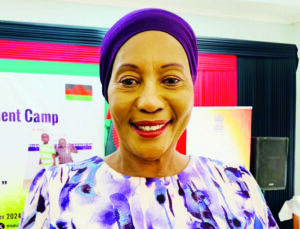
Deputy Minister of Health Halima Daudi believes that establishing a specialised facility for artificial limb services is essential to address the challenges faced by those in need.
She states that the government has been sending many people to South Africa for this service because Malawi lacks the necessary equipment.
“The introduction of this camp has benefited many Malawians. Our plea is for such services to be offered in Malawi so we do not have to send people abroad, which is costly,” Daudi says.
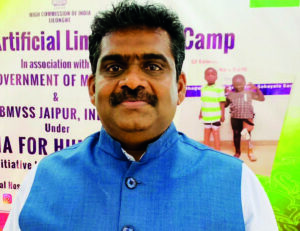
Indian High Commissioner to Malawi Subbiah Gopalakrishnan pledged his government’s continued support for the country’s health sector.
The envoy added that India is willing to assist Malawi in establishing a limb fitment centre in Lilongwe or wherever the government prefers.
“I am hopeful that artificial limbs will have a long-term effect not only on the beneficiaries but also on their families, enabling them to contribute to various economic activities,” Gopalakrishnan said.
The absence of an artificial limb fitment centre underscores Malawi’s struggle to meet international obligations.
According to the World Health Organisation (WHO), the Convention on the Rights of Persons with Disabilities mandates member states to take effective measures to ensure personal mobility, enabling the greatest possible independence for people with disabilities.
“WHO estimates that currently only one in ten people in need have access to assistive products due to high costs and a lack of awareness, availability, trained personnel, policies and financing,” the health agency states.
Meanwhile, there is hope that Malawi may soon have an artificial limb fitment centre.
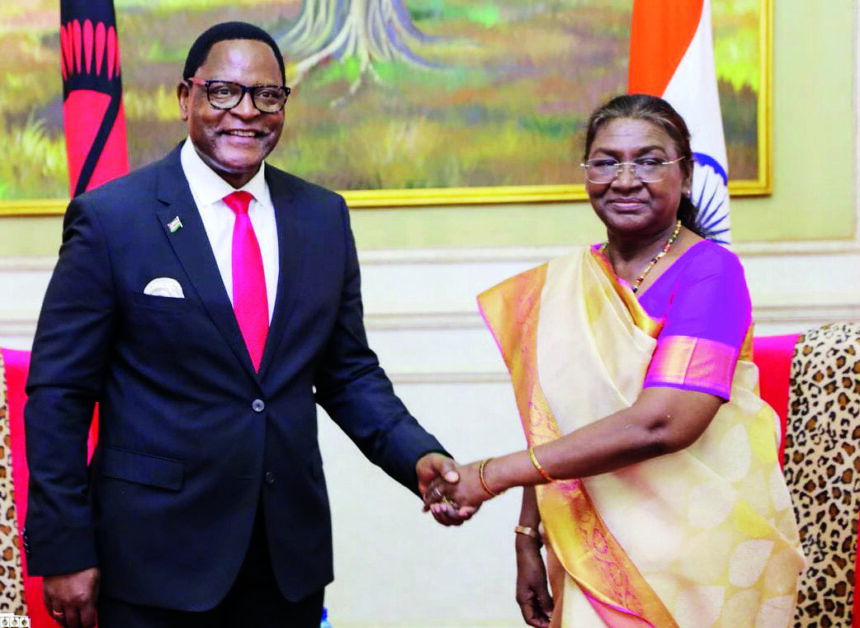
President of India, Droupadi Murmu, bolstered these hopes when she announced her government’s support in establishing a permanent centre in the country during her recent visit to Malawi.


