By Chisomo Livason, contributor :
It is 4am in Nsaliva Village, in Traditional Authority Chapananga in Chikwawa District.
Evelece Lasten joins a group of women on their daily routine in search of clean and potable water.
For years, Nsaliva Village has had no access to clean water. Despite numerous boreholes being drilled, they only produced saline water, which was undrinkable.
Like many women in the area, Lasten used to walk long distances in search of clean water, but to no avail.
- Advertisement -
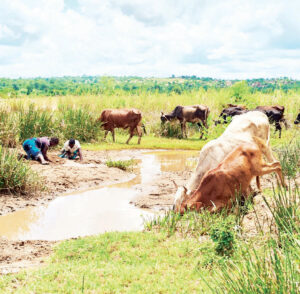
The scarcity of clean water forced the community to rely on water from the dambo, which was also used by cattle and dogs.
This water, according to Lasten, led to frequent cases of diarrhoea and other waterborne diseases in her family and the community.
“Our lives were full of disturbances due to the dirty water we were consuming every day,” she laments.
Lasten adds that this also disrupted their daily economic activities, as they spent a lot of time nursing illnesses, which affected productivity.
- Advertisement -
- Advertisement -
She recounts a terrifying experience when she almost got swept away by raging currents while searching for water near Mwanza River.
The river swelled and her two-year-old baby’s leg was broken in the process.
“It rained that day while I was searching for water. Mwanza River swelled and while I was running, I fell and my baby was injured,” Lasten narrates.
These challenges prompted the community to mobilise and lobby for solutions.
Non-govenrmental organisation Water Witness Malawi, with financial assistance from DAI Global UK and the Scottish Government, is implementing the Climate Just Communities Project in the district.
During the project’s early phase, a water point assessment revealed that the area had significant salinity issues, leading the community to rely on unsafe water sources.
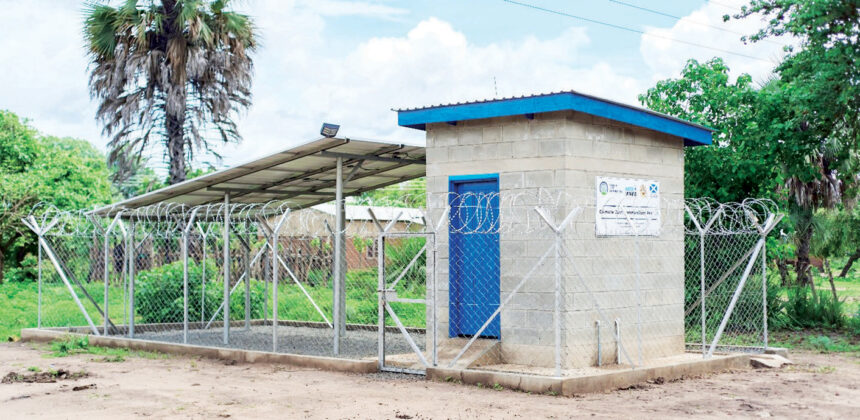
However, with the construction of a water reticulation system, a new dawn has emerged for the people of Nsaliva Village.
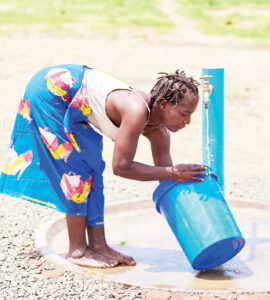
This game-changing solution has brought smiles to households whose lives were previously threatened by the consumption of unsafe water.
Lasten can now smile, knowing her family will no longer suffer from life-threatening waterborne diseases.
The state-of-the-art solar-powered reticulation system was made possible by exploring water sources in the neighbouring village of Tombondera.
Water was tapped from one of the boreholes to supply clean and potable water to Nsaliva Village.
Meanwhile, Group Village Head Tombondera says they were aware of the struggles the people of Nsaliva faced in search of clean water and were more than willing to help.
In addition, Michael Taulo, who is Group Village Head Nsaliva, says the water challenges in the area were spiralling out of control, but thanks to the Climate Just Communities Project, the situation has improved.
“There has been a big change, with a reduction in diseases, because we are now consuming clean and safe water,” the traditional leader states.
He further reveals that he is working closely with the neighbouring village and the committee responsible for managing and sustaining the facility.
Furthermore, chairperson of the scheme management committee, Headson Zagwazatha, says they have implemented laws and strategies to ensure the sustainability of the reticulation system.
“We have a committee that looks after the system. The committee also collects monthly contributions for repairs and security purposes,” Zagwazatha says.
Chikwawa District’s water monitoring assistant, Chisomo Kabu, notes that parts of the area still face water quality challenges, putting lives at risk.
For his part, project officer for the Climate Just Communities Project, Baleke Banda, says the reticulation system has transformed the area, providing easy access to clean and potable water.
“People no longer walk long distances in search of water. There is no longer queuing for water, as they can access clean water right in their villages,” Banda says.
Lasten and the rest of the villagers can now smile, knowing they have access to clean and safe water and can build a more resilient, hopeful and desirable future for their children, thanks to the water reticulation system.
Among others, Sustainable Development Goal 6 focuses on providing safe, affordable drinking water for all by 2030.
The people of Saliva Village have found themselves among those being regarded as positive examples in the global goals, particularly in relation to water access.