For a long time culture has been deemed old-fashioned and not significant in this modern world where technology has occupied space.
But Kungoni Centre of Culture and Arts at Mua in Dedza in the Area of Traditional Authority Kachindamoto in Dedza District continues to create discussions on various issues affecting the country to bring about change by using culture.
Culture is not archaic and remains essential in development so says the current director of Kungoni Centre of Culture and Arts, Father Brendan O’shea also known as Angozo.
He observes that some of the problems that the world and Malawi are experiencing at the moment are due to the fact that culture has been thrown out of the equation of helping in bringing about solutions.
He said as a centre of culture, they will remain alert in showing people out there that culture has a role to play in bringing about change in the country and that some of the challenges being experiencing are there because people have thrown away their humanity (umunthu).
- Advertisement -
“The issues of corruption we experience today are because people have thrown away the culture of umunthu. Issues of climate change are there because people have damaged the environment that God gave us to conserve,” Father O’shea, said.
In their quest to let people to realise the importance of culture, Kungoni every year holds the Chamare Open Day every first week of August.
The open day in 2023 run under the theme ‘Culture as a means of promoting self-reliance’ (‘Chikhalidwe Chathu Chimazamitsa Mizu Yakudzidalira’ accompanied by the proverb ‘Kanthu Ndi Kako Uvundukula Nupenya’.
O’shea, who leads Kungoni having taken over from Father Claude Boucher (Achisale), said that Kungoni Open Day has been part of the activities of their cultural centre for the last 15 years.
- Advertisement -
- Advertisement -
“The open day provides us with a stage to showcase the incredible richness and complexity of Malawian history and culture. Performance in all its formats has been an integral tool in preserving memories and educating people through various rites passage,” he said.
Just as has been the case with the previous editions of the open day, it was the same this year where a huge audience appreciated songs, dances, drama and storytelling.
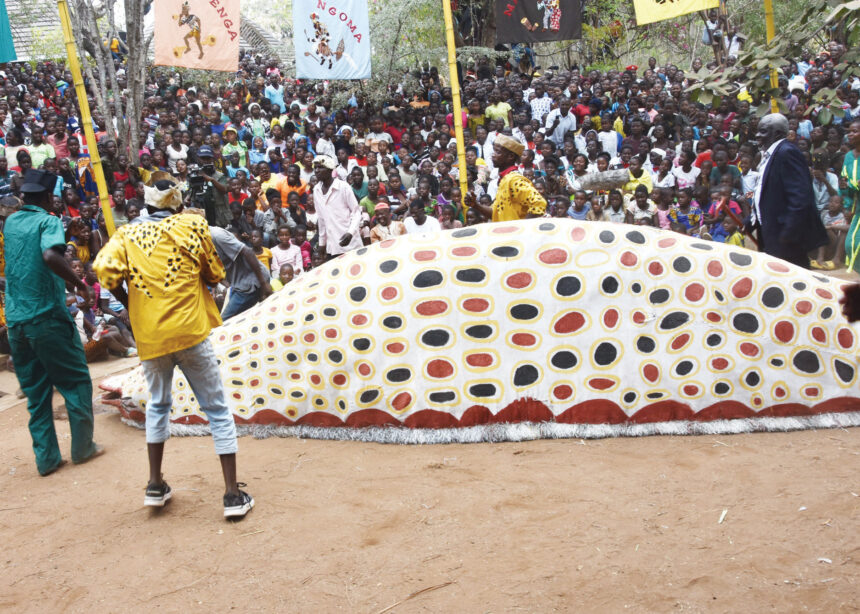
It all starts with a religious ceremony that unites people from different denominations and then climaxes with traditional dances with the last on the line-up being Gule Wamkulu coming in different forms fused with drama.
“We begin with liturgy and then dances and with the theme; we revisit it in prayer, song and dance. We get reminded that from the beginning God has blessed us in Malawi with many gifts and resources,” he said adding that from the play performed by Kungoni Cultural Troupe, he was hopeful that the celebration will inspire Malawians to strive for self-reliance.
The open day featured performances from both the old and the young and in their songs emphasised the importance of self-reliance as people.
“We encourage dances from many different groups i.e. Ngoni, Chewa and Yao. We also invite other faith experiences to participate. It is also our way of saying thank you to our many local collaborators and for that reason, we do not charge any entrance fee so, as to allow many people as possible to enjoy the day,” O’shea said.
He said this year’s theme came through after reflecting on the issues facing Malawians at this present time citing poor crop yields because of overreliance on fertiliser, degradation of the environment leading to flooding (Cyclone Freddy), and donor mentality.
“When we look at the generations gone before us, we admire their capacity to use local resources in order to fulfil their needs. Also looking at our many rituals which a person follows in life, it is clear that all the advice imparted is to ensure we are aware of our need to contribute to our family and community,” the director said.
Before people sampled drama fused with Gule Wamkulu, there were other traditional dances.
Senior Group Village Head Kakhome, who represented Traditional Authority Kachindamoto, said the cultural troupe at Kungoni takes time to put together their performances.
“Apart from offering entertainment, the performances that people sampled are there to disseminate important messages on various issues. For instance, at the very end, people saw Napolo that depicted what happen in the Southern Region this year,” he said.
The traditional leader said apart from Napolo which was depicted through Gule Wamkulu and vomited water which damaged property and claimed lives, there were also other forms of Gule Wamkulu that looked at the old and the present.
“So many things have changed today; we are not saying technology is bad. We need to embrace it but without neglecting our own because this is our identity. We can run with both provided we move in the right direction,” he said.

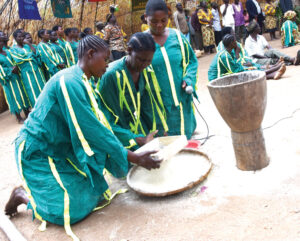
In one of the scenes, the troupe took people down memory lane where they were using mortar and pestle for grinding maize among others and connected it with the present day, where people have graduated to maize mills.
But while a mortar and a pestle only require human power, it is a different story with a maize mill where there is need for electricity.
“The old ways have an advantage as well over the modern. We have machines today but to move them we need energy and to have that, we have had challenges. Today we are talking about power outages. If we are to excel in all this, we need to use all these systems together,” the traditional leader said.
He said the troupe fused drama and Gule Wamkulu to also show the beauty of art.
“These people have never gone to any music or drama school to learn art. This is inborn and through it, they are able to tell beautiful stories and tackle issues affecting society. We need to value our culture, we need to value our art and with that, we will be able to grow as a country,” Kakhome said.
Nyamithambo Arts Palace Director Eric Trinta, who is also an arts activist and leads Khulubvi Arts and Cultural Festival, said the country has failed to make progress in most of the sectors because culture has not been supported fully.
“All these issues to do with corruption for example, are happening because we have lost our values as people, we need to give culture all the time because it is the beginning of things,” Trinta said.