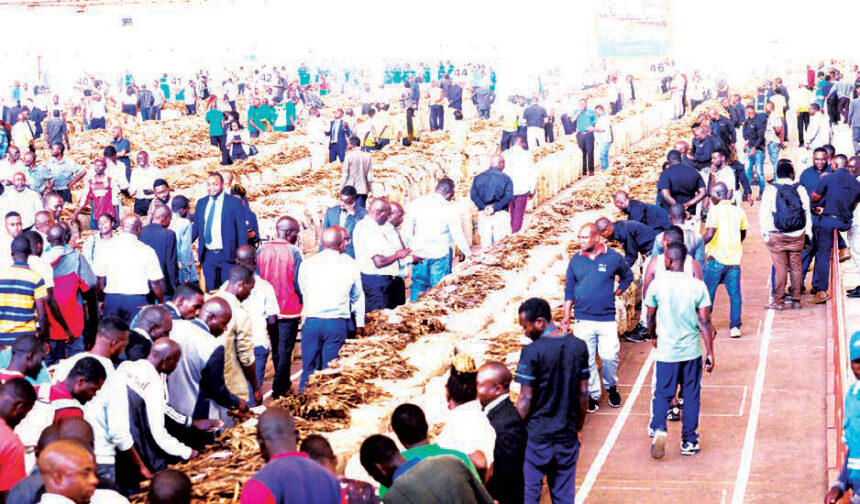

Listening to ‘Hot Current’ on Times TV on Sunday, the team of Wonder Msiska, Bishop Chafumuka and Bayana Chunga raised what is both a relevant and, for some people, an uncomfortable topic: the declining relevance of tobacco in Malawi at a time the country’s needs, especially for foreign exchange, are only growing.
And as the discussion unfolded, one alternative kept coming through clearly from the trio—minerals. I found myself in full agreement.
The discussion even drew on a powerful image; that just as Jesus Christ was burdened with the cross, it [the burden] was ultimately lifted. There comes a moment when a weight carried by tobacco for too long must be set down to allow renewal and progress.
While, for decades, tobacco has been Malawi’s economic backbone—the “green gold” that sustained livelihoods, financed imports and shaped national identity—the numbers increasingly tell a complicated story.
For instance, in 2023, Malawi earned about $449 million from tobacco exports, accounting for roughly 46 to 50 percent of total export earnings.
- Advertisement -
By 2024, earnings had climbed to around $500 to $570 million, showing resilience —yet also reinforcing how exposed the economy remains to a single commodity. Presently, the current figures for the season do not look promising even before the selling season has come to an end.
At face value, tobacco is still delivering. But underneath, the pressure is building. Prices continue to fluctuate within a narrow band of roughly $2.1 to $2.9 per kilogramme (kg), even as production costs rise and global demand faces long-term structural decline driven by health policy (anti-smoking lobby), regulation and changing consumer patterns.
So, the question is no longer whether tobacco matters; it clearly does. The real question is: For how long, and at what opportunity cost? Tobacco seems to have reached the end of its lifespan, as echoed by the ‘Hot Current’ team.
This is because while we have been holding onto tobacco, often out of necessity, another story has been quietly unfolding beneath our feet. Very ironical.
- Advertisement -
- Advertisement -
And that is precisely where the programme’s proposition on Sunday becomes both timely and compelling. Malawi is sitting on a mineral opportunity that could redefine its future. Sadly, we, as a country, seem not to have seen the writing on the walls of the auction floors despite clear signals.
We are no longer speaking in hypotheticals. Malawi holds rare earth elements that are critical to clean energy technologies and advanced manufacturing, alongside rutile—the highest grade titanium feedstock—with the country now home to what is widely recognised as the largest known natural rutile deposit globally.
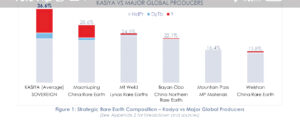
Alongside this sits graphite and a broader suite of energy transition minerals that are becoming increasingly strategic in global supply chains. What is even more compelling is the momentum building in the sector. The Kasiya project alone is being positioned as a globally significant, long-life operation that is capable of supplying international markets for decades.
The Songwe Hill rare earths project is advancing toward development with a projected net present value of about $339 million while new exploration results across the Lilongwe belt suggest this is not an isolated opportunity but part of a much larger, world-class mineral corridor.
At macro level, the potential is transformative. If developed strategically, Malawi’s mining sector could generate up to $3 billion annually in exports by 2034 — a significant leap from today’s total export base of less than $1 billion.

And yet, there is an uncomfortable truth we rarely confront.
For years, Malawi has continued to export its minerals in raw or minimally processed form, often labelled as ‘samples’.
In doing so, we are exporting not just resources but value, jobs, skills and tax revenue.
The real economic benefit leaves before it has a chance to take root locally.
At the same time, artisanal and small-scale miners, who are already active and proving the existence of these resources, remain largely unsupported. Without financing, equipment, formalization or structured markets, their contribution remains constrained and the broader value chain remains underdeveloped. So, we must ask ourselves, honestly: For how long will we keep exporting our future in the name of ‘samples’?
For how long will we remain price takers — first in tobacco, now in minerals?
This is not just about shifting sectors; it is about shifting mindset.
If tobacco helped build Malawi’s past, minerals— as highlighted in Sunday’s conversation—could define its future, but only if the transition is intentional. That means building systems that support artisanal miners, investing in local processing and value addition, strengthening transparency in mineral markets and ensuring policy consistency that attracts long-term investment.
It also requires us to stop seeing mining purely as an extractive activity and, instead, recognise it as a strategic pillar for economic transformation in Malawi.
The difficult decision is no longer whether to diversify; it is whether we have the courage to accelerate the transition—while tobacco still provides the cushion to do so.
Because, ultimately, as the smoke clears, Malawi’s next economic chapter must be written deliberately—not by default.
Malawi stands at a crossroads: continue stretching a declining commodity or deliberately build the next engine of growth. The difference between the two is not resources; it is choices.