By Wezzie Gausi:
In the heart of Kanengo Industrial Area in Lilongwe, behind the towering walls of a company owned by foreign direct investors, a dark and painful narrative of exploitation and abuse quietly festers.
For some people, industrial factories symbolise economic growth and employment opportunities, but for Daniel and colleagues, these walls have become cages of suffering.
Daniel, a soft-spoken man in his mid-30s, sits on a broken wooden stool, his face weathered beyond his years. He slowly lifts the leg of his tattered pair of trousers, revealing deep, jagged scars running along his shin.
“Our supervisor beats us like animals,” he whispers, the weight of his words heavy with pain. “For no reason at all. Sometimes, he just lashes out. We have reported the issue but nothing changes.”
- Advertisement -
Daniel is one of five men subjected to routine beatings by their foreign supervisor at their company.
Their bodies carry the physical evidence of violence, but the emotional toll runs even deeper. Each day, they walk into work knowing they might be assaulted, yet they return out of necessity.
“Our families depend on us. If we leave, there is no food on the table,” Daniel adds, staring blankly ahead.
A cry for dignity amid filth
- Advertisement -
- Advertisement -
But physical abuse is only one aspect of the torment. For the over 100 women working at the firm, the degradation is more subtle but equally harmful.
The factory has only one toilet, which doubles as a bathroom, forcing women to manage their menstrual hygiene in deplorable conditions.
Ethel, a production line worker, wipes sweat from her brow as she recalls her daily struggle.
“The toilet is beyond filthy. There’s no privacy and it stinks,” she says. “We are forced to clean ourselves during our periods in that same space. It’s humiliating.”
This treatment violates Sustainable Development Goal 6 (clean water and sanitation), which emphasises universal access to safe and dignified sanitation.
Yet, for Ethel and many others, this right remains a distant dream.
Locked away like prisoners
The exploitation stretches beyond one company.
At another company along Njewa Road in Lilongwe, workers endure a different kind of imprisonment; nearly 50 workers are locked inside poorly ventilated warehouses for gruelling 10-hour shifts.
Ruth, a petite woman with a firm voice, recounts the suffocating reality.
“They lock us in at 7:30 in the morning and only release us in the evening,” she says. “There’s no food, no water, and only one blocked toilet. The smell of faeces and urine fills the room. Sometimes, I feel like fainting.”
The warehouse, packed with bodies and stifling heat, becomes a chamber of slow torment.
Such practices blatantly violate Malawi’s Employment Act, which guarantees safe and humane working conditions, and breach international labour standards, as outlined by the International Labour Organisation (ILO).
Noah, another worker, adds to the grim picture.
“Our bosses make us work without clothes because they think we will steal from them,” he reveals, his voice trembling with humiliation. “It’s dehumanising. We are not criminals.”
Bleeding for a pay check
At yet another company, which is in the hardware trade, danger is part of the daily routine. Without any protective gear, workers handle sharp and heavy metal sheets, risking life and limb.
Jacob, a father of three, shows a deep gash across his palm.
‘I was lifting iron sheets when one slipped and cut me badly,” he says. “When I asked to go to the hospital, they refused to cover the costs. They told me to find my own way.”
Workers operate without gloves, helmets or boots, directly violating the Occupational Safety, Health, and Welfare Act of Malawi, which mandates employers to ensure a safe work environment.
Shockingly, the company operates without any toilet. Workers must cover long distances on foot to use private toilets.
“It’s embarrassing,” Jacob sighs. “Sometimes, I have to hold it in for hours because I can’t leave my workstation.”
Despite the hazardous environment, employees receive wages as low as K20,000 ($12) per month—barely enough to cover basic needs.
Crushed and forgotten
For some, the risks of industrial labour turn into permanent disability.
Yohane, another worker at a Lilongwe-based company, drags his injured foot behind him—a painful reminder of the employer’s neglect.
“A machine rolled over my foot,” he recalls, his voice barely a whisper. “They didn’t take me to the hospital. They just told me to rest and come back. Now I can hardly walk, but I have no choice but to work.”
His story reflects a complete disregard for workers’ compensation laws and violates the Universal Declaration of Human Rights (UDHR), which protects individuals from hazardous and degrading working conditions.
Government and advocates’ response
Public outrage finally forced action. Minister of Labour Vitumbiko Mumba ordered the immediate closure of some of the companies linked to worker abuse earlier this year.
“This mistreatment is unacceptable,” Mumba stated firmly. “We will not tolerate employers who disregard workers’ rights,” he fumes.
Human rights organisations also raised their voices.
Michael Kaiyatsa, Centre for Human Rights and Rehabilitation (CHRR) Executive Director, condemned the conditions.
“This is not just exploitation; it’s modern-day slavery,” Kaiyatsa declared. “These companies must be held accountable, and the police must act swiftly.”
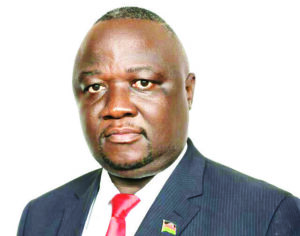
Meanwhile, Madalitso Njolomole, Secretary General of the Malawi Congress of Trade Unions (MCTU), has stressed the need for union representation in private companies.
“Most workers are unaware of where to report such abuses,” Njolomole explained. “Unions can give them a voice and protect them from exploitation. The government must enforce labour laws strictly.”
Systemic failure
The exploitation of workers in Malawi reflects a broader failure to uphold human dignity.
Sustainable Development Goals (SDGs), especially Goal 8 (Decent Work and Economic Growth) and Goal 3 (Good Health and Well-being), call for safe, fair, and humane labour conditions.
However, enforcement of these standards remains weak. Employers exploit gaps in the legal system, prioritising profit over people.
Workers who suffer from abuse are simply casualties of unchecked industrial growth.
A call for justice and reform
According to CHRR, ending these abuses requires more than temporary closures.
He says Malawi must commit to comprehensive reforms that prioritise the welfare of its workforce.
“These include strengthening labour laws by closing loopholes that allow companies to bypass safety regulations; enforcing accountability by conducting regular inspections and imposing harsh penalties on non-compliant companies.
“Other measures include empowering workers by establishing unions and hotlines for reporting abuse without fear of retaliation; promoting corporate responsibility by mandating employers to provide safety equipment, sanitary facilities and fair wages,” Kaiyatsa says.
No Malawian should have to bleed, starve or suffer indignity to earn a living.
As the world races toward the 2030 SDG targets, Malawi must ensure that economic growth does not come at the cost of human dignity.
Behind every product made in these factories are human lives—lives that deserve respect, protection, and justice.
It is time to break the silence.