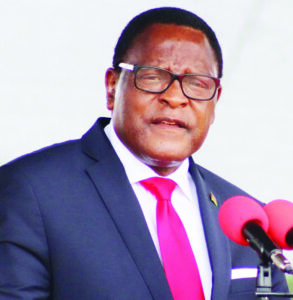
Since assuming office in June 2020, President Lazarus Chakwera has made it his mission to plead for cancellation of Malawi’s debts, currently standing at over K13 trillion.
The thinking is that having the debts scrapped off would free resources for the government to invest in health, education, agriculture, roads, social welfare and other sectors to improve the quality of life of people.
But Malawi is not failing to make progress in these social-economic areas essentially because of debts, commentators say.
Rather, it is largely because the country abuses the resources it generates and which it borrows.
In effect, what Malawi primarily needs is to stop corruption for any debt relief to be impactful.
- Advertisement -
“The issue of debt cancellation should also go together with responsibility in making sure the resources saved through debt cancellation are not managed through broken systems,” said Gift Trapence, chairperson of the Human Rights Defenders Coalition (HRDC).
Chakwera’s calls
At a number of high-profile summits, Chakwera has not shirked from the subject, pleading with rich nations to scrap off the debts which Least Developed Countries (LDCs) owe them.
Chakwera made his latest call on this on November 17, 2023 during the Second Voice of Global South Summit which Indian Prime Minister Narenda Modi hosted.
- Advertisement -
- Advertisement -
The President made that request after another call at the world’s biggest stage, the 78th United Nations General Assembly (Unga) in New York, the United States of America, in September 2023.
“And so our call to action on behalf of all LDCs on this matter remains the same: Cancel the debts! Cancel the debts! Cancel the debts!
“As a family of nations, we have already lost two years of progress during the Decade of Action due to the economic shutdowns effected to contain Covid and, if you want the global economy to regain that lost ground, you must cancel the debts,” he said.
Progress on the calls

In an interview, Secretary to the Treasury Betchani Tchereni said government continues to engage both multilateral and bilateral debtors for their favourable position.
He could not state clearly on whether the campaign has yielded a positive response yet.
“From the restructuring front, our negotiations with bilateral debtors are at very advanced states to the extent that we are expecting positive decisions soon.
“In terms of cancellation, it is a decision which we hope will be made quickly especially by multilateral partners.
“Let it be known that government, led by the President, will continue to engage for debt cancellation. We hope other stakeholders such as civil society will join us in this endeavor for the good of the country,” he said.
Tchereni further said government has resorted to only take or guarantee concessional debt.
“Concessional in the sense that we do not want debt which is going to lead to us to fail to pay and in the end we are country that is in debt distressed because of debt sustainability.
“So even if any government department brings to us a need to guarantee a debt, for as long as it is not concessional, we are not going to take and for as long as it is only for consumption we are not taking.
“The debts which we are going to take are only those focusing on investment development and they are concessional in nature,” he said.
Value in debt relief

In separate interviews, economist Edward Chilima and Economics Association of Malawi (Ecama) president Bertha Chikadza said the calls for debt relief are valid and need more momentum.
“When you look at the budget there is a huge chunk of money that is allocated to repaying of debt. If we are to be forgiven that debt, that money can be channeled to development projects,” Chilima said.
He added: “We still need to keep pushing for these calls to reap results. If you remember, during the late Bingu Wa Mutharika’s time when we had debt relief and a lot development took place. That could be the case now as well. We would be in a space to carry out developments like roads and various infrastructures which we desperately need,” he said.
Opportunities missed
Chikadza said currently Malawi allocates about K1.5 trillion to debt repayment, an amount which she said can be channeled to the development of many sectors.
“The only problem is that as a country we do not utilise the chances when we get debt cancellation to invest in other productive sectors to make sure that we do not fall into this trap again. We end up piling up more debt and eventually we get back to the problem we are in.
“But otherwise once we achieve debt cancellation, then it is a good thing for the country because we do not have a lot of resources,” Chikadza said.
‘We need to help ourselves first’
But beyond this misplacement resources freed from debt cancellation, the flourishing corruption risks wrecking the benefits of such a relief, Trapence said.
He said calling for debt cancellation should go hand in hand with decisive action on corruption.
“We need to help ourselves first before others help us by walking the talking in the first against corruption and manage our appetite for borrowing.
“We need to have real commitment to fix the broken systems. We need to be radical in tackling corruption,” he said.
‘Own resources, less borrowing’
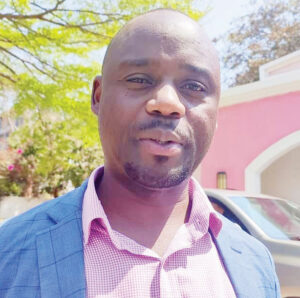
Civil society activist Moses Mkandawire said Malawi which ranks consistently high in global Transparency Corruption Index has some serious work to do in safeguarding the public purse.
“Much as the international community would want to forgive our debts, they need for us to meet some conditions, one of which is fighting corruption. Unfortunately we have not been serious in the fight against corruption,” Mkandawire said.
He added that there is a connection on “how we spend and manage our public resources and it has a bearing on how much we would be borrowing.”
“The biggest problem is how we manage our public resources. If we learnt how to manage our public resources it would make a big difference. We would have a lot of resources which would mean less urge to borrow whether internationally or locally,” he said.