





By Maina Waruru:
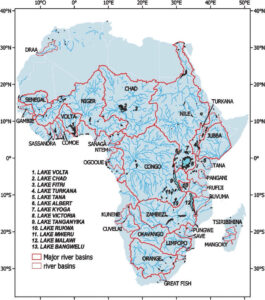
Almost all major river basins in Africa have become the epicentres for conflicts over the last 20 years, and agricultural yields on the continent could drop by up to 50 percent in the coming years owing to the drying up of ‘traditional’ water sources, thanks in part to effects climate change and degradation of the environment, the inaugural edition of the State of Africa’s Environment Report 2023 released in Nairobi finds.
At the same time, environmental degradation and loss of biodiversity affect the continent the most, with a loss of 4 million hectares of forest cover each year, double the global average rate.
This, in part, has contributed to over 50 million people migrating from the degraded areas of sub-Saharan Africa to North Africa and Europe by 2020, according to the report compiled by India’s Centre for Science and Environment (CSE) released in Nairobi on October 13, 2023.
- Advertisement -

It finds that all the critical water basins on the continent were experiencing distress and turbulence due to, among other reasons, unsustainable use of resources besides climate, becoming hotspots for competition over water.
- Advertisement -
The basins include Lake Chad, shared by Chad, Nigeria, Cameroon and Niger, the river Nile shared by Egypt, Uganda, Sudan and Ethiopia; Lake Victoria, Shared by Kenya, Uganda, and Tanzania; and the river Niger used by communities in Niger, Mali and Nigeria.
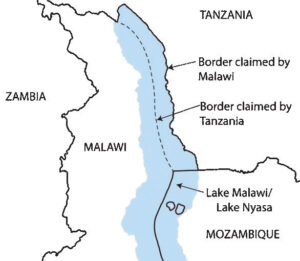
Malawi on the North
Also on the list is the river Congo basin, a joint resource used by Cameroon, the Central African Republic, the Democratic Republic of the Congo, Equatorial Guinea and Gabon, the Lake Malawi basin shared by Tanzania and Malawi and Lake Turkana basin in Kenya and Ethiopia.
Examples show that the Lake Chad basin disputes started in 1980, and the water body has diminished by 90 percent since the 1960s due to overuse and climate change effects.
“For years, the lake has supported drinking water, irrigation, fishing, livestock and economic activity for over 30 million people; it is vital for indigenous, pastoral and farming communities in one of the world’s poorest countries. However, climate change has fueled massive environmental and humanitarian crises in the region,” the report notes.
- Advertisement -
It notes that international actors and regional governments have long ignored the interplay between climate change, community violence and the forced displacement of civilians.
“Conflict between herders and farmers have become common as livelihoods are lost, and families dependent on the lake are migrating to other areas in search of water,” the report says.
“In the Congo basin, disputes started in 1960. The basin witnesses multifaceted crises, including forced displacement, violent conflicts, political instability, and climate change impacts,” it concludes.
On the other hand, it traces conflicts in the Niger basin to 1980, blaming climate change for disagreements over “damage to farmland and restricted access to water, while in the Nile, disagreements began around 2011 stemming from the construction of the Grand Renaissance dam by Ethiopia, which Egypt fears will impact water flow.
Conflicts over Lake Turkana resources are fairly recent, traced to 2016 when it was observed that with 90 percent of its water from the Omo River in Ethiopia, rising temperatures and reduced rainfall have contributed to the lake’s ‘retreat’ into Kenya.
To survive, the Ethiopian herder tribes began following the water, resulting in inter-tribal conflict with their Kenyan counterparts.
The construction of Ethiopia’s Gilgel Gibe III Dam on the river worsened matters.
It notes that in 2020, between 75 and 250 million people on the continent were projected to be “exposed to increased water stress” due to climate change, warning that in some countries, yields from rain-fed agriculture could drop up to 50 percent due to drying up of traditional water sources including lakes, rivers, and wells.
“How Africa manages its water resources will define how water-secure the world would be. Africa’s aquifers hold 0.66 million KM3 of water. This is more than 100 times the annual renewable freshwater resources stored in dams and rivers.”
Take Ethiopia, for instance. Known as the continent’s water tower, the country is confronting huge challenges of disappearing lakes and rivers, it explains.
Africa, the world’s second-largest and second-most-populous continent, hosts a quarter of the planet’s animal and plant species, but the species extinction and general biodiversity loss rate in the continent are higher than in the rest of the world.
As a result, total deaths from extreme weather, climate or water stress in the world in the last 50 years, 35 percent of them were in Africa. Predictably, Africa will account for 40 percent of the world’s migration due to climate change.
“While the Global South will bear the maximum burden of internal migration, the reasons might vary from region to region, depending on climate change-related issues like water scarcity or rising sea levels. However, water scarcity will be the main driving force of the total migration, the report explains.
Citing the example of chimpanzees, the SOE 2023 reports that there are only 1.050 million to 2.050 million of the species on the continent, limited to Gabon, Democratic Republic of Congo and Cameroon, with populations having disappeared in Gambia, Burkina Faso, Benin, and Togo.
On the brighter side, it says that African countries have some pioneering conservation models that, among other things, put communities at the centre of conservation efforts, noting that if Africa protects its biodiversity, the whole world will also gain.
Protected areas in Africa, if sustainably used, can eradicate poverty and bring peace, it asserts.
South Africa will be worst impacted by extreme weather events, making some areas inhospitable because of weather events, where already people are being forced to migrate within their own countries or regions in search of more hospitable and better living conditions, said Sunita Narain, CSE Director General.
Explaining the rationale behind the report, Narain said: “We can read and get the immediate story today, but often we do not get the big picture. The report will help us get that big picture. It will enable us to understand the different aspects of the environment by putting together a comprehensive picture that makes the links clearer between the environment and development. Environment and development are two sides of the same coin.”
She added that the report, produced with input from scientists and Africa-based journalists, also helped people appreciate the link between development and the environment.
According to Mamo Boru Mamo, director of Kenya’s National Environmental Management Authority (NEMA), the issues raised in the report are important and pertinent to the environment in Africa.
Among other things, the SOE 2023 had captured the plight of East Africa’s agro-pastoral communities whose migration from arid and semi-arid areas of Africa to urban centres and out of the continent has risen over the recent years, thanks in part to accelerated degradation of the environment.
“The continent has a collective responsibility to manage the environment sustainably while giving direction on the position Africa should take in the upcoming UN’s COP28 in Dubai,” he said.
Citing the World Meteorological Organization (WMO), “Provisional State of the Global Climate 2022”, it finds that in East Africa, rainfall has been below average for four consecutive wet seasons, the most extended sequence in 40 years.
The region recorded five consecutive deficit rainy seasons by the end of 2022, with the rainy season of March to May 2022 being the driest in over 70 years for Ethiopia, Kenya and Somalia, partly due to the destruction of the environment and climate change.
Overall, the report confirms that the climate crisis in Africa was an existential problem facing millions of people who have endured the wrath of nature for years.
Over 100 journalists, researchers and experts from across Africa have contributed to the preparation of this annual publication.—IPS