





By Isaac Salima:
There is confusion in relation to the future of the Tonse Alliance as the country heads towards the September 16 2025 Tripartite Elections.
The alliance was formed by nine parties in the run-up to the June 23 2020 court-ordered presidential election.
worked as expected
Parties that constituted it included Malawi Congress Party (MCP), UTM, People’s Party, Alliance for Democracy, Umodzi Party, Freedom Party, People’s Transformation Party, among others.
- Advertisement -

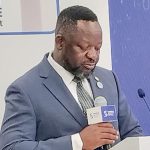
In the latest development, alliance spokesperson Mark Katsonga has said the coalition agreement was for the previous election.
- Advertisement -
“The alliance was meant for one election and one term. What happens with an electoral alliance is that, after the end of the term, the alliance falls off and you sit down and come up with another agreement.
“This alliance is the longest because it has, as of now, lasted over four years. The alliance has not worked as expected because of lack legal provision but it will remain in the history of the country,” Katsonga said.
He added that, generally, alliances are supposed to be formed after an election; that is, in case there is no winner.
“The idea behind that 50-percent-plus-one voting system is to measure the strength of parties. If big parties fail to make it, they are supposed to consult smaller parties for an alliance. If you start forming alliances before elections, what is the meaning of 50-percent-plus-one?” Katsonga said.
- Advertisement -
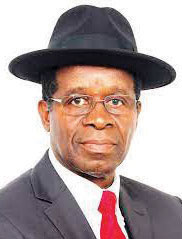
However, Njawala said the agreement runs up to 2030.
He added that contents of the agreement would be made public soon.
“We are still abiding by [terms of] the agreement that was made in 2020, [to the effect] that the alliance runs up until 2030. The contents will be made public soon,” Njawala said.

On March 31 this year, MCP spokesperson Ezekiel Ching’oma told The Daily Times that the alliance agreement ends in 2025.
He added that, as such, MCP would field a presidential candidate in the September 16 2025 presidential poll.
“The agreement covers the period between 2020 and 2025. In MCP, the decisions are made by the National Executive Committee (Nec).
“The mandate of the Nec will end in August [this year]. The new Nec to be elected in August will decide on what should be the way forward. It doesn’t mean the alliance will end. In MCP, you cannot decide for 10 years,” Ching’oma said.
In the run-up to the June 23 2020 presidential poll, the then governing Democratic Progressive Party (DPP) joined forces with the United Democratic Front.
On the other hand, the then opposition MCP joined forces with UTM and other political parties that successfully ousted the DPP from power.
However, all has not been rosy in the alliance, which has seen other members ditching it.
So far, People’s Transformation Party and Alliance for Democracy have left the coalition, citing unmet expectations.
Meanwhile, political commentator George Chaima has urged alliance members to come clear on the future of the alliance.
“Some quarters were of the view that the alliance was a marriage of convenience. Others believed that the alliance was to be for a tenure of five years.
“However, it would be problematic to believe statements that the alliance was for the elections only. This is because you may wonder why other partners have remained active in the alliance if the union was for elections only,” Chaima said.
MCP’s Lazarus Chakwera is the State President, with UTM’s Saulos Chilima serving as State Vice President.
Recently, some political parties in the country called for the regulation of alliances so that they are recognised under the country’s Political Parties Act.