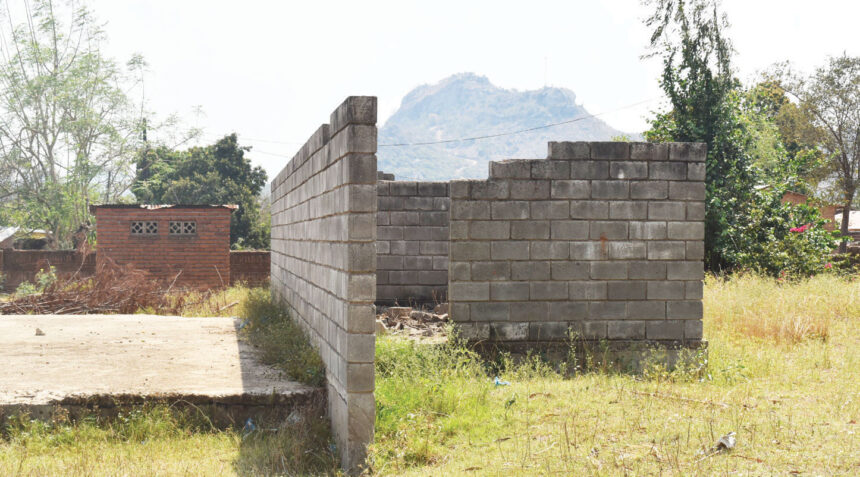
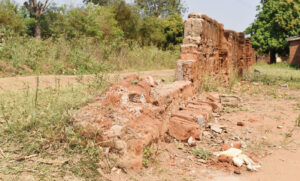
Some projects simply do not grow, a case in point being a recreation centre that has remained at foundation level years after construction works were launched in Mwanza District. THOMAS KACHERE writes.
One of the jokes that is widely shared around in Mwanza District is that its population has been growing steadily because people are starved of entertainment, such that they spend more time in the home than outside it.
They may not be entirely wrong. According to the Malawi Population and Housing Census of 2018, the district’s population was 130,949 some five years ago.
Today, real-time projections of the population put it at 148,763, meaning that it continues to grow.
The development has been a cause for concern among district council officials, who fear that a bloated population could exert pressure on natural resources such as trees.
- Advertisement -
The fears are not unfounded. According to the Department of Forestry, in 2010, Mwanza had 10.3 kilohectare (kha) of tree cover, extending over 14 percent of its land area. 1 kha represents 103 hectares.
In 2022, it lost 54ha of tree cover.
The development has prompted the authorities to mull over the idea of setting up a recreation centre, an idea which, from the word go, elated residents.
The project was allocated K26 million, which was sourced from District Development Fund (DDF) in the 2015- 16 financial year.
- Advertisement -
- Advertisement -
Seven years on, only the foundation, which is actually a dilapidated brick fence, stands at the site.
This means the council’s plans to have a number of revenue generation avenues have come to a naught.
This also defeats the cause of transparency and accountability in public resource management. For development to flourish, councils are supposed to work in a transparent manner, which has not been the case in some districts.
In the case of Mwanza, some residents are faulting council officials for operating in isolation.
One of the women in Mwanza, Lusika Clemence from Gwile Nchira Village, said she felt that residents, who are ratepayers, are being denied their right to development.
“I think we, as citizens of Malawi, deserve to know what type of development is being carried out. We need to know the amount of money allocated and used for projects.
“It is good for us to be in the know because it puts us in a better position to, if need be, question duty bearers,” she said.
Chapter 5 (Section 30(1)) of the Constitution of the Republic of Malawi, which is the supreme law of the land, states that all persons and peoples have a right to development, right to, and enjoyment of, economic, social, cultural and political development.
To put an icing on the cake, Section 42 of the Local Government Act of 1998 provides for the public’s right to access local governments’ information, including financial information.
Little or no community involvement by the council in implementing public works is highly discouraged.
But, according to Clemence and other people we spoke to, Mwanza District residents are sometimes not fully involved in development activities but treated as beneficiaries.
According to the Mwanza District Development Agenda status report of 2018, there have been concerns from community members, some of whom claimed that they were not made aware of how contractors were being identified.
It added that community members do not take roles in the purchase of construction materials, which is against Constituency Development Fund (CDF) guidelines.
Clemence is full of examples. She cites the stalled project at Thethula Community Day Secondary School, a development, she said, is affecting learners who cover long distances on foot to access education services.
Senior Chief Nthache said what has been happening at the council leaves a lot to be desired.
He said he has been concerned about the way projects are introduced, saying some of them are introduced late.
“I have always reminded people that we cannot go forward if we implement most of our projects in secret. In the case of the recreation centre, what is on the ground and money pumped into the project do not match,” he said.
Boxten Kudziwe, another community member, called for adherence to good governance principles.
“People need to be aware of projects being implemented, the cost and how resources have been used. This promotes transparency and accountability.
“There is no need to create room for people to suspect that corrupt activities have been happening,” he said.
When we visited the council offices for officials’ side of the story, spokesperson Brian Wasili said he needed ample time to consult before he could weigh in on the issue.
“I need more time for consultations to get details of this project but, so far, the site on which this was being constructed is now earmarked for construction of a multipurpose hall when funds are available,” he said.
Wasili could not explain how the other money was used since the project stalled at foundation level.
And community members can only hope that, one day, the structure will fulfill its full potential and grow into something tangible; something that can generate funds for the council.