By Wezzie Gausi:
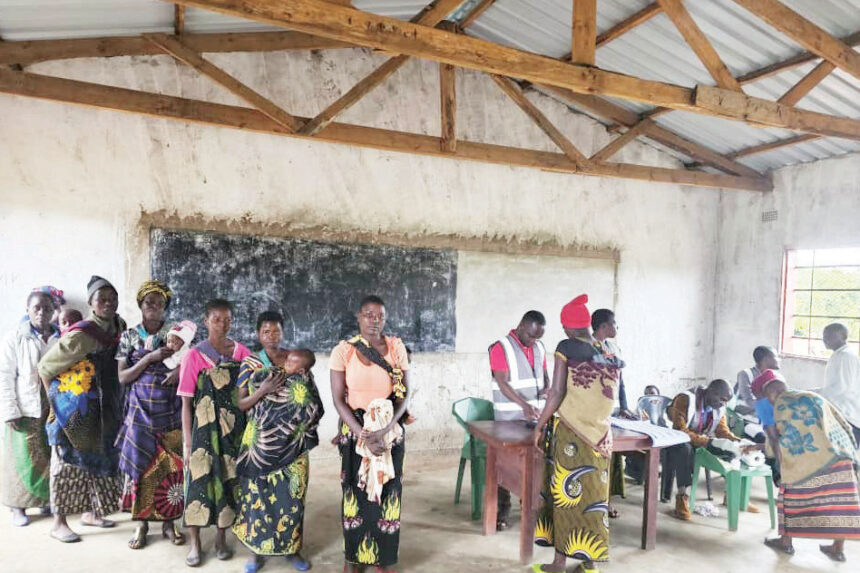
At a polling centre in Mua, Dedza, 70-year-old Gogo Lackson arrives slowly, supported by her granddaughter.
She pauses at the entrance, catching her breath, before being ushered forward by polling staff.
For the first time in years, she does not have to endure a long queue.
“They called me forward because I am old,” she says, her face softening into a smile. “I did not have to stand for long this time. It made me feel respected.”
- Advertisement -
Gogo Lackson says she has voted in every election since Malawi embraced multiparty democracy, but the experience has not always been easy.
“In the past, we would just stand and wait like everyone else, even when our bodies could not manage,” she explains. “Some would go back home without voting.”
A similar story unfolds in Waliranji, Mchinji district, where 61-year-old Elube Bonongwe reflects on what he describes as a quiet but important change.
Bonongwe, who has struggled with mobility challenges in recent years, says the simple act of being given priority transformed his experience at the polling station.
- Advertisement -
- Advertisement -
“I was not sure if I would manage to vote because of the way I walk,” he says. “But when I arrived, they guided me and allowed me to vote without pressure.”
He adds that such gestures go beyond convenience.
“It shows that they are thinking about people like us. It gives you courage to come and vote again.”
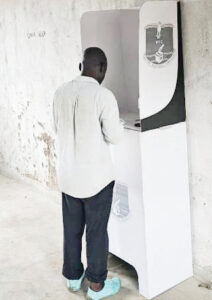
Nearby, a young man with a hearing impairment follows instructions through a sign language interpreter before casting his ballot. He raises his inked finger in silence, a small but powerful sign that he too has taken part.
Moments like these may appear ordinary, but they signal something deeper.
They mark a shift from exclusion to recognition, where the electoral process begins to respond to the realities of those who have long stood at its edges.
National Initiative for Civic Education (Nice) Area Civic Education Coordinator Elizabeth Banda says such progress is not accidental.
She explains that sustained civic education efforts on the ground have helped communities and polling officials understand the importance of inclusive participation.
“As Nice, we have been engaging communities ahead of the elections, encouraging people to understand that voting is a right for everyone, including the elderly and persons with disabilities,” she says.
Banda adds that their teams have also been working closely with electoral staff to promote practical measures that support inclusion at polling centres.
“We have been emphasising the need to prioritise vulnerable groups and to treat them with dignity,” she says. “What we are seeing now is a result of that awareness. People are beginning to appreciate that no one should be left behind.”
She notes that while progress has been made, continued civic education remains key to sustaining and expanding inclusive practices in future elections.
“We still have a long way to go, but this is a step in the right direction,” Banda says.
National Initiative for Civic Education (Nice) Director of Programmes Hentry Hillary Mwale says overall the conduct of the elections and by-elections reflects encouraging progress in promoting participation.
“We are satisfied with how the elections have been conducted. We have seen improvements in how people are being treated at polling centres, especially those who were previously left out,” he says.
However, Mwale is quick to point out that inclusion remains incomplete.
He notes that one of the most pressing gaps is the low participation of women in electoral contests.
“While we are making strides in ensuring people come out to vote, we still have a challenge when it comes to women taking up positions as candidates,” he says. “The numbers remain low and this affects representation.”
Mwale adds that addressing this imbalance will require deliberate efforts beyond election day.
“We need to create an environment where women feel supported to contest and lead. Civic education must go further to challenge the barriers that hold them back,” he says.
He maintains that inclusive elections should not only be measured by who votes but also by who stands to be elected.
“That is the next step in strengthening our democracy,” Mwale says.
Centre for Social Accountability and Transparency (CSAT) Executive Director Willy Kambwandira says the country is beginning to see progress in how electoral processes are conducted.
“The electoral process is now taking good shape in Malawi,” he says. “We are seeing improvements in organisation and participation, which is encouraging.”
However, Kambwandira echoes concerns about the continued low participation of women in electoral contests.
“Women are still underrepresented when it comes to standing as candidates. This is an area that needs urgent attention if we are to talk about true inclusion,” he says.
He also stresses the need to strengthen accountability and transparency throughout the electoral cycle.
“Inclusion must go hand in hand with accountability. People need to trust the process and that trust comes from transparency at every stage,” Kambwandira says.
He adds that sustaining progress will depend on how institutions respond to these concerns moving forward.
“We have made steps but maintaining credibility in the electoral process is key to deepening democracy,” he says.
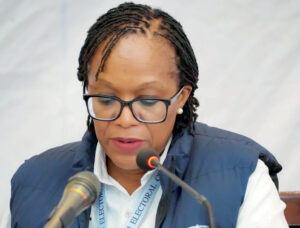
Malawi Electoral Commission (Mec) Chairperson Annabel Mtalimanja says the commission remains committed to upholding the law and ensuring that every election meets the required standards.
“As Mec, we follow all the laws that govern elections in this country to make sure that the process is free, fair and inclusive,” she says.
Mtalimanja emphasises that inclusion is central to the commission’s mandate, noting that deliberate measures are being taken to ensure no voter is left behind.
“All eligible Malawians should be able to cast their vote, regardless of gender or where they are located,” she says. “We are working to address barriers that may prevent people from participating fully in the electoral process.”
She adds that the commission will continue strengthening systems and working with stakeholders to improve accessibility and trust in elections across the country.
The push for inclusive elections in Malawi aligns with global development commitments, particularly United Nations Sustainable Development Goals (SDGs).
SDG 5 on Gender Equality calls for women’s full and effective participation and equal opportunities for leadership at all levels of decision-making.
SDG 10 on Reduced Inequalities emphasises social, economic and political inclusion of all, regardless of age, sex, disability or status.
SDG 16 on Peace, Justice and Strong Institutions is central to electoral processes. It promotes inclusive, participatory and representative decision-making, as well as access to justice and accountable institutions.
At the national level, Malawi’s electoral processes are guided by the Parliamentary and Presidential Elections Act and related legal frameworks, which set standards for conducting elections that are free, fair and credible.
These laws place responsibility on institutions such as the Malawi Electoral Commission to ensure that every eligible citizen can participate without discrimination.
Together, these frameworks reinforce a simple but powerful principle. Elections must not only be conducted. They must include everyone.