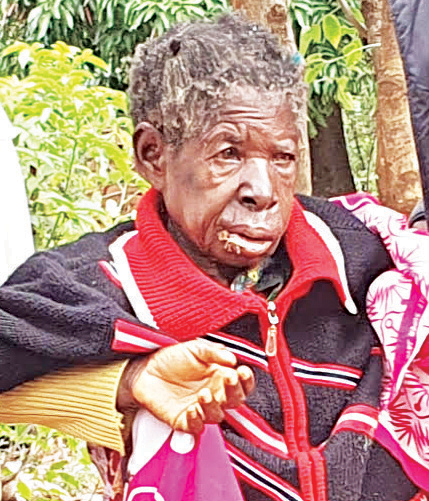
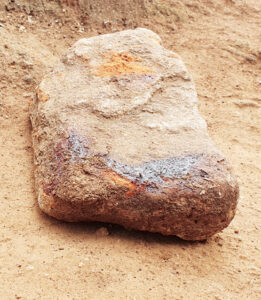
Mable Ntapasha, a physically challenged elderly woman from Traditional Authority (TA) Mwambo in Zomba District, has suffered memory loss after her granddaughter allegedly hit her on the head with a stone over witchcraft accusations.
According to Lines Kili, a relative who stays in the vicinity, the granddaughter [name withheld] had been ill for some time and visited a ‘prophet’ she wanted to spiritually determine the genesis of her problem.
The prophet allegedly told her that the elderly woman was responsible for her sickness.
Kili said that upon receiving the news, the suspect attacked her grandmother on the night of May 29, 2025, hitting her with a rock on the head.
“I heard a scream from her [elderly woman’s house] and decided to check on her. When I peeped into the house, I saw the suspect attacking her. Two other people arrived at the scene, which prompted the suspect to flee the scene.
- Advertisement -
“Due to the severity of the injury and the pool of blood, we thought the elderly woman was dead, such that all of us started crying,” Kili said.
Patrick Kalingo, one of the grandsons, said prior to the incident, the suspect had publicly warned that she would deal with her grandmother after the ‘prophet’ that she was responsible for her illness.
“We’re deeply saddened by what has happened because the old woman has been injured in the head and seems to have lost her memory. People who claim to be men of God and traditional doctors are fuelling these attacks on the elderly by providing information that cannot be authenticated,” he said.
Kalingo added that it was unfortunate that witchcraft accusations have been a lingering issue in their clan, with their late forefathers also quarrelling over similar issues.
- Advertisement -
- Advertisement -
“It’s our duty to care for elderly persons because they’re weak and need our help. If these people wanted to bewitch us, they wouldn’t have waited for us to grow old. It’s just misguided beliefs that are corrupting our minds,” he said.
According to Kalingo, the victim’s lower lip was damaged, and medical personnel who operated on her at Zomba Central Hospital took almost three hours to do the job.
When The Daily Times visited Ntapasha, she could not recall what happened to her.
In addition, her utterances were incoherent, making it difficult to stitch together what she was saying.
Community members said they reported the issue to Zomba Police Station and that police were yet to arrest anyone in connection with the incident.
The alleged perpetrator did not grant us an interview.
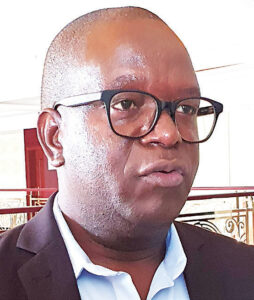
Malawi Network of Older Persons’ Organisations (Manepo) Executive Director (ED) Andrew Kavala has since condemned the act, urging Malawians to stop accusing others of practising witchcraft.
“No one can prove that witchcraft exists and our laws don’t recognise it. We strongly condemn such barbaric acts as they put the lives of the elderly, women and children at risk. Where should the elderly go?” Kavala said.
He urged community leaders to take a leading role in condemning witchcraft accusations.
“We want community leaders, including chiefs and religious institutions, to ensure that the elderly live in a safe environment. We urge law enforcers to bring to book those who are violating the rights of others,” he said.
Centre for Human Rights Education Advice and Assistance (CHREAA) ED Victor Mhango called on the police to quickly apprehend those found violating the law.
“Those who are taking the law into their hands should be arrested and face the law. There’s no room for such barbaric acts in our country. Every person deserves quality life,” Mhango said.
Witchcraft accusations persist in Malawi, with many elderly individuals being targeted.
According to the Centre for Human Rights and Rehabilitation (CHRR), over 75 people suspected of practising witchcraft were killed between 2019 and 2022.
Manepo also reported that over 15 elderly people were killed in the first part of 2022 alone over suspected witchcraft practices.
Witchcraft-related violence remains a significant concern in Malawi, where socio-economic challenges and cultural beliefs run deep.