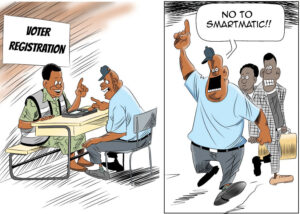
 Elections can bring out some of the strangest beliefs and behaviours in people.
In times of political tension, the line between fact and fiction is often blurred and this distortion is usually not accidental. It is a deliberate ploy by those who thrive on misinformation and manipulation.
Take the voter registration exercise conducted last year as an example.
Some opposition parties and their handlers took it upon themselves to spread a dangerous narrative, that the election had already been rigged.
They made rounds in various communities, spreading this message like gospel, convincing potential voters that their participation would be futile.
- Advertisement -
The consequence? A good number of eligible voters stayed away from registration centres. They believed there was no point in registering if the outcome had already been decided.
I encountered this firsthand in Bvumbwe, Thyolo, when Members of Parliament visited some centres during the registration period.
Several residents openly admitted that they saw no reason to register. Why should they, they asked, when they were told the election was a foregone conclusion?
Even when the Malawi Electoral Commission (Mec) extended the registration period in an effort to boost participation, the turnout remained disappointingly low.
- Advertisement -
- Advertisement -
The damage had already been done. Misinformation had achieved its intended effect—disenfranchisement and apathy.
Let us be honest. In this country, many politicians speak confidently on matters they scarcely understand.
Unfortunately, we are also a nation that seldom questions what our leaders say. We often accept their words as truth without scrutiny, without demanding evidence and without thinking critically.
This dynamic has created fertile ground for misinformation to thrive.
In recent months, the spread of falsehoods has accelerated, particularly on social media.
These platforms have become echo chambers where lies are repeated so often that they begin to sound like facts.
Peddlers of false information are not just taking advantage of digital platforms; they are exploiting the public’s trust, fears and ignorance.
The current debate around voting processes and results transmission is a classic case of history repeating itself.
In 2014, the air was thick with rumours and wild claims. There were allegations that vans carrying pre-marked ballot papers had been intercepted on dusty roads in remote parts of the country.
People shared these stories with conviction. It turned out that there was no truth to those claims; just another concoction in the political rumour mill.
Then came 2019 and with it, a new wave of allegations. This time, the tale was that foreigners had been flown in to help rig the elections.
Again, no credible evidence was ever produced. But that did not matter to those who believed it. The goal was to plant doubt, to delegitimise the process before it even began.
What we witnessed then was a growing trend of voter apathy and we are at risk of seeing it again. Once more, we are hearing the same tired claims about rigging, manipulation and shadowy forces.
The passion with which some political actors spread these claims is almost impressive. It is as if they have experience in these tactics and know precisely how to exploit the system.
In fairness, Mec has gone to great lengths to explain the electoral process. It has held briefings, issued statements and clarified procedures.
It has invited parties and observers to participate in verifying key stages of the electoral cycle.
At some point, we must accept that a reasonable person, party or institution cannot keep harping on the same point indefinitely, especially when there is no new information to support their claims.
If certain people or parties still believe that there are irregularities in the process, the logical step would be to take their concerns to court.
The Judiciary exists and it is there to interpret the law and resolve disputes. There is no excuse for clogging public discourse with the same baseless allegations over and over again.
Frankly, it has become both infuriating and tiresome to hear these recycled accusations. They add no value to the national conversation and only serve to deepen divisions, discourage voter participation and erode trust in our democratic institutions.
Elections are a cornerstone of democracy. But they can only serve their purpose if the people believe in the process.
When that belief is attacked with lies and fearmongering, the entire nation suffers. We all lose when cynicism takes the place of civic duty.
So, to those who continue to peddle misinformation, let them be. They have made their choice.
The rest of us must rise above it. Let us choose facts over fiction, participation over apathy and unity over manipulation.
After all, democracy belongs to those who show up; not those who shout the loudest from the sidelines