


The Football Association of Malawi has certified its own stadium for top-flight football while turning a blind eye to violations that disqualified other venues from hosting competitive matches, Malawi News Sport can reveal.
This is the damning conclusion of a Malawi News Sport investigation into Fam’s 2026 stadium inspection exercise, which has uncovered what appears to be a calculated double standard at the heart of Malawian football governance.
Fam’s First Instance Body (FIB)—the association’s own licensing arm—failed Kamuzu, Nankhaka and Mzuzu stadiums on infrastructure grounds ahead of the new season.
Among the 14 stadiums quietly waved through was Mpira Stadium in Blantyre—a venue that, under Fam’s own published Club Licensing Regulations and the international frameworks of both Fifa and Caf, should never have passed inspection.
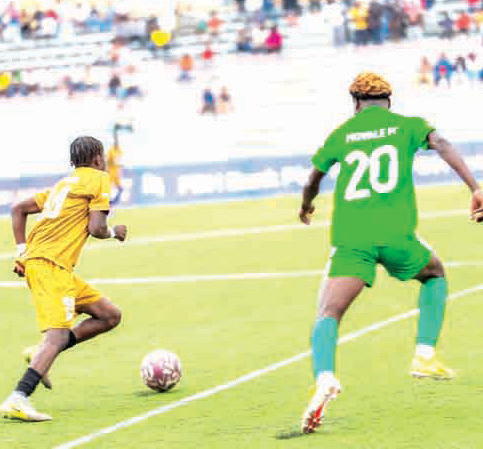
A Malawi News Sport visit to Mpira Stadium during a FDH Bank Premiership fixture between Ekhaya and Moyale Barracks found not a stadium operating at minimum standards, but one operating visibly below them—and without consequence.
- Advertisement -
The technical benches at Mpira have no cover.
Under Fifa Stadium guidelines and Fam’s own Club Licencing Regulations, covered technical benches are a Grade A mandatory requirement—non-negotiable, no exceptions.
A stadium without them does not pass proper tunnel connecting them to the pitch, a basic safety and operational requirement under club licensing rules.
Several stands at the ground are visibly unfinished, with wooden props serving as structural supports in place of permanent reinforced materials.
- Advertisement -
- Advertisement -
A source from one of the teams that played at Zomba Stadium, who requested anonymity to protect professional relationships, confirmed the inadequacy of the facilities.
“The dressing rooms cannot accommodate 25 people as stipulated by Caf. There is no tunnel. Even the toilets are not adequate,” the source said.
A second source told us that Zomba Stadium was approved to host elite matches without a valid safety certificate—a direct violation of the minimum standards required under Club Licensing.
Caf says a Stadium’s dressing room must have Showers, individual seated toilets, urinals, bathroom sinks, tactical board, hot and cold water, good ventilation among others, according to article 15 of the stadium regulations.
Article 10 of the Caf Stadium regulations requires a stadium to have a proper tunnel.
Reads Article 10.01, 10.02 and 10.03, “In the event a stadium has a Player Tunnel, it shall be a minimum of four (4) metres wide and a minimum of two point four (2.4) metres high. The point where the Participating Players and Match

“Officials entering the playing area shall be protected by means of a fireproof telescopic tunnel and shall extend into the playing area far enough to prevent the risk of injury to the match participants caused by objects thrown by spectators. Such telescopic tunnels shall be capable of being extended or closed quickly so that they may be used during the match when a player is entering or leaving the field, without causing a lengthy viewing obstruction.”
Zomba Stadium was certified. Three other stadiums were not. On the evidence gathered, the difference in standards applied is indefensible.
However, Fam’s Club Licencing Manager, Clement Kafwafwa insisted that Mpira Stadium meets the minimum infrastructure requirements required for certification and approval to host matches.
“The stadium has a functional scoreboard installed at the venue. If the scoreboard was not updated during the Ekhaya vs Moyale match, that would be considered a match-day operational issue and not the absence of the facility itself.
“The stadium also has: A designated VIP area in line with the minimum stadium requirements. Media positioning areas used by television and radio broadcasters during matches. Basic safety, security, dressing room, and field of play requirements as prescribed under the regulations,” Kafwafwa said.
He added that stadium licencing and certification are conducted based on compliance with minimum mandatory requirements, not necessarily on whether a stadium has advanced or elite infrastructure comparable to larger international venues.