





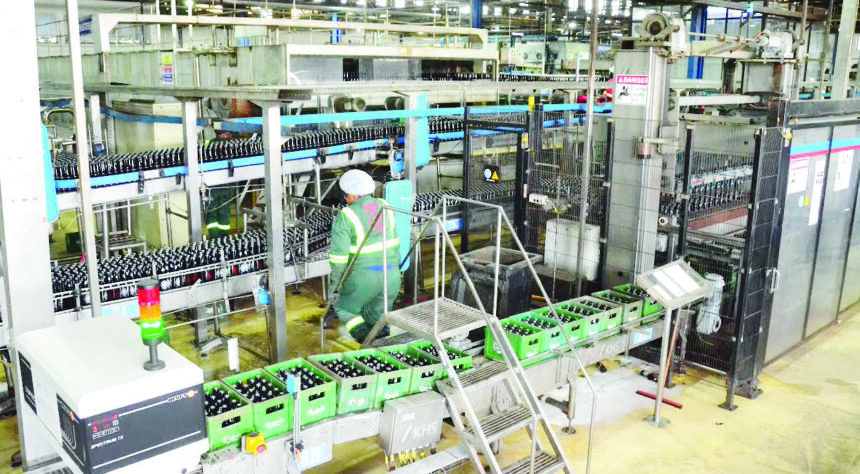
Foreign exchange scarcity remained the biggest challenge on business operations in 2025, undermining production, investment and confidence across Malawi’s private sector, the Malawi Confederation of Chambers of Commerce and Industry (MCCCI) has said.
In its 2025 Annual Economic Performance and Business Environment Review, MCCCI says limited access to foreign currency continued to disrupt the importation of raw materials, spare parts and intermediate inputs, forcing firms to operate below capacity despite relative macroeconomic stability compared to 2024.
According to findings from an MCCCI business survey, 74.1 percent of firms ranked forex scarcity among their top three challenges, making it the most cited constraint in 2025.
Inflation followed at 70.4 percent while rising input costs affected 55.6 percent of respondents.
- Advertisement -

Only 3.7 percent of firms said they were not affected by foreign exchange shortages while 63 percent reported being severely and frequently impacted, highlighting the scale and persistence of the problem.
- Advertisement -
The report shows that 51.9 percent of businesses operated at below 50 percent capacity while 37 percent operated between 50 and 75 percent.
“Although export sectors such as tobacco showed some recovery in volumes, export earnings were insufficient to significantly ease foreign exchange constraints. As a result, business planning and pricing remained difficult, and confidence stayed weak,” the report reads.
Beyond foreign exchange challenges, MCCCI also cited prolonged power outages, intermittent disruptions in fuel supply and escalating operational costs, which it says further limited output and business activity throughout the year.
According to the chamber, manufacturing, construction and agro-processing firms were among the hardest hit, as delays in accessing imported inputs led to production stoppages, longer lead times and increased reliance on the parallel foreign exchange market, which pushed up costs.
- Advertisement -
MCCCI also observes that although inflation eased compared to 2024, averaging about 28.7 percent in 2025, price levels remained high, eroding household purchasing power at a time when elevated interest rates constrained borrowing and private investment.
In the year, manufacturing growth was revised down to 1.8 percent from 2.4 percent, impacted by foreign exchange shortages.
Wholesale and retail trade barely grew, at 0.1 percent, pointing to subdued consumer demand, while transport and storage services also underperformed.
In its recommendations, MCCCI calls for export diversification and value addition to strengthen foreign exchange generation and reduce dependence on a narrow range of primary commodities.
The chamber also recommends policies to promote export-oriented investment, formal remittance inflows and targeted import substitution, particularly in food, energy and basic industrial inputs, to ease pressure on the balance of payment position.
On the domestic front, MCCCI stresses the need for a predictable and investor-friendly business environment, calling for reduced policy uncertainty, streamlined regulations and improved access to foreign exchange.
“A transparent, growth-oriented tax regime and faster contract enforcement will help attract both domestic and foreign investment. Special attention should be given to supporting small and medium-size enterprises, which are central to employment creation and economic diversification in Malawi,” the report says.
In an interview, economist Velli Nyirongo recommended a decisive shift in policy for 2026, from short-term stabilisation to structural reform.
Nyirongo further called for reform of the foreign exchange regime to support productive sectors and improve the business environment.
“The government must entrench fiscal discipline while improving public financial management, tackle corruption to restore credibility, prioritise agriculture transformation, irrigation and agro-processing to address hunger and boost exports,” Nyirongo said.
Real gross domestic product for 2025 is projected to grow by 2.7 percent, slightly below the earlier forecast of 2.8 percent, which MCCCI describes as an indication of weaker-than-anticipated performance across several key sectors of the economy.