







A loan facility is supposed to keep money moving. One farmer borrows, invests, produces and repays, allowing another farmer to access the same opportunity. That is how a revolving fund should work.
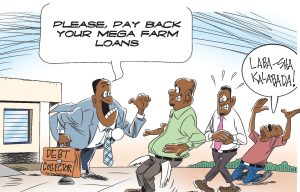
But when beneficiaries of the Mega Farms programme fail to repay, the entire arrangement is undermined.
Those holding on to the money are effectively blocking others from accessing a facility intended to support agricultural development.
This is unacceptable and those responsible must be called out. The billions of kwacha advanced under the Mega Farms programme were not gifts, political handouts or free money for a privileged few.
- Advertisement -
They were loans that beneficiaries were expected to repay in the form of maize. That was the agreement.
Those who borrowed must honour it. If they do not have the maize, they should pay back the equivalent amount in cash. It is as simple as that.
They cannot expect taxpayers to absorb their debts because they have failed to produce or deliver the agreed commodity.
I find it particularly disturbing that people who benefited from a government-backed financing scheme can fail to meet their repayment obligations while millions of ordinary Malawians continue to struggle to access affordable credit.
- Advertisement -
What gives these beneficiaries the impression that they can simply walk away from their debts? Would they behave the same way if they had borrowed from a commercial bank? Certainly not.
Banks would pursue them, impose penalties and, where necessary, take them to court. Maiic must show the same determination.
The situation is even more troubling when one considers the questions surrounding the selection of Mega Farms beneficiaries.
Like several other government-supported financing initiatives, the programme attracted concerns about political influence and patronage.
Questions have been raised about whether some beneficiaries were selected because of their agricultural capacity or because of their connections to those in power.
Public financing must never become a reward for political loyalty.
If the programme was intended to support serious commercial farmers, beneficiaries should have been selected on merit, based on their business plans, production capacity, land ownership and ability to repay.
Taxpayers’ money cannot be turned into a private club for politically connected individuals.
What is particularly galling is the apparent attitude among some people that public money is nobody’s money. Once they get their hands on it, repayment becomes someone else’s problem.
This culture must end. Government money belongs to the people. It comes from taxes and other public revenues contributed by hardworking Malawians.
It is the same money needed to build hospitals, equip schools, improve roads, support irrigation and provide essential services.
It is outrageous that a country struggling with limited resources should allow billions of kwacha to remain tied up in unpaid loans while other deserving farmers are denied access to financing.
There are farmers who could put this money to productive use, create jobs, increase food production and contribute to the economy.
Yet their opportunities are being held hostage by people who have already benefited from the scheme and failed to meet their obligations.
This is selfish and deeply unfair.
The repayment arrangement was straightforward. Beneficiaries would receive financing and repay through maize deliveries.
If they cannot deliver the agreed quantities, they must settle their debts in cash. There should be no confusion about this.
A poor harvest, low production or failure to meet business targets cannot automatically wipe away a financial obligation.
Maiic must therefore stop treating loan recovery as an exercise in issuing statements and publishing lists of alleged defaulters.
It must pursue every outstanding account and ensure that borrowers honour their obligations.
Where beneficiaries have the agreed maize, they should deliver it. Where they cannot, Maiic must demand payment of the outstanding monetary equivalent in accordance with the loan agreements.
Where individuals deliberately refuse to settle their debts, the corporation must take legal action.
There must also be no sacred cows. Whether a beneficiary is a politician, businessperson, former public official or someone with powerful connections, the obligation remains the same.
If ordinary Malawians are expected to repay loans, those who benefited from the Mega Farms programme must do the same.
The government must also take responsibility for ensuring that future public lending programmes are properly managed.
There must be transparent beneficiary selection, thorough assessment of loan applications, clear repayment conditions and effective monitoring.
It is unacceptable to disburse public money without adequate safeguards and then act surprised when recovery becomes a nightmare.
We have seen too many instances where public money is mismanaged, people responsible walk away and taxpayers are left carrying the burden.
This impunity encourages others to behave in the same way because they see little risk in abusing public trust.
Enough is enough.
Those who owe Maiic must pay up. If they have the maize, they should deliver it. If they do not, they should pay the equivalent amount in cash.
They must not hide behind endless excuses or the misconception that government money is free money.
A public loan is still a loan. It must be repaid. The money belongs to taxpayers and taxpayers deserve nothing less than full accountability.
Deliver the maize or pay back the money. It is taxpayers’ money, not yours to keep.
