By Imam Wali:
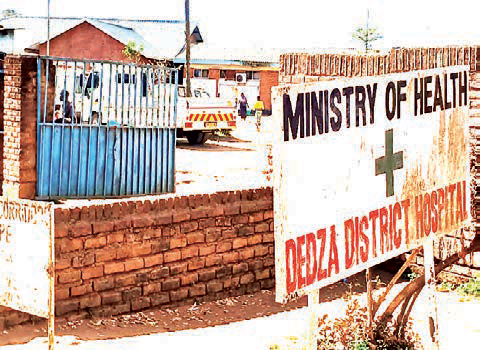
At 4:03pm on Saturday, May 9, 2026, the lights died in Dedza District Hospital’s nursery ward.
The hum of oxygen concentrators stopped.
The beeping of incubators flatlined.
For four premature infants, the countdown began. It lasted nearly seven hours.
- Advertisement -
The hospital line is sometimes exempt from Electricity Supply Corporation of Malawi (Escom) load-shedding.
This day, it was not. By midnight, when power returned, three infants were gone. By sunrise Sunday morning, a second round of load-shedding claimed a fourth life.
The babies were buried in their respective communities on Monday, May 11 and they included the daughter of Napuleyi Stephano from Group Village Headman Chikuse, Traditional Authority (TA) Kasumbu.
The others were the son of Sakina Mbela from Malindima Village, the baby of Mwatitha Egnale from Group Village Mchira and the child of Eliza Rashide from Group Village Mchepo—all from Senior Chief Kaphuka and all under 28 days old.
- Advertisement -
- Advertisement -
Their lives ended not just because the lights went out but also because the systems that are meant to protect them failed.
Multiple sources faulted fuel supply and infrastructure gaps for the situation, saying this left life-saving equipment inoperative.
Mother of one of the deceased babies, Napuleyi Stephano, had been admitted to the hospital for weeks with the daughter she conceived and hoped to see grow into an adult.
“I was admitted with the hope that the child I prayed for would heal.
I was devastated when officials broke the news that my child was gone.
This came when the nurse had just told me there was a marked improvement in the condition of the child,” she said.
A mother from Chabwalo Village, whose child survives on oxygen, described the night as one of helpless terror.
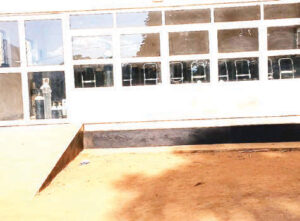
Her child was born with low birth weight at six months. “Some of us who had children in the room were engulfed in grief and fear. It was devastating because the children were dying and there was nothing the nurses could do about it. The authorities must look into this crisis. If it continues, more lives will be lost since this has been the order of the day,” said a mother in the ward.
Dedza District Hospital relies on three systems to keep its nursery ward alive.
On May 9 and 10, all three failed. Our inside sources confirmed the collapse. “When there is an electricity blackout, the whole facility is affected. It is disastrous in the nursery ward, where premature babies are kept. When there is no fuel, the generators become useless,” says a senior staffer, who asked not to be named.
In the absence of Escom power or emergency diesel generators, the hospital typically relies on oxygen gas cylinders for crucial wards.
However, sources allege that these gas oxygen cylinders were empty.
Hospital authorities reportedly blame the Malawi’s national fuel crisis for their inability to travel to Lilongwe for refills.
Malawi has faced acute diesel and petrol shortages for months. Queues stretch for kilometres. Black-market prices have tripled.
When asked about backup power in critical wards, hospital spokesperson Mwai Liabunya pointed to “solar panels” in the nursery ward.
“We also use solar systems in the nursery ward,” he said.
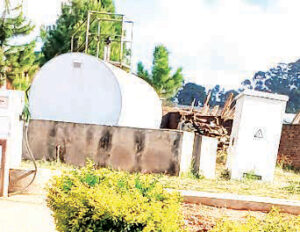
An on-site check found that the panels power lights only. They do not run oxygen concentrators or incubators, leaving life-saving equipment silent when the grid fails.
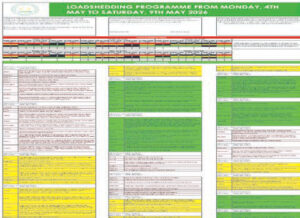
In response to a written questionnaire, Escom Chief Public Relations Officer Pilirani Phiri said Dedza District Hospital was not on the load-shedding exemption list as of May 9, 2026.
“Escom policy only exempts referral hospitals from load-shedding. Most district hospitals, including Dedza, are on shared lines that supply residential, institutional, and commercial customers. They are subject to scheduled load-shedding,” Phiri said
He added that the weekly schedule was circulated through Escom’s media platforms and shared directly in the official Dedza Escom Community Group, which includes the District Council and hospital representatives.
“Because Dedza District Hospital is supplied through the Chipatala Transformer on the 305 line, which also serves residential and commercial customers, it cannot be isolated or exempted.
“The hospital knows the line is not exempted. Once we communicate load-shedding, the hospital is expected to plan accordingly with standby power,” Phiri said.
Ministry of Health and Sanitation spokesperson Benedicto Mbewe failed to provide answers to our questionnaire, which was sent on Tuesday.

However, George Jobe, Malawi Health Equity Network Executive Director, said his organisation was saddened by the reported deaths.
“This tragic incident raises serious concerns about emergency preparedness and the state of critical healthcare systems in public hospitals. Essential services such as backup power and oxygen supply must always be functional to prevent avoidable loss of life,” Jobe said
Dedza Civil Society Network Chairperson Osborne Nyirongo urged the facility to prioritise backup power.
“Absence of back-up power for a nursery ward is not something we can joke with. It is [a case of] life or death. The facility must prioritise fuel for emergency power and make its budget public,” he said.
In an interview, Parliamentary Committee on Health Chairperson Anthony Masamba announced urgent intervention plans with the Ministry of Energy.
“Uninterrupted power in hospitals is a matter of life and death. The committee will formally request that the Ministry of Energy prioritise diesel allocations for hospital generators.” He said
Masamba stated that the tragedy violates Malawi’s Sustainable Development Goal (SDG) 3.2 commitment to end preventable newborn deaths by 2030. To honour this pledge, he insists health facilities must take precedence over private vehicles at fuel depots.
“Documented targets on newborn survival must match practical measures.
This requires collaboration between the ministries of Energy and Health to protect facilities during national crises,” he said To prevent future tragedies, Masamba said the committee would immediately secure protected diesel allocations through the Ministry of Energy, establish a ring-fenced line item for hospital fuel and oxygen in the 2026-27 health budget, coordinate with the ministries of Finance, Local
Government and Transport to safeguard supply chains.
“Malawi’s pledge to end preventable newborn deaths must be upheld. We will work across ministries to ensure health facilities are prioritised. Preventable tragedies like [the] Dedza [one] must not happen again,” Masamba indicated.