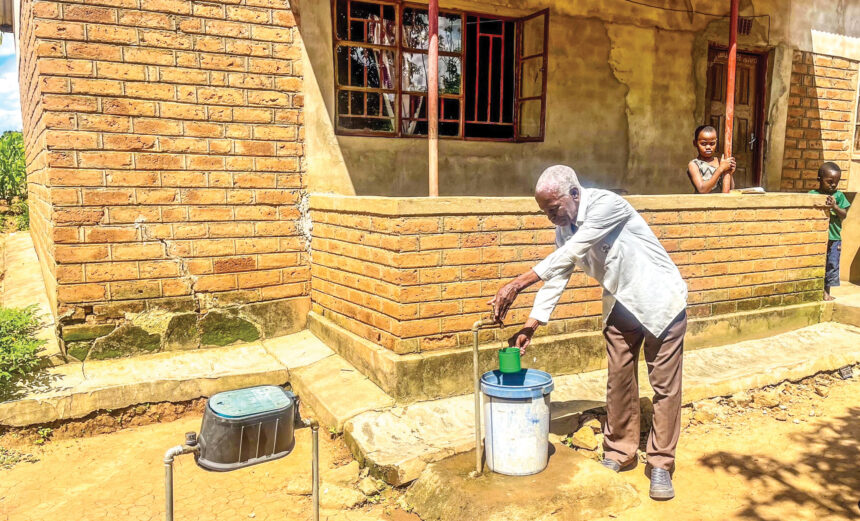
Prepaid meters that the Northern Region Water Board (NRWB) began installing in 2019 have started developing technical faults, forcing the water utility to replace them with postpaid meters.
The Daily Times understands that the fault relates to worn-out batteries, which cannot be sourced locally.
Under the €24.6 million NRWB Water Efficiency Project, funded by the European Investment Bank, one component involved the procurement and installation of 15,000 prepaid water meters at a total cost of €3.85 million.
At present, the board has about 30,000 of its 92,339 customers using prepaid meters who are likely to be affected.
“Water stopped coming out on Wednesday last week. It was only my house in the area where I live in Chibanja. Surprisingly, the interface unit could not indicate whether I had run out of credit; it was only displaying ‘connecting’ and nothing else,” Judith Nyirenda, a resident of Chibanja Township, said.
- Advertisement -
In an interview Monday, NRWB spokesperson Edward Nyirenda attributed the replacement challenges to “unforeseen circumstances”.
However, The Daily Times has learnt that the delays are largely due to foreign exchange scarcity, which has hindered procurement of the required batteries.
“Prepaid meters typically have a lifespan of about five years, after which their efficiency declines – particularly due to battery issues.
“We have recently seen this with meters installed earlier. While we have been replacing the batteries, we temporarily ran out of stock,” Nyirenda said.
- Advertisement -
- Advertisement -
He added that although replacements have been procured, delivery has been delayed due to the so-called unforeseen challenges.
“In the meantime, we are assisting affected customers by installing postpaid meters to ensure uninterrupted water supply,” Nyirenda said.
Last year, Blantyre Water Board also recalled its prepaid meters due to similar technical challenges.
Consumers Association of Malawi Executive Director John Kapito described the situation as retrogressive and raised concerns about the procurement process, particularly since prepaid metering was introduced as part of public service reforms.
Kapito proposed a proper commission of inquiry into all the water boards that have faced a similar challenge.
“Are we sure they did not know that these meters could not last for more than five years? How did they end up buying equipment that fails to meet the interests of consumers and the government?
“Have we all accepted that this was a mere misprocurement or that someone was involved in malpractice? A lot of money was used in the procurement; who approved it?” Kapito said.
NRWB was the first utility in the country to introduce prepaid water meters, piloting the initiative in Katoto, Chasefu and Chimaliro residential areas in Mzuzu City, where 1,000 meters were initially installed.