




By Alick Ponje in Belem, Brazil:
Malawi is among the countries most affected by extreme weather in 2024, according to the latest Climate Risk Index (CRI), published by Germanwatch.
The development, environmental and human rights organisation advocates for global equity and sustainability and works to influence public policy on trade, the environment and North-South relations.
The CRI, unveiled at the 30th UN Climate Change Conference (COP30) in Belem, Brazil, measures the human and economic toll of extreme weather events over the past year and the preceding 30 years.
Malawi ranks eighth for 2024, alongside Chad and Niger, as a low-income nation facing rising climate vulnerability.
- Advertisement -
Five other nations in the top ten are lower-middle income and two are upper-middle income.
“To countries, particularly to those ranked high in the index, the index is a warning sign of being at risk of either frequent event or rare and extraordinary events.
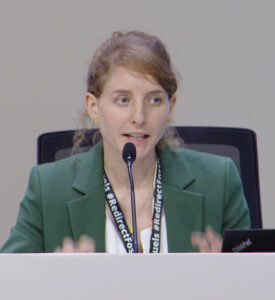
“And the index very clearly shows that the climate crisis is already a lived reality for people worldwide,” co-author Laura Schäfer said.
Over the past 30 years, extreme weather has caused more than 832,000 deaths and affected 5.7 billion people worldwide, with economic losses totalling almost $4.5 trillion, according to the index.
- Advertisement -
- Advertisement -
Schäfer called for stronger climate risk management and adaptation measures, adding that in 2025 courts have confirmed the urgency of climate action.
“The International Court of Justice [ICJ] advisory opinion clarified that states have binding legal duties to prevent and address the harmful effects of climate change,” she said, referencing a July ruling by the ICJ.
The case was initiated by the island nation of Vanuatu, supported by a group of Pacific Island law students and over 130 other UN member states, including Malawi.
Schäfer said COP30 must deliver a political roadmap to close the ambition gap, leading to an annual improvement of the so far inadequate national climate plans “and also the adoption of a roadmap for accelerating the phase-out of coal, oil and gas”.
“COP needs to come up with a credible strategy to move towards the $1.3 trillion as well as a new adaptation finance target and the loss and damage fund needs to be adequately filled,” she said.
The CRI rankings are based on “the best publicly available historical data on extreme weather impacts”.
These events are said to be often under-reported, particularly in the Global South, due to data quality and coverage challenges.
Just a day after the release of the index, President Peter Mutharika declared a state of disaster in all Malawi’s 28 districts, having initially done so in 11.
The declaration is due to the ongoing food insecurity crisis caused by prolonged dry spells affecting nearly a third of the 21-million-strong population.
“Government is facilitating provision of humanitarian assistance to all affected districts and to intensify irrigation farming,” a statement from the Office of the President and Cabinet said.
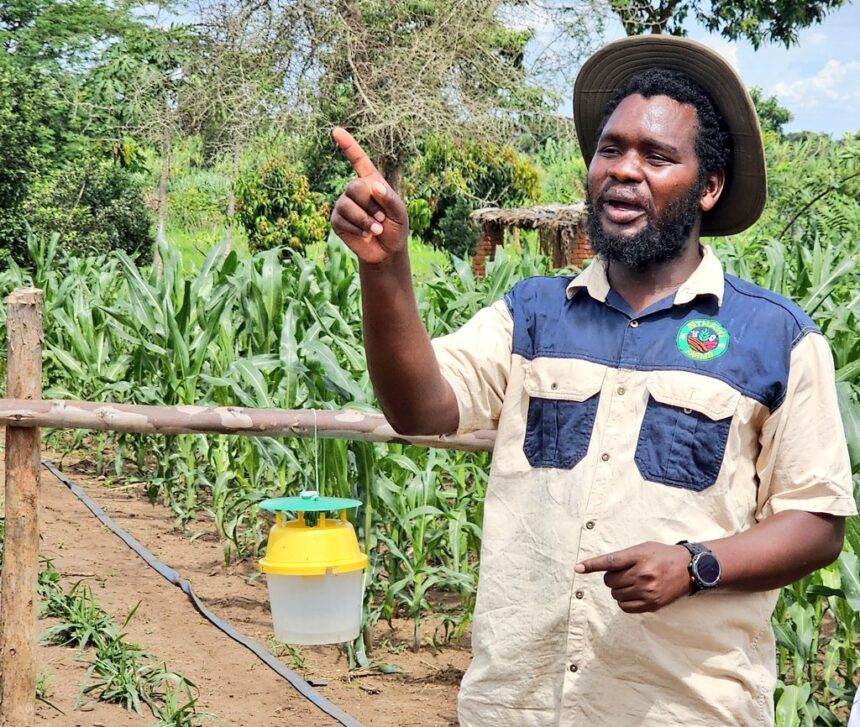
For young Malawian farmer Clement Taonani and hundreds of thousands of others, farming has become a daily struggle against unpredictable weather and worsening climate conditions.
Rainfall comes late, stops early or falls in destructive torrents. Rising temperatures dry soils faster and pests and crop diseases are increasing.
“Seasons that used to be clear and consistent are now confusing. We can plant in December and still face drought in January,” Taonani, who follows COP negotiations, said in an interview on Thursday.
He is adapting by moving away from monocropping, mixing crops, using biochar and organic matter, and focusing on soil regeneration to retain moisture.
The young farmer, who abandoned nursing to turn to the climate-stressed trade, says he is mostly self-funding his initiatives despite promises of support to youths.
“Sometimes there are programmes promising support, but access for smallholders like us remains very limited,” he said.
He sees climate negotiations as mere talk-shows whose benefits do not trickle down to farmers but hopes COP30 will be different.
“There is a lot of talk about adaptation finance, but on the ground, we still struggle with basic things like irrigation and reliable weather forecasts,” Taonani said.