By Deogratias Mmana:
After summoning seven institutions and pressing them to explain what went wrong with the export trade deal with South Sudan, the Parliamentary Committee on Industry, Trade and Tourism concluded that government institutions lacked the effective coordination to implement terms of the memorandum of understanding (MoU) between the two countries.
The committee also urged the government to begin implementing strategies that speak to the fundamental pillars highlighted in the national vision as the mission of the Export Development Fund (EDF), which was key to the trade agreement, is to accelerate structural transformation. EDF was the financier.
Already, Malawi has missed the opportunity to generate K900 billion.
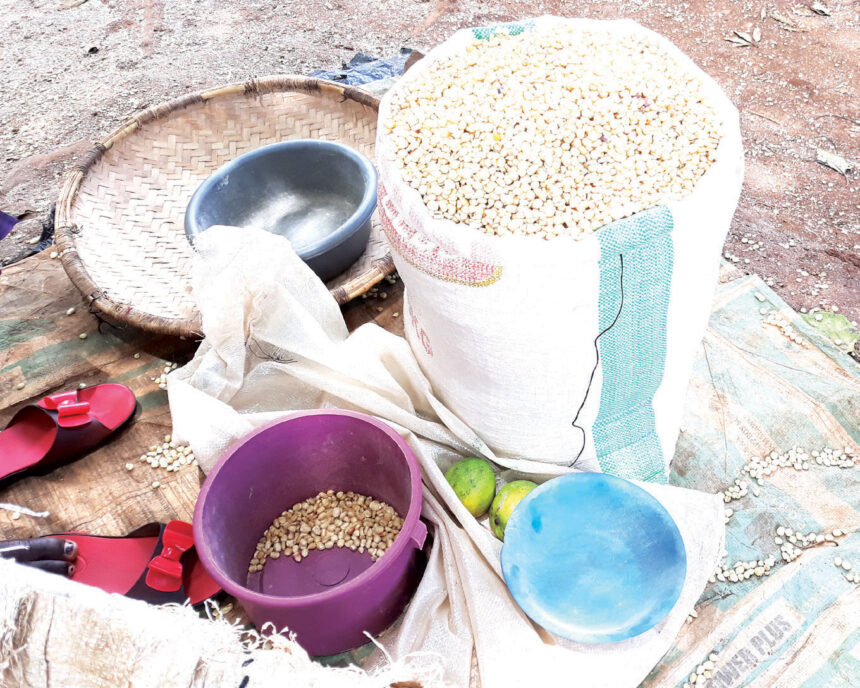
Under terms of the deal, Malawi was given the nod to supply maize, maize flour, groundnuts and beans to South Sudan.
- Advertisement -
The agreed quantity of produce was 180 000 metric tonnes (mt), which would have generated about K295 million for Malawi every year.
However, since the signing of the deal, Malawi has failed to realise about $885 million (about K900 billion) after failing to export farm produce.
The five-year deal, which was facilitated by Ideal Group Limited involving Trinity Holdings of Sudan as the buyer, was signed in 2021.
According to the committee’s report, seven institutions were summoned between September 4 and 10 2022 and several flaws that affected the trade were discovered.
- Advertisement -
- Advertisement -
The seven institutions that appeared before the committee included Ideal Group Limited (IGL), EDF, Agricultural Development and Marketing Corporation (Admarc), Malawi Bureau of Standards (MBS), Public Procurement and Disposal of Assets Authority (PPDA), Ministry of Agriculture and Irrigation (MoAI) and Ministry of Trade and Industry (MoTI).
When IGL, which was acting as the exporter, appeared before the committee, it was learnt that 14 trucks that were engaged to transport produce from Simama General Dealers could not leave after loading because EDF failed to pay and, after a month, transporters started protesting and threatened to abandon the loaded goods.
“Police were engaged to control the protests, and EDF indicated that it could only pay K30 million for fuel. EDF failed to pay the broker and litigation was issued against the broker by the owner of the trucks,” the report reads.
The report further said after crossing the border, the trucks were waiting for payment but, due to lack of funds from EDF, the processed flour faced transportation delays and the consignment remained at Dar es Salaam, Tanzania, for close to two months.
The report says EDF was not ready to fund the project as payment was made in two months instead of between seven and 14 days.
“A meeting with all growers was called for in late August 2021 but the meeting was held in early September 2021. It was claimed that the meeting was heated when the farmers refused to leave. EDF at that time confirmed that payment would be made in seven days,” the report says.
Later, the former minister of Finance Felix Mlusu disclosed that EDF did not have money, such that the Reserve Bank Governor was engaged to pay the transporter in mid- November 2021.
However, the 14 trucks that sought to cross the border were detained by the Sudanese Bureau of Standards from entering as the products were expected to expire in January 2022.
The report says the last shipment arrived in Juba in July 2022 and, upon arrival and inspection of the products, the Sudanese counterparts claimed that the flour from Malawi had arrived rotten, replete with maggots.
Both IGL and Trinity Holdings Limited (THL) claimed to have lost millions of dollars in the process.
And the report says when IGL and EDF officials travelled to South Sudan for physical inspection, they had a hostile reception and, later, an MoU was signed between MBS and SSBS to resolve the matter relating to contaminated flour.
The committee observed that a trip that could take seven to 12 days took three months and the other took six months and $150 (about K150,000) per day in damages were being incurred and EDF was expected to pay.
The committee also observed that finances were, upon delivery, supposed to come from South Sudan but the response to the invoicing was negative as it was argued that products were not in good condition.
IDL told the committee that it faced administration costs and insisted that the products would not be sold.
It further said, in the heat of the moment, statements were mad to the effect that official communication to withdraw the contract would be forwarded in due course.
“The committee was informed that EDF was the problem …and the committee noted [that] there was a cancer in EDF that was affecting its efficiency,” the report reads.
On its part, EDF told the committee that notification of initial exports from Malawi was not done by MBS but by Societe Generale de Surveillance (SGS) Malawi, which was condemned by the SSBS.
“This was contrary to the information that was provided to the committee by Ideal Group,” the report reads.
After that anomaly, the two parties agreed to do a second round of tests with results that were agreeable by the parties and they signed an agreement that warrants certification of products by them for the future.
The committee says most of the imports and exports such as rice, maize and bran that required import and export licences were smuggled at the border.
“The centralised system of issuing licences had delayed challenges which inhibited the facilitation of trade,” the report says.
As for Agricultural Development and Marketing Corporation (Admarc), the committee was told that the company was not issued with instructions to facilitate the trade export agreement between the two countries.
MBS told the committee that the MoU between it and SSBS was signed on January 28 2022 after the deal was already in motion.
“The committee observed that rectifying the embarrassment of exporting rotten flour was very important as there was lack of interface and export certification mechanism [that] required that the exporter approach the bureau voluntarily. The export deal went on without MBS [Malawi Bureau of Standards] knowing but it would have been able to advise that the products were not yet ready for exports,” the report reads.
The committee observed that since the discussions were government-to-government, the policy holder would have to come in to minimise the damage.
Leader of the House Richard Chimwendo Banda said the report exposed weaknesses or missed opportunities from the deal, which was designed to help the country generate forex and empower farmers.
Executive director for Church and Society, which is under Blantyre Synod of the Church of Central Africa Presbyterian, Reverend Master Jumbe said yesterday that it is unfortunate that people entrusted with the responsibility to serve the interests of Malawians cannot function as expected.
“The report simply exposes inefficiency in various offices. It is betrayal to Malawians when officers cannot deliver on such agreements,” Jumbe said.