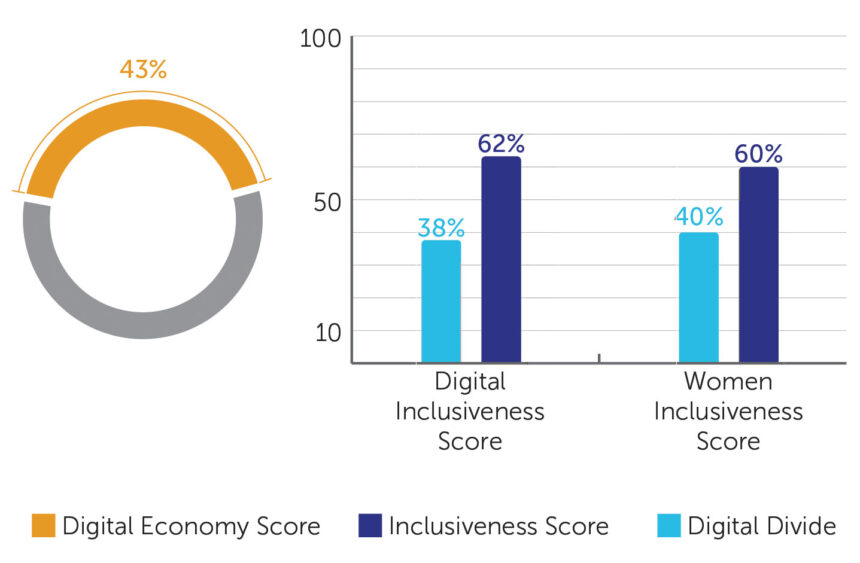
The first-ever data-rich report, Inclusive Digital Economy Scorecard (Ides) for Malawi, has rated the country’s digital economy score at 43 percent.
This score indicates that the country is at the higher end of the start-up phase and is close to reaching the threshold for transitioning into the expansion phase.
This serves as a basis for evaluating the level of advancement in the country’s digital economy.
The Ministry of Information and Digitalisation of Malawi, in partnership with UN Capital Development Fund (UNCDF), presented the report in April this year.
“The digital inclusiveness score is at 62 percent, which indicates the percentage of the marginalised population participating in the digital economy. [This is] data that are critical for strategy development as the Government of Malawi furthers its work on the Malawi 2063 and 10-Year Implementation Plan,” the report reads.
- Advertisement -
The report further indicates that 38 percent of the population is at risk of being excluded due to barriers in one or more of the four Ides components.
With clear data and strategies, the Ministry of Information and Digitalisation is likely to be an active monitor of achievements of the Malawi 2063.
“The Malawi 2063 and the 10-Year Implementation Plan will help ensure [that] the country is on its course to develop an inclusive digital economy from which all the people of Malawi can benefit,” it reads.
UNCDF has been actively engaged in supporting the development of the digital economy in various countries, including Malawi.
- Advertisement -
- Advertisement -
Moving forward, UNCDF said it remains committed to the promotion of inclusive and sustainable economic development through digital innovation.
“UNCDF will continue to work with our partners to build an enabling environment for the digital economy and ensure that all individuals and communities in Malawi have access to the benefits of the digital era,” it says.
Ministry of Trade and Industry spokesperson Mayeso Msokera said the government is, among other interventions, implementing the National Single Window, an electronic system, with simplified, efficient and harmonised trade procedures.
“This will allow traders to submit applications for licences and documents relating to trade. This will boost exports, simplify imports and reduce the cost of doing business.
“There is a trade portal that serves as a one-stop platform for all trade related information for our traders,” he said.
However, to harness the full benefits of the digital economy, the ministry says there is a need to further enhance internet connectivity in terms of coverage and speed, boost the digital literacy, expand ICT infrastructure and strengthen cyber security issues, among other things.