






By using this site, you agree to the Privacy Policy.
Accept
The Times GroupThe Times Group
  • Home
  • National
    National
    Get the latest National News from your trusted source.
    Show More
    Top News
    Lawyers’ body wants Judge Manda probed
    October 14, 2024
    Education fight escalates in Nkhata Bay
    October 22, 2024
    Lazarus Chakwera rallies voters to register
    October 30, 2024
    Latest News
    Japan hails Malawi volunteer partnership
    November 12, 2026
    Malawi launches Population Awareness Month
    November 12, 2026
    Unmet promises
    November 12, 2026
    Malawi awaits IMF Board date on ECF
    November 12, 2026
  • Business
    Business
    Breaking news and analysis on business and the economy, including the latest news in technology, stock markets, media and finance.
    Show More
    Top News
    Forex shortage triggers cost-of-living crisis
    October 20, 2023
    Opportunity to deepen US-Malawi trade, investment
    November 2, 2023
    Muscco pushes for financial inclusion
    November 14, 2023
    Latest News
    MSE targets mining firms’ market entry
    November 12, 2026
    Honey industry faces setbacks
    November 12, 2026
    EU offers Malawi duty-free market for critical minerals
    November 12, 2026
    Cassava, potato value chains face challenges
    November 11, 2026
  • Entertainment
    Entertainment
    Your source for entertainment news, celebrities, celeb news, and celebrity gossip. Check out the hottest fashion, photos, movies and TV shows!
    Show More
    Top News
    Thlupego Chisiza to be laid to rest today
    June 19, 2023
    Suffix to star for Malawi in Germany
    July 12, 2023
    All set for Malawi Has Talent elimination show
    July 28, 2023
    Latest News
    Jack Mapanje’s last verse rises from ‘Rare Earths’
    November 12, 2026
    Casino leads Maso chorus
    November 11, 2026
    Malawi, India bond in song of freedom
    November 10, 2026
    First Couple mourns Jack Mapanje
    November 6, 2026
  • Sports
    Sports
    Keeping you up to date on the latest sports news from Malawi and around the World. With live scores, fixtures from world of Football, Netball,…
    Show More
    Top News
    Nomads won’t beef up squad for Caf tourney
    August 6, 2026
    Unfriendly Scorchers baptise Seychelles
    September 26, 2023
    MPs pledge continued support for Scorchers
    August 21, 2026
    Latest News
    Flames step up preparations ahead of Egypt clash
    November 12, 2026
    Fam commits K5 million to Swam
    November 12, 2026
    FA Cup in the offing
    November 12, 2026
    Coach Kalisto Pasuwa faces goalkeeper dilemma
    November 11, 2026
  • fyi
Search
More Categories
  • World
  • Features
  • Leisure
  • Social and Human interest
  • Digital & Technology
  • Advertise
  • About Us
  • Privacy Policy
  • Contact Us
© Copyright 2026, The Times Group. All Rights Reserved.
Reading: Malawi farming experiment shows how simple changes can boost maize yields
Share
Sign In
0

No products in the cart.

Notification Show More
Latest News
Japan hails Malawi volunteer partnership
National
Malawi launches Population Awareness Month
National
MSE targets mining firms’ market entry
Business
Flames step up preparations ahead of Egypt clash
Sports
Fam commits K5 million to Swam
Sports
Aa
The Times GroupThe Times Group
0
Aa
Search
  • Home
  • National
  • Business
  • Sports
  • Entertainment
  • Features
  • World
  • Digital & Technology
  • Leisure
  • Social and Human interest
  • Times Radio
  • Read e-Paper
  • Exclusive Content
  • Dzuka Publishing Company Limited
Have an existing account? Sign In
Follow US
  • Advertise
  • About Us
  • Privacy Policy
  • Contact Us
© Copyright 2026, Times Group Media. All Rights Reserved.
The Times Group > Blog > Features > Malawi farming experiment shows how simple changes can boost maize yields
Features

Malawi farming experiment shows how simple changes can boost maize yields

Times News
Last updated: 2024/06/15 at 10:08 AM
Times News
Share
7 Min Read
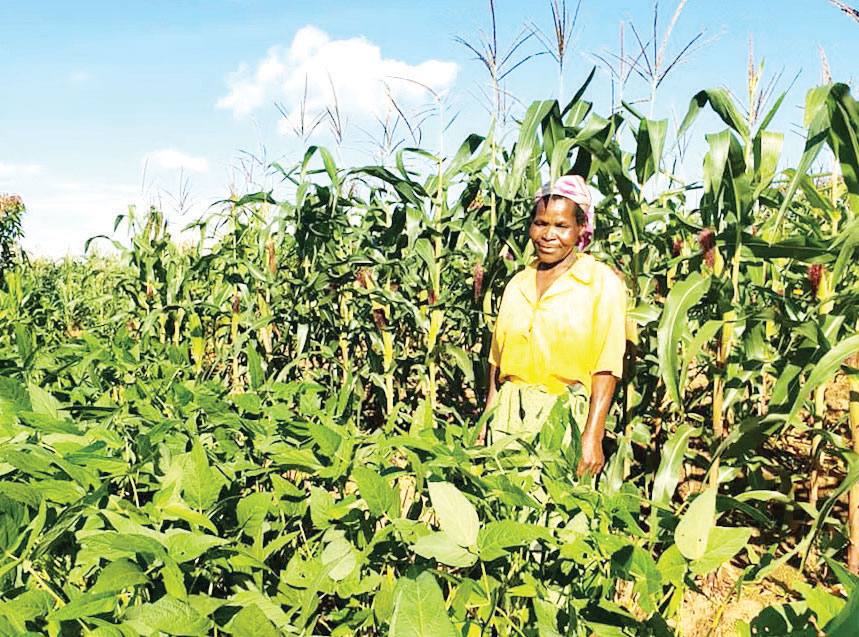
SOMETHING TO SMILE ABOUT—Esnala Jumbe of Njete Village in her maize-legume plot
SHARE
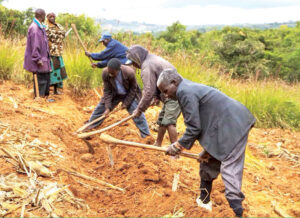
DIGGING UP FORTUNES—Smallholder farmers in northern Malawi, preparing deep beds to plant with peas and maize

By Alan Dixon:

Malawi’s increasingly unpredictable rainfall and higher than usual temperatures are causing problems for smallholder farmers. Soil erosion has increased, causing soil fertility and water availability to decline. Crops often fail.

Farmers are already struggling financially. Many farm only one crop: maize. They can’t easily afford chemical fertilisers that would boost the soil’s fertility and sustain yields.

Agriculture accounts for just over 25 percent of Malawi’s gross domestic product. About 80 percent of the population depend on smallholder farming for their survival.

- Advertisement -

Ad image

We are soil fertility and sustainable development specialists. Together with sustainable agriculture and environmental researcher Augustine Talababie Phiri, we set out to discover how we could use different combinations of plants to improve soil fertility so that farmers wouldn’t need expensive fertilisers.

- Advertisement -

We conducted trials on farms in northern Malawi where we tested a combination of different crops grown together. We then measured changes to the soil fertility in each field over a two year period.

Our research found that growing maize with cowpea and pigeon pea in raised “deep beds” led to much greater soil fertility.

What we researched

Traditional farming techniques involve tilling the soil each year and then planting and cultivating one crop on narrow ridges. However, these ridges are extremely vulnerable to soil erosion.

- Advertisement -

We looked into the results of combining intercropping with deep bed farming. Intercropping means growing two or more crops side by side, instead of just one. Deep bed farming is a new practice developed in Malawi where a farmer digs with a pickaxe all the way through the hard layer of soil near the surface. This hard layer – the compacted soil hardpan – prevents plant roots from growing well, and usually stunts the growth of the crop. Breaking it up allows the crop roots more room to grow.

The other part of deep bed farming involves planting seedlings on piles of soil 30cm higher than ground level. The farmer then digs a ditch next to these beds to catch and hold rainwater, and keep the soil moist for months.

We worked with a Malawi non-governmental organisation, Tiyeni, which has been training farmers in sustainable and climate-smart agriculture since 2004. Tiyeni had found that the maize yield from deep beds was much higher than maize grown the normal way.

We decided to work with smallholder farmers in Msongwe, near the city of Mzuzu, to see if intercropping peas with maize in deep beds would give even better results.
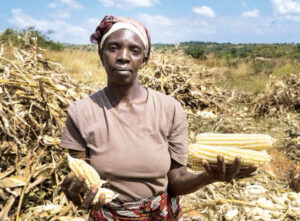
BEARING FRUIT—Farmer Ivy Trindade shows the bigger cobs grown under the new method

Our experimental design compared agricultural plots across two growing seasons, one after another. We tried growing different combinations of maize in traditional cultivation ridges (ordinarily sown in lines) and in deep beds, both on its own and intercropped with cowpea or pigeon pea. We then analysed the amount of nitrates in the soil – one of the most important nutrients to help plants grow. We also analysed the amount of phosphates (or phosphorous, another important nutrient) in the soil and measured the amount of maize that was grown.

Inexpensive climate-smart solutions

Our research found that intercropping improves the soil a lot. Legumes such as beans or peas take nitrogen from the atmosphere and turn it into ammonium and nitrate in the soil. This is a natural fertiliser. It improves soil health and supports better growth for other crops, like maize, that are planted alongside legumes.

When cereal-legume intercropping is combined with deep bed farming, the results are even better. We found that:

Soil is more fertile: The nitrogen-fixing ability of pigeon pea and cowpea enriched the soil even more than ordinary fertilisers did. In the test areas with deep bed farming, the soil fertility improved even more and remained very fertile across the two growing seasons.

Crops produce more: Intercropping with legumes showed higher crop yields compared to the fields where only maize was grown. Again, these effects were higher in the deep bed farming fields across the two growing seasons.

Why this matters

This new method of farming improves the quality of the soil and its ability to grow more crops.

Farmers can reduce their dependence on chemical fertilisers, which are often expensive and out of reach. This makes farming more sustainable and cost-effective.

Higher yields of maize, cowpea and pigeon pea mean a greater quantity and diversity of nutritious food can be produced on the same amount of land.

Because farmers don’t have to buy fertilisers, their profits are greater and it costs less to grow more crops to sell. Farmers used these profits for many different things, from paying school fees to investing in business enterprises.

Deep bed farming reduces soil erosion and compaction. When soil is compacted, or pressed together too tightly, it does not retain water. This is important in Malawi, which has suffered a number of El Niño droughts. The natural nitrogen-fixing process of legumes also reduces the environmental impacts of farming.

In short, combining deep bed farming with legume intercropping can enhance the benefits already being achieved by both systems independently. As climate change continues to negatively affect agriculture worldwide, innovative approaches like these will be essential in creating more resilient and productive agricultural systems.—THE CONVERSATION

The author is Professor of Sustainable Development, University of Worcester and Trustee for Tiyeni, a Malawian NGO that shows show farmers how to improve their crop yields, using extremely low-cost, low-technology set of methods.


You Might Also Like

Malawi’s public debt situation

The rush to catch Super El Niño off

Mponela 2 Primary School battles for dignity

Eyes on Commonwealth leaders’ meeting

Quenching thirst in trash: Residents turn to polluted rivers for water

TAGGED: Esnala Jumbe, Farmer Ivy Trindade, Smallholder farmers

Sign Up For Daily Newsletter

Be keep up! Get the latest breaking news delivered straight to your inbox.

By signing up, you agree to our Terms of Use and acknowledge the data practices in our Privacy Policy. You may unsubscribe at any time.
Times News June 15, 2024
Share this Article
Facebook Twitter Copy Link Print
Share
Previous Article Literary craft: Art of writing a great short story
Next Article Flames pull out of Cosafa Cup
Leave a comment Leave a comment

Click here to cancel reply.

Please Login to Comment.

Stay Connected

554.5k Followers Like
120.8k Followers Follow
5.5k Followers Follow
28.6k Subscribers Subscribe

Latest News

Japan hails Malawi volunteer partnership
National November 12, 2026
Malawi launches Population Awareness Month
National November 12, 2026
MSE targets mining firms’ market entry
Business November 12, 2026
Flames step up preparations ahead of Egypt clash
Sports November 12, 2026
//

The Times Group is a multi-award winning media group and the only 360 media house in Malawi.

About Us

  • Company Profile
  • Rate Cards
  • Vacancies
  • Privacy Policy
  • Contact Us

Quick Links

  • e-Edition
  • Times Radio
  • Subscribe for Exclusive Content
  • Submit a Story
The Times GroupThe Times Group
Follow US

© Copyright 2026, The Times Group. All Rights Reserved.

  • Advertise
  • About Us
  • Privacy Policy
  • Contact Us

Removed from reading list

Undo
Welcome Back!

Sign in to your account

Lost your password?
