




By Chimwemwe Mangazi in Shanghai, China:
Malawi’s failure to show up at the on-going 9th China International Import Expo has raised questions about the country’s preparedness to exploit international trade opportunities.
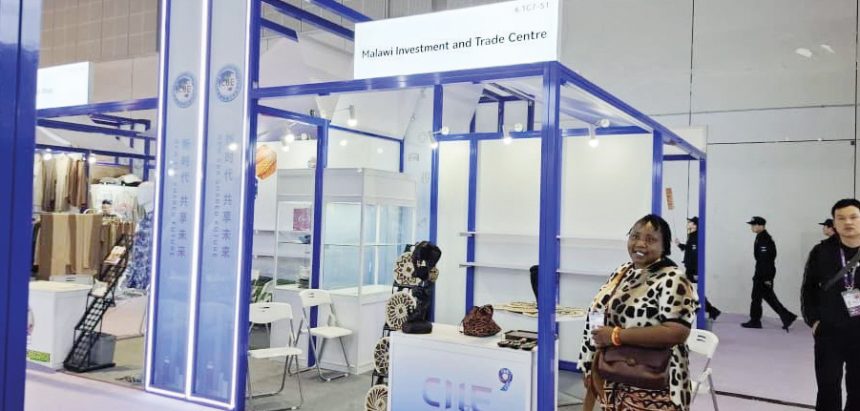
Malawi’s pavilion was found without local exhibitors on the first two days of the exhibition.
Instead, one of the country’s four booths had been given to an exhibitor from Guinea, while another was occupied by a Zambian businesswoman displaying sculptures.
- Advertisement -

Malawi Investment Trade Centre spokesperson Ndondwa Msaka said the centre registered and coordinated participation arrangements for eight businesspersons at this year’s expo.
- Advertisement -
“However, some experienced challenges with export permits and we are still following up on the other two,” Msaka said.
The absence of local exhibitors raises concerns about the practical challenges Malawian businesses face in accessing international markets, particularly export documentation and regulatory requirements.
United Nations Development Programme Administrator Alexander De Croo said developing countries needed to do more than secure access to international markets, stressing the importance of building local production capacity.
He further said the success of trade should not only be measured by the volume of goods exchanged, but also by its impact on people’s livelihoods.
- Advertisement -
“Access to markets is only the beginning. The real task, the larger task, is to build productive capacity that can make use of that market access,” Croo said.
This comes at a time when China is promoting the expo as a platform for countries to access its market, attract investment and strengthen international business partnerships.
China’s Minister of Commerce Wang Wentao said this year’s expo had attracted 162 countries, regions and international organisations, with more than 4,100 exhibitors taking part in the business exhibition.
He said the event was designed to help countries share opportunities created by China’s development and promote mutually beneficial cooperation.