By Brian Banda:
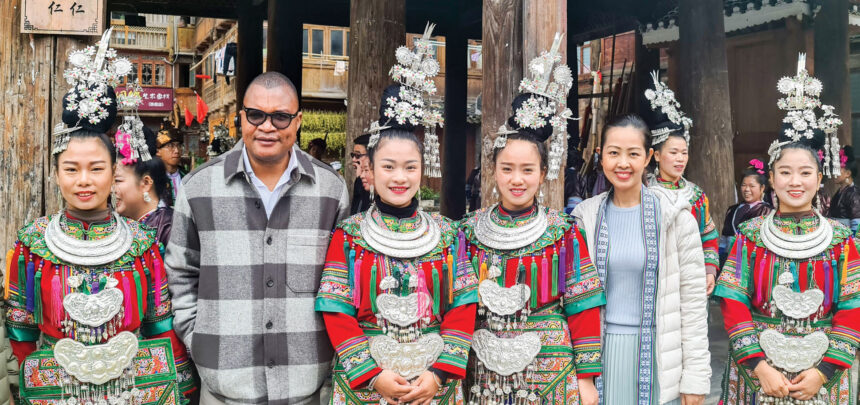
It took me time to figure it out but, finally, I think I know why the Chinese people are making it big in almost all spheres of life.
I am talking about both at home [in China] and abroad.
Here, I am not talking about soft loans that have made China the darling of the African countries such as Malawi. China-funded facilities have enabled countries such as Malawi to have structures such as Bingu International Convention Centre (BICC), Parliament Building, Bingu National Stadium (BNS), among the countless initiatives that have endeared Malawians to the Chinese people in general and the Chinese government in particular.
Today, though, I want to focus on tourism, which is timely considering that we are in the National Tourism Month.
- Advertisement -
Let me start with the way the Chinese conduct their business in the tourism sector. What I learned, during my stay there, is that, when it comes to promoting tourism, the Chinese seem to have two ways of going about business and these are: Either letting the mind become a beehive of activity during the tourism off-season or turning tourist attraction sites into beehives of activity by attracting people through promotional campaigns.
I will quickly expound on this. By saying the Chinese— be it citizens, government officials and private sector players— let the mind become a beehive of activity during the tourism off-season, I mean they do not care whether the weather is affecting tourism or not; they are always innovating and coming up with ways of attracting more tourists when the weather and other factors finally allow for the influx of tourists.
Malawi can learn from that, too. For example, during the rainy season in Malawi, which often spans from October to April, individual citizens, government officials and private sector players can take advantage of that tourists’ ‘breather’ to think about ways of making Malawi’s tourism attraction sites attractive.
This includes doing what the Malawi Government did the other time; advertising Malawi tourist attraction sites using international media.
- Advertisement -
- Advertisement -
The thing is, with tourism, there is nothing like taking a breather from innovation.
Which brings me to the second point; turning tourist attraction sites into beehives of activity by attracting people through promotional campaigns.
Sometimes, one does not necessarily have to spend wads of cash on promotional campaigns. By simply reducing prices for accommodation services, for example, tourists share the news among themselves, at no cost to the manager of a tourist attraction site, and the tourists flock in.
The other way of doing it is actually going on the offensive, in terms of raising awareness about tourist attraction sites, zooming in on unique places.
In this regard, Malawi has many unique species, notably Tilapia saka. Other people prefer to call it Oreochromis saka, which is typically a species of cichlid fish that is endemic to Lake Malawi and Lake Malombe.
The fish cannot be found in all parts of the world, more so because it inhabits relatively shallow coastal areas. The fish, which is known to reach a standard length of 36 centimetres and is part of the subgenus Nyasalapia, also known as Chambo, is so tasty that it literally has few rivals, taste-bud-wise, throughout the world.
Maybe I should highlight some of the activities that are taking place in China right now, in terms of tourism sites promotion, before I can cite those in Malawi.
As at now, thanks to awareness-raising campaigns, autumn tourism is flourishing. A case in point is Changbai Mountain in Jilin, where the site has become a beehive of activity.
In Beijing, Hotel Nuo has taken the game of tourism marketing to another level by unveiling tours at all its historical sites.
Indeed, as I am writing, tourists are appreciating the early autumn scenery at the Great Wall in Hebei, while other people— Chinese people themselves and foreign tourists— are appreciating paddy field paintings as they celebrate the bumper harvest in Jilin.
Not just that, Dawa Lake in Southwest China’s Tibet area has become the fresh flower that is attracting all the bees as tourists, both local and foreign, are flocking there.
These activities are not just happening in China; in Saudi Arabia in the Middle East, for example, community members, tourism industry players and government officials are preparing for the arrival of Chinese tourists.
These tourists will shore up the economy of Saudi Arabia by spending the hard cash on accommodation, food and other ware.
Malawi, too, can reap from Chinese tourism. Malawi can boost its foreign exchange reserves by attracting tourists from China.
Of course, the tourists will not fall from the sky. They have to be made aware of places of tourist attraction in Malawi through awareness campaigns.
I am sure that, by now, BNS, Parliament Building, BICC and other sites that have changed the outlook of places that surround them, thanks to the government of China’s understanding, qualify as sites of tourist attraction in Malawi.
And Malawi has more of such places.
As National Tourism Month— a day when United Nations World Tourism Organisation Member states and the rest of the world join hands in commemorating World Tourism Day, which falls on September 27— wears off, Malawians can think of places such as Mulanje Mountain, which is renowned for Mulanje Cider.
Also coming to mind are the tea plantations that paint the whole place green there.
Also in the picture is Mount Michesi.
Zomba Mountain, Dedza Mountain, Dzalanyama Forest, Chia Lagoon in Nkhotakota District and Madzimawira [hotspring] in the same district, Chiweta Lake View, among other places, are up there with the best tourist attraction sites in the world.
Malawi, commonly known as the Warm Heart of Africa, also has Mpata road, which is tucked between Mulanje and Michesi mountains in the Southern Region and is part of history for all the wrong reasons: Arabs used it as slave trade route.
Did I, the other day, not hear about the spirits of Anamwansepwani? Of course, everything about them remains a mystery— something a tourist would find worth exploring anyway.
In addition, Malawi has lakes, namely Malawi, Malombe, Chiuta, Chilwa and Lake Kazuni; national parks [Liwonde, Kasungu, Lengwe and Nyika], wildlife reserves [Majete, Nkhotakota, among others], the mighty Shire River, Ruo River and other tourist attraction sites.
There are countless places a tourist would visit in Malawi.
However, for this to happen, there is a need for stakeholders to emulate one more example from China; launch campaigns such as Amazing China in 60 Seconds.
Amazing China in 60 Seconds can be turned into Amazing Malawi in 60 Seconds and, just as the Chinese have transformed the physical appearance of the capital Lilongwe through BNS, BICC and Parliament Building, they [the Chinese] can as well help Malawi address challenges it faces in tourism through some of its ideas.
After all, what are diplomatic friends for?