Persons with disabilities in Malawi continue to face harsh realities on the streets.
This is happening as the Constitutional Court spends eight years on a case in which they are challenging Section 180 (b) of the Penal Code.
The section in question criminalises begging.
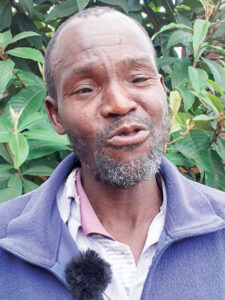
Regina Phiri, a visually impaired resident of Bangwe, said she asks for alms because, apart from being blind, she does not have any source of income to support her two school-going children.
She added that she allows one child to attend classes while engaging the other in begging in the streets.
- Advertisement -
“We face many challenges, including arrests by the police, and it is our hope that our concerns will be heard,” she said.
According to Phiri, the said law criminalises poverty because, being a vulnerable group, they have no source of income.
Stella Viano from Masala Village, Blantyre, said she faces insults and police torture.
“I can’t send my children to school without giving them food. In the morning, I wake them up and take them on begging errands in town, where we get insulted. My children are sometimes beaten up and roughed up by street-connected children,” she said.
- Advertisement -
- Advertisement -
Viano wondered why the government was silent on the issue pertaining to their concerns, especially on Section 180 (b) of the Penal Code.
“Why are they arresting us when the same government cannot provide us with our needs? Where else can we turn to for help? She queried.
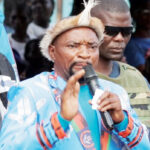
Aron Tambala, also blind, from Mondiwa Village in Blantyre wakes up every day to beg on the streets so that he can support his family.
As leader of Tithandizane Association of the Visually Impaired (Tavi), he highlights challenges faced by persons with disabilities, including police arrests and detention.
“We go through pain. How can you stop someone from begging yet you do not provide them with support?” he questions, adding that they are often forgotten, except during election periods.
Malawi’s laws on begging are facing renewed scrutiny, with activists arguing they violate human rights and perpetuate poverty.
Section 180(b) of the Penal Code makes it an offense to be “idle and disorderly”, disproportionately affecting vulnerable groups, including persons with disabilities.

Vivian Kasunda, a Criminal Justice Researcher at Southern Africa Litigation Centre, said the law criminalises poverty and status.
She said poor people, particularly those who beg on the streets, are being arrested by the police for begging and are, thereafter, being charged with the offence of being idle and disorderly.
Kasunda said the issue is that the section criminalises poverty and status, which, she said, is also a violation of the right to engage in economic activity as well as the right to development.
She said, in line with constitutional provisions, the government has to ensure that persons with disabilities are covered.
“The government is obliged to protect these individuals, not penalize them,” she emphasised.
Kasunda argued that beggars lack government support and income sources, highlighting the need for policy change.
Principal Civil and Rights Officer for Malawi Human Rights Commission, Monica Namonde, has stressed the urgency of resolving the eight-year-old case, calling it a violation of the principle of access to justice.

Namonde said eight years is “a very long time” and also an “unreasonable period of time” for people to be waiting to hear from the courts about their claim.
“This borders around their rights to access justice and, in this case, it is a clear violation of the right to access justice,” Namonde explained.
She added that this is an important case because it is going to give direction assuming that the court decides that the section is, indeed, unconstitutional or constitutional.
The applicants, who are persons with disabilities and were arrested and convicted of begging in 2017, are challenging the constitutionality of the offence of begging, which applies to non-aggressive begging, saying it criminalises the poor.
In 2024, the High Court certified the begging case as a constitutional matter.
One of the key components of the Sustainable Development Goals—in this case Goal Number 16, which talks about promoting peaceful and inclusive societies—is the provision of access to justice for all, and building effective and accountable institutions at all levels.