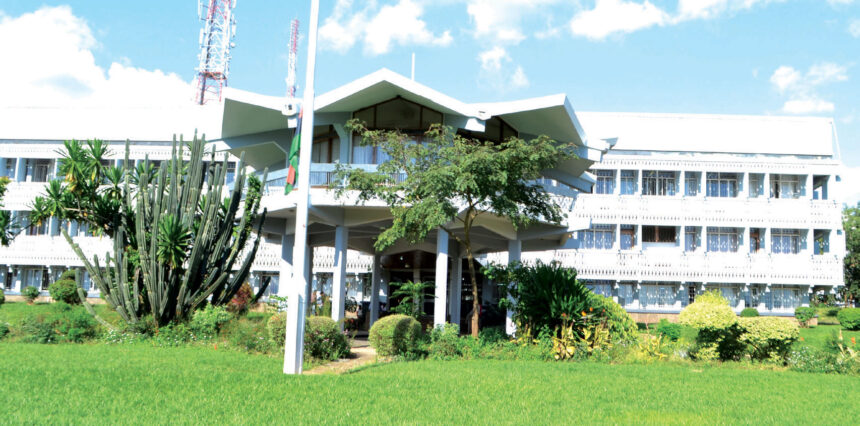
Every day, the powers that be in the government passionately talk about cutting public expenditure. So what expenditure is being cut when a country of 21 ministries has 63 principal secretaries and spends about K1 trillion a year on potentially excess PSs?

By Deogratias Mmana:
The government of Malawi has 21 ministries. But it has 63 principal secretaries running those ministries, almost an average of three PSs for each ministry.
The 63 PSs include 56 who are managing the ministries and another group which is dumped at the Office of the President and Cabinet (OPC) where they are doing nothing but drawing salaries and commensurate perks allocated to a PS.
Salaries
The revised salaries for employees in the civil service as announced by Secretary for Human Resource Management and Development Blessings Chilabade in January this year show that a principal secretary at Grade C pockets K25.8 million per year.
- Advertisement -
This translates to K2.15 million per month.
Malawi News understands that some PSs who have been in the system for a number of years get more than this.
Going by the figures in the January circular, it means that the government will have spent over K1.6 trillion on the 63 PSs in one year in salaries alone.
And if Malawi was to get to the practice of one PS for each ministry, it means there is excess of 42 PSs who will draw about K1 trillion in a year.
- Advertisement -
- Advertisement -
Other benefits
Apart from the salary, each PS is also entitled to a monthly fuel allocation. Until recently, the allocation was 500 litres.
Government also provide each PS with K50,000 airtime and a TX Prado vehicle.
The PSs
According to the government’s updated PSs list of April 2024, here are the 56:
- G.Kaonongera and Anjimile Mtila at the Office of the President and Cabinet;
- S.T Ngutwa, clerk to the Cabinet at OPC;
- Luckie Sikwese for the Vice President;
- Dickxie Kampani, Medrina Mloza Banda, Geofrey Mamba at Agriculture;
- James Chiusiwa at Defence;
- Mangani Katundu and Joseph Mkandawire at Education
- Alfonso Chikuni at Energy;
- Betchani Tchereni, Ted Sitimawina and Hetherwick Njati at Treasury;
- Bernard Sande and Mary Kachale at Foreign Affairs;
- Yusuf Mkungula and Richard Perekamoyo at Natural Resources;
- Samson Mndolo and James Manyetera at Health;
- Steven Kayuni, Mphatso Sambo and Erica Maganga at Home Affairs;
- Chrisitna Zakeyu and Francis Zhuwao at Trade and Industry;
- Elias Chimulambe for Water and Sanitation;
- Baldwin Chiyamwaka at Information;
- Allison M’bang’ombe at Justice.
- Chikondano Mussa at Labour;
- Richard Hara, Esmie Kainja, Elizabeth Chindevu and Chrissy Chiumia at Local Government;
- Chancellor Kaferapanjira and Martin Phiri at Mining;
- Chauncy Simwaka and Marjorie Shema at Tourism;
- David Mzandu and Madalo Nyambose at transport;
- Isaac Katopola and Chikumbutso Mtumodzi at Youth and Sports;
- Blessings Chilabade and Ian Chingwalu at the Department of Human Resource Management and Development;
- Ireen Chikapa at Civil Service Commission;
- Thomas Makiwa at National Audit Office;
- Stuart Ligomeka, Comptroller of Publications and Printing Services;
- Peter Simbani, Comptroller of Statutory Corporations;
- Henry Mphasa and Chimwemwe Banda at the Accountant General’s Office;
- Jean Munyenyembe as Controller of the Department of Procurement and Supply Services;
- Patrick Zimpita and Jacob Mazalale at Economic Planning and Development;
- Charles Kalemba at the Department of Disaster and Management Affairs;
- Davie Chilonga is at Lands.
Those dumped at the OPC include the following:
- Thokozire Banda,
- Sungani Mandala,
- Hilary Chimota,
- Wezi Kayira,
- Patrick Matanda,
- Often Thyolani
- Ali Chibwana.
‘We will provide response’
We asked OPC Chief Communications Officer Robert Kalindiza to explain our findings.
“We will provide a response,” he said.
“We need to verify the figure that you have mentioned. But there is a reason for every decision. I am on a plane now going to Ethiopia and so I may get the response when I do have a network. But still I will provide the response,” Kalindiza said.
‘Political patronage’
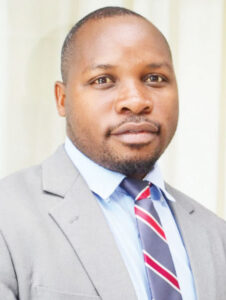
National Coordinator for Catholic Commission for Justice and Peace (CCJP) Boniface Chibwana said this trend of bloating the public service has been there for a while.
He said governments prioritise expanding ministries and PS roles more often to manage political alliances other than serving public interest.
“The unfortunate part of this is that it drains most of our resources. It also brings unnecessary competition that derails coordination within and among ministries as some PSs have risen through civil service while others are purely political appointees. This demotivates officers that deserve legitimate promotions,” Chibwana said.
He added: “There is no better explanation to this other than political patronage to satisfy political allies by the government of the day.”
To correct this, two things need to be done, according to Chibwana.
“First as a country, we need a comprehensive audit and rationalisation of these roles are necessary. This would help ensure that public resources are used more effectively.
“The second aspect is political will to conduct this audit and rationalisation of roles; otherwise without it the first measure would not even go through,” he said.
Publicity Secretary for Political Science Association Mabvuto Bamusi said bloating of government system is a form of corruption.
Failed public sector reforms
It is also a portrayal of the state of political capture that civil service finds itself in.
“It signals the failure of public sector reforms. It reflects the wastage of time and resources invested in functional reviews over the years. It is a manifestation of the triumph of partisan politics which favours some PSs and condemns others into the despicable ‘Guantanamo’ [the OPC],” Bamusi said.
He called for an urgent need for the government to be held accountable for this extravagance.