




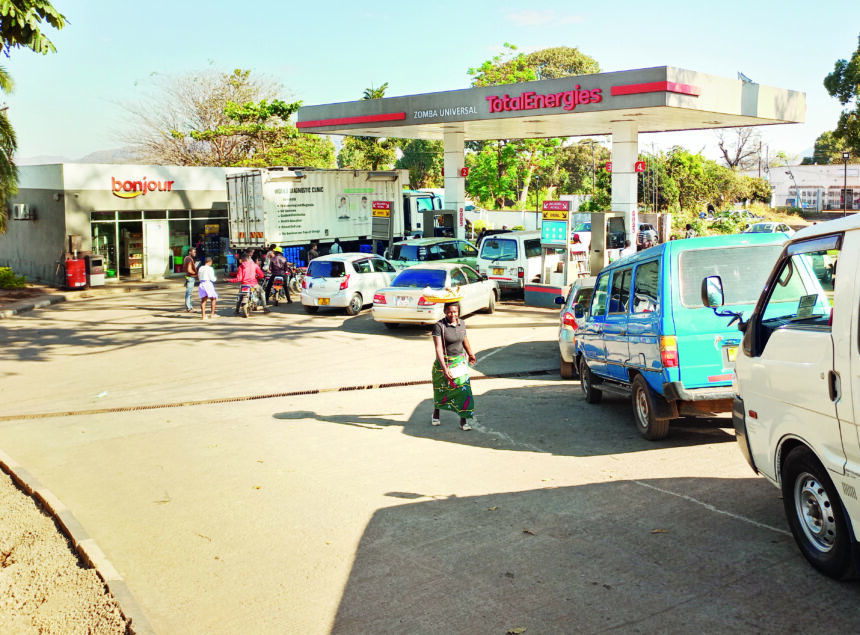
The manufacturing sector is operating below capacity as persistent foreign exchange shortages, leading to fuel scarcity and coupled with prolonged electricity blackouts continue to disrupt production and weaken business viability.
Industry leaders have since said the ongoing constraints are not only crippling firms but also threatening government revenue and accelerating a shift away from local production.
In an interview yon Tuesday, Manufacturers Association of Malawi President Gloria Zimba said companies were operating at about 46 percent capacity on average, with some recording sales volumes at about 35 percent lower than last year.
Zimba said the unstable economic environment which is characterised by unpredictable policy shifts and shortages of critical inputs, is making it difficult for firms to plan and sustain operations.
“In a volatile environment where key economic factors are constantly changing, it becomes very difficult for businesses to plan and execute their strategies,” Zimba said.
- Advertisement -
She identified forex shortages, fuel supply disruptions and erratic electricity as the major constraints affecting production.
According to Zimba, frequent load-shedding by power supplier Electricity Supply Corporation of Malawi (Escom), has forced companies to rely on generators, further increasing operational costs.
However, she said fuel shortages and lack of forex to import it have made this alternative unsustainable.
“You cannot run generators without fuel, and you cannot procure fuel without forex,” she said.
- Advertisement -
- Advertisement -
The association said that production slowdown is already having ripple effects across the economy, including reduced tax revenues for the government.
At the same time, manufacturers say rising taxes and levies are worsening the situation.
These increases she said have pushed up prices of goods on the market, reducing consumers’ purchasing power and dampening demand.
As a result, some companies are scaling down operations or shifting from manufacturing to distribution, while others are relocating production to neighbouring countries such as Zambia and Mozambique, where operating conditions are perceived to be more favourable.
She said this trend risks turning Malawi into a net importer of goods, industry players warn.
Meanwhile, small and medium enterprises (SMEs) are also feeling the pressure.
National Association of Small and Medium Enterprises (Nasme) National Coordinator William Mwale said in a separate interview that forex shortages are forcing exporters to rely on parallel market exchange rates, making their products uncompetitive internationally.
“We are quoting prices using unofficial exchange rates, which are very high, and this is pushing us out of international markets,” Mwale said.
He added that some firms are struggling to meet basic obligations, including paying employees, due to reduced business activity.
Mwale, however, expressed optimism that recent government initiatives such as reforms to the Malawi Enterprise Development Fund (Madef) and increased Constituency Development Fund allocations, could improve access to finance for small businesses.
Zimba said there is a need for consultative approaches involving policymakers, industry and financial institutions to create an enabling environment for business growth.
In an earlier interview, MCCCI Chief Executive Officer Daisy Kambalame lamented what she described as high levies being imposed by the government, saying they are contributing to a rise in the cost of production at a time when firms are struggling.
For instance, Kambalame called for the removal of some government-imposed fuel levies as a way of easing rising fuel price pressures.