The only remedy that can keep people with kidney problems on their feet is out of the reach of many, driving them onto eternal queues in desperate search of some relief, MERCY MATONGA writes.
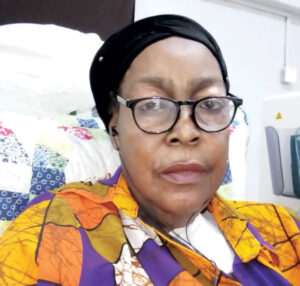
Fifty-two-year-old Khozgya Ubale Mwale once had a beautiful life. She played music, travelled across Malawi’s neighbouring countries doing business and took care of her vibrant home.
After years of a busy life, in 2020, Mwale resolved to retire to a beautiful lakeside town of Chilumba in Karonga District.
Two years later, on a visit to friends and family in neighbouring Zambia, she suddenly fell ill and was rushed to hospital, where doctors diagnosed her with stage-five kidney failure.
She immediately started dialysis, an important treatment for people suffering from kidney failure, which, since 1943, has been used to relieve pain and suffering of patients across the world.
- Advertisement -
It has also prolonged lives of millions of patients by removing excess water and toxins from the body, functions which are naturally performed by kidneys.
Inevitable return
But even if Mwale wished, she could not stay in Zambia forever.
As the eldest in her family and in charge of some projects back home, she soon had to find her way back home.
- Advertisement -
- Advertisement -
But as beautiful as the beaches of Chilumba are, there is no dialysis machine close by, let alone the whole Northern Region.
Yet, Mwale now needed to be treated by the dialysis machine at least twice a week. The nearest was in Lilongwe, more than 400 kilometres away.
She could not afford the nearly nine-hour regular one-way trip, so her family arranged a house in the capital city, at a cost of K275,000 a month, a huge expense for a retiree in a country where the majority live below the poverty line.
But the alternative was more costly. The bus fare for her and a guardian was expensive. Lodging, food and other travel amenities generally ate into pockets.
“I am not being productive here; I miss having a normal life. In Chilumba, I was teaching kids in my neighbourhood English so that they could communicate with tourists, since Chilumba is a tourist destination,” Mwale said in an interview.
Just waking up to familiar faces in her community, she adds, is therapeutic. She misses it.
But such is the life of many people suffering from kidney failure in the country.
Rising cases, limited resources
According to statistics from the Kidney Clinic at Kamuzu Central Hospital (KCH), there are around 390 people currently suffering from Kidney failure who are dependent on a sole functional unit at the facility.
Out of the 390 patients, only 70 are allowed access to the dialysis machine. More who need dialysis cannot be accommodated at KCH due to space constraints.
There are 12 machines at KCH, which cater for the Central and Northern regions, and there are five at Queen Elizabeth Central Hospital (QECH) in Blantyre. Patients are referred to KCH if the machines at QECH malfunction.
According to Kidney Foundation Malawi Chapter, there are about 400 patients with Kidney failure in the country.
Mwale and others facing nightmares over lack of dialysis machines are victims of a healthcare system crumbling down due to neglect and lack of investment.
Each and every year, the government has not been able to reach the Abuja health declaration, which guides that 15 percent of the national budget should be channelled to health.
As a result, most hospitals have not been able to access essential drugs, let alone medical machines.
Samuel Kamwanje, founder of the Kidney Foundation says it is surprising that the government is failing to install dialysis machines in Mzuzu and other hospitals when “the situation is dire for patients”.
‘Death on waiting list’
He bemoans how patients are suffering and dying on the waiting list, pointing out that for one to access dialysis, it means another patient has to die.
Kamwanje recalls how five patients died “after giving up” because they could not afford the costs of regular travel between their home villages in northern Malawi and Lilongwe.
“Buying new dialysis machines is about saving lives,” he says.
Kamwanje adds that the foundation is aware of the supply chain for the machines which can be utilised to address acute shortages and says some suppliers provide the machines for free.
“We have a company where they procured the machines; they give the government the machine for free and government is only required to buy medical supplies from the company for five years,” he explains.
In 2022, during the Karonga-Chitipa Cultural Festival, President Lazarus Chakwera directed the Ministry of Health to establish a dialysis centre in northern Malawi.
Two years later, the Northern Region, home to 2.2 million, is yet to have a single facility.
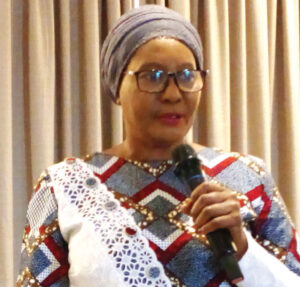
But Deputy Minister of Health Halima Daudi says the government has procured a machine for Mzuzu Central Hospital.
She says what is remaining is for the equipment “to be installed”.
More waiting
The installation of a dialysis machine in Mzuzu could be good news for many patients in Malawi’s third-largest city, including Angela Watson.
Just like Mwale, Watson, 52, migrated from her home village in 2015 to settle in Lilongwe to live close to a dialysis machine at KCH.
She visited the hospital several times but she could not be helped for her kidney problems for years because the hospital she was attending did not have proper equipment.
Once a farmer, she left behind the only life she knew and her family, including her then five-year-old daughter. The girl is fourteen now.
Watson cannot easily go back home. Dialysis is for life and she has to be closer to where a machine is.
“I had a normal life, but at 30, I noticed a change in my body. I was no longer having my monthly period, but I was not in any pain,” she recalls.
Watson started dialysis in 2015.
She has heard about the planned installation of machines at Mzuzu Central Hospital, which would be more convenient for her.
She prays this will come to pass in her lifetime.