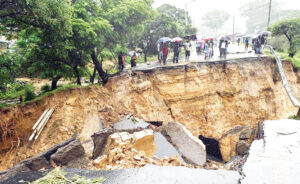
Disaster management entails preparing for potential calamities and responding to them as quickly, strategically and effectively as possible. It is how we deal with the human, material, economic or environmental impacts of the said disaster.
It includes the administrative decisions and operational activities that pertain to various stages of a disaster at all levels.
May be we can have a recap from the previous entry. Disasters are serious disruptions of the functioning of a community or society, causing widespread human, material, economic or environmental losses that exceed the ability of the affected community or society to cope using its own resources.
It can be a natural or human-caused event which causes intense negative impacts on people, goods, services and/or the environment.
- Advertisement -

One of the biggest challenges of disaster management is the need to be prepared for a wide range of contingencies, which demands the need to consider and understand what constitutes a disaster.
- Advertisement -
Disaster management cycle phases are mainly categorised into pre-disaster, during disaster and post-disaster. The pre-disaster phases are those that are undertaken before the disaster occurs. The post-disaster phases are those that are implemented after the disaster occurrence. There are also interventions that are undertaken when the disaster is in motion.
Specifically, the disaster management cycle comprises disaster prevention, mitigation, preparedness, response and recovery. Pre-disaster category encompasses disaster prevention, preparedness and mitigation.
During and post-disaster categories cover disaster response and disaster recovery, respectively.
In terms of prevention, the principle is that the best way to address a disaster is by being proactive. This entails identifying potential hazards and devising safeguards to mitigate their impact. For instance, planning and designing a city in a way that minimises the risk of flooding, with the use of locks, dams or channels to divert water away from populous areas.
- Advertisement -
However, it must be understood that although prevention involves putting permanent measures, that can help minimise disaster risk, into place, disasters can’t always be prevented.
Mitigation involves putting in place measures to minimise the negative impacts of a disaster occurrence. The disaster history of the area and recent past experience may be useful when planning mitigation measures as they inform on common disasters in the area, frequency and severity of such disasters, among others.
Mitigation measures may be structural, which implies changing the physical characteristics of a building or an environment to curb the effects of a disaster, or non-structural, which may involve adopting or amending building codes to optimise safety for all future buildings.
Mitigation interventions include developing and enacting preventive laws and regulations, constructing barriers, establishing building codes and zoning requirements, vulnerability analyses public education etc.
Preparedness, as a pre-disaster phase of disaster management, focuses on response readiness for a disaster. It is an ongoing process in which individuals, communities, businesses and organisations can plan and train for what they will do in the event of a disaster.
Effective preparedness is key to saving lives and reducing injuries when disaster occurs. Preparedness measures or interventions include preparedness plans, evacuation plans and training, warning systems, emergency communication systems, resource inventories, emergency personnel database, complete with contact details, among others.
Malawi recently experienced one of the most devastating cyclones, Freddy, which is an advance notice form of a disaster. The Department of Climate Change and Meteorological Services issued a warning of the impending cyclone, when it was expected to land in Malawi, potential areas to be worst hit, among other details. Such information is very vital as it is meant to trigger, activate or enhance our preparedness to the impending cyclone and potential disaster.
Disaster response interventions, on the other hand, are the very initial actions taken as the disaster is in motion. Response focuses on minimising the hazards and secondary hazards being created by the disaster.
The primary mission of the response phase is to save lives by meeting the basic needs of the people until more permanent and sustainable solutions are formulated. This includes, but is not limited to, evacuations, search and rescue, emergency relief, first-aid, transportation, shelter and food.
The success of the response phase depends, to a greater extent, on the effectiveness of the pre-disaster preparedness phase. Poor preparedness leads to poor and chaotic response, characterised by poor coordination, poor communication, poorly prepared emergency health facilities, among other challenges, leading, unfortunately, to injury and loss of life.
Disaster recovery is the stage which is ultimately about helping individuals, communities, businesses and organisations return to normal or a new normal depending on the impact of the disaster.
Recovery can take a long time, years or even decades, depending on the nature and gravity of the disaster. It involves stabilising the disaster areas and restoring all essential community services such as potable water supply, housing, utilities, transportation, medical facilities and care, grants for communities to restart their entrepreneurial undertakings and restore their livelihoods, among others.