



By Taonga Sabola:
Imagine this scenario: You go to a bank to borrow K100 million to finish your ambitious hotel project which is at 60 percent completion.
In your analysis and forecast, you are confident that the hotel project will pay back the money once it rolls out. Things don’t go exactly according to plan and with the passage of time then boom!!! You owe the bank K1 billion.
The principal of K100 million has attracted an interest and penalties of K900 million and you are finished.
That’s the story of one of Malawi’s most established entrepreneurs, Mike Chilewe, who for close to 20 years had built a solid business empire in Mike’s Trading Limited.
- Advertisement -
Today, Chilewe’s dream that started with welding of doors and window frames before it grew exponentially into manufacturing of trailers, creating jobs for hundreds of Malawians is now shattered.

Sitting in his basket chair with leather cushions in his home village at Nkhonya in the area of Senior Chief Chikumbu in Mulanje, Chilewe is courageous enough to tell his story.
“We got a loan on the first and the bank told us that by the end of the month we were supposed to start servicing the loan. I said this hotel is under construction. It’s not yet making money. It’s not in operation.
“Where are we going to get the money to start servicing the loan?” he said.
- Advertisement -
- Advertisement -
He narrates that when he failed to service the loan, the bank valued the hotel at K405 million and sold it at around K450 million.
“But it was not enough for them, and they came for Mike’s Trading which I sold to pay them because they were putting me under pressure,” he said.
The story of Chilewe is just a tip of an iceberg of how indigenous businesses have been tormented by money lending institutions.
Unfortunately, most of them do not live to tell their story because of shame. They just hibernate, close the business, and relocate to the village in silence.
Indigenous Businesses Association of Malawi (Ibam) President Mike Mlombwa says many indigenous enterprises have gone under because of the punitive charges by the banks.
According to Mlombwa, the current short-term type of lending by commercial banks does not support serious investments which need ample time to start getting results.
“Just look around and see the various vibrant indigenous businesses that were there 20 years ago.
“Have you asked yourself where they are now? Most of them have been repossessed by banks and their properties sold. It is pathetic,” Mlombwa said.
Consumers Association of Malawi (Cama) Executive Director John Kapito says the cost of borrowing from banks in the country is prohibitive to economic growth and it has failed to make any contributions to the many hard-working Malawians that ventured into different businesses.
According to Kapito, there are charges that are attached to any borrowing and the endless interest accruals that hurt borrowers.
“Unfortunately, Malawi does not have such financial lending institutions and the current high street bank lending institutions are not meant for medium- and long-term lending. From the experiences of Chilewe and many more that have suffered, and had their dreams shattered by the current banking institutions there is need for the government to consider establishing separate lending institutions whose objective would be to grow this economy.
“No wonder many Malawians are unable to participate in serious business ventures including supplying procurement contracts against foreigners who have access to easy and cheap money from international financial institutions,” Kapito said.
In jurisdictions such as Kenya and South Africa, they have what is called the In Duplum rule. In fact, the in duplum rule has been part of South African law for more than 100 years, being applied through South African case law from as early as 1830.
This common law rule provides that interest on a debt will cease to run where the total amount of arrear interest has accrued to an amount equal to the outstanding principal debt.
In 2018, the then Dowa West lawmaker Alexander Kusamba Dzonzi drafted the Financial Services (Amendment) Bill 2018 which proposed a new Section 3(a) in the Act setting a maximum amount as interest that can be recovered from a borrowed amount.
Business of that Parliament cohort expired in 2019 before a decision could be reached on the matter.
On March 25, 2021, Mangochi West lawmaker Shadrick Namalomba resuscitated the issue when he brought a motion in the House though he was sent back for not following the right procedure.
Namalomba’s motion reads: “That having observed that exorbitant interest rates on loans obtained from banks and other lending institutions have resulted in failure by most citizens of the Republic of Malawi to service the loans and in some cases forfeiture of property, this House resolves that a Private Members Bill that prohibits all commercial banks and all finance lending institutions from recovering more than 100 percent of the principal loaned amount be drafted and introduced in the House for consideration.”
The motion was later brought again by Dowa West MP Abel Kayembe in November 2021 and was advised to draft a bill on the same.
In an interview yesterday, Kayembe said there is a task force headed by Mangochi Monkey Bay lawmaker Ralph Jooma that was constituted to make consultation on the bill with an intention of reporting back to the whole House.
“At the moment, Further processing of that bill is waiting for the presentation of the report on the consultation done. Once that has been presented, as the owner of the bill; I will take any recommendations the House would make to incorporate into the bill.
“I am, therefore, looking forward to the logical conclusion of the bill, and I hope business committee can give guidance to the task force so that the bill is finalised,” Kayembe said.
On his part, the then Legal Affairs Committee of Parliament Chairperson, Peter Dimba, described the prevailing interest rates in the market as pure witchcraft.
“As Parliament we are there to protect the people,” Dimba said.
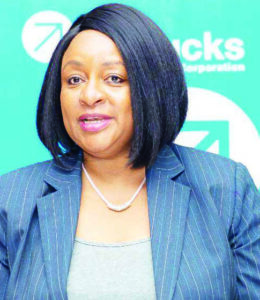
But Institute of Bankers Chairperson, now Bankers Association of Malawi President Zandile Shaba said banks are not satanic or demonic as other people have chosen to put it.
She said one has to look at the banking sector as a reflection of the economy, saying there were times when interest rates were as low as four percent and that there is need to look at what was happening in the economy at that time.
“Interest rates are just a symptom of the prevailing economic environment that is there and there are a number of issues that one has to take into account when looking at these symptoms,” Shaba said.
She said it has been proven that when you cap interest rates access to credit goes down, saying the capping acts as a price control.
According to Shaba, capping interest rates to a point when it is no longer profitable would lead to credit vanishing and it would only be available on the black market.
Whatever the argument could be, week-in, week-out, financial institutions continue to post repossessed property such as houses and motor vehicles.
To others, these could be mere houses, but to the owners and their family, they are homes.
Behind each house posted is a story of millions of kwacha levied on the business.
Something must be done urgently to rescue the entrepreneurs who cry in silence as their dreams get shattered.